Showing posts with label Miles Davis. Show all posts

Friday, July 14, 2017

VIDEOS: Miles Davis Opens for Neil Young and “That Sorry-Ass Cat” Steve Miller at The Fillmore East (1970)

by  , Open Culture: http://www.openculture.com/2015/05/miles-davis-opens-for-neil-young-and-the-steve-miller-band-1970.html

The story, the many stories, of Miles Davis as an opening act for several rock bands in the 1970s make for fascinating reading. Before he blew the Grateful Dead’s minds as their opening act at the Fillmore West in April 1970 (hear both bands’ sets here), Davis and his all-star Quintet---billed as an "Extra Added Attraction"---did a couple nights at the Fillmore East, opening for Neil Young and Crazy Horse and The Steve Miller Band in March of 1970. The combination of Young and Davis actually seems to have been rather unremarkable, but there is a lot to say about where the two artists were individually.
Nate Chinen in at Length describes their meeting as a “minimum orbit intersection distance”—the “closest point of contact between the paths of two orbiting systems.” Both artists were “in the thrall of reinvention,” Young moving away from the smoothness of CSNY and into free-form anti-virtuosity with Crazy Horse; Davis toward virtuosity turned back into the blues. Miles, suggested jazz writer Greg Tate, was “bored fiddling with quantum mechanics and just wanted to play the blues again.” The story of Davis and Young at the Fillmore East is best told by listening to the music both were making at the time. Hear "Cinnamon Girl" below and the rest of Neil Young and Crazy Horse’s incredible set here. The band had just released their beautifully ragged Everybody Knows this is Nowhere.
When it comes to the meeting of Davis and Steve Miller, the story gets juicier, and much more Miles: the difficult performer, not the impossibly cool musician. (It sometimes seems like the word “difficult” was invented to describe Miles Davis.) The trumpeter's well-earned egotism lends his legacy a kind of rakish charm, but I don’t relish the positions of those record company executives and promoters who had to wrangle him, though many of them were less than charming individuals themselves. Columbia Records’ Clive Davis, who does not have a reputation as a pushover, sounds alarmed in his recollection of Miles’ reaction after he forced the trumpeter to play the Fillmore dates to market psychedelic jazz-funk masterpiece Bitches Brew to white audiences.
According to John Glatt, Davis remembers that Miles “went nuts. He told me he had no interest in playing for ‘those fu*king long-haired kids.’” Particularly offended by The Steve Miller Band, Davis refused to arrive on time to open for an artist he deemed “a sorry-ass cat,” forcing Miller to go on before him. “Steve Miller didn’t have his shit going for him,” remembers Davis in his expletive-filled autobiography, “so I’m pissed because I got to open for this non-playing motherfu*ker just because he had one or two sorry-ass records out. So I would come late and he would have to go on first and then when we got there, we smoked the motherfu*king place, and everybody dug it.” There is no doubt Davis and Quintet smoked. Hear them do “Directions” above from an Early Show on March 6, 1970.
“Directions,” from unreleased tapes, is as raw as they come, “the intensity,” writes music blog Willard’s Wormholes, “of a band that sounds like they were playing at the The Fillmore to prove something to somebody… and did.” The next night’s performances were released in 2001 as It’s About That Time. Hear the title track above from March 7th. As for The Steve Miller Blues Band? We have audio of their performance from that night as well. Hear it below. It's inherently an unfair comparison between the two bands, not least because of the vast difference in audio quality. But as for whether or not they sound like “sorry-ass cats"... well, you decide.
Related Content:

Wednesday, June 28, 2017

VIDEO: What Miles Davis Taught Herbie Hancock: In Music, as in Life, There Are No Mistakes, Just Chances to Improvise

by Ted Mills, Open Culture: http://www.openculture.com/2016/04/what-miles-davis-taught-herbie-hancock-about-mistakes-and-improvising.html

One of my favorite Brian Eno quotes, or rather one that became an Oblique Strategy, is “Honor Your Mistake as a Hidden Intention.” (Or to be pedantic, the original version was “Honor Thy Error...”).
As a teenager growing up and trying to make art (at that time music and comics) there was no advice more freeing. It was the opposite of what I thought I knew: mistakes were shameful, the sign of an amateur or of the lack of practice. But the more art I made, the more I referenced Eno’s idea, and the more I read and listened, the more I realized it wasn’t just Eno. The Beatles left in an alarm clock meant for the musicians on “A Day in the Life” and the sound of empty booze bottles vibrating on a speaker was left in at the end of “Long Long Long” (along with tons more). The Beastie Boys left in a jumping needle intended for a smooth scratch on “The Sounds of Science.” Radiohead left in Jonny Greenwood’s warm-up chord that became essential to “Creep.” (There’s a whole Reddit thread devoted to these mistakes if you choose to go down the rabbit hole.)
But those examples relate to the recording process of rock music. What about jazz? Surely there’s “wrong” notes when it comes to playing, especially if you’re not the soloist.
In this very short video based around an interview with pianist Herbie Hancock, the master improvisor Miles Davis honored Hancock’s mistake as a hidden intention by playing along with it. It’s both a surprising look into the arcane world of jazz improvisation and a revealing anecdote of Davis, usually known as a difficult collaborator.
“It taught me a very big lesson not only about music,” says Hancock, “but about life.”
h/t Jason W-R

Saturday, January 25, 2014

ALBUM REVIEW: ‘Miles at the Fillmore’ - Uncut 1970 Brew

Miles Davis in 1970sby , Psychedelic Sight: http://psychedelicsight.com/9942-miles-davis-fillmore/

“Miles Runs the Voodoo Down,” the song title went.

And so he did, playing dark and spellbinding music in Bill Graham’s Fillmore Auditoriums over a two-year period in the early 1970s.

“You can hear that anger and darkness and the craziness of everything that was still in the air from the ’60s when this music was made,” says the guitarist Carlos Santana, a Fillmore regular and witness to the eruption of the electric Miles Davis.

Even today, Santana remains awestruck by Davis’ psychedelic proto-funk, as is made clear in his liner notes to a significant restoration of the old live album “Miles Davis at Fillmore” that’s due from Columbia/ Legacy in March.

Davis’ psychedelic period began, more or less, when “Bitches Brew” was recorded in 1969.

He’d been absorbing psychedelic soundscapes, acid rock and the aggressive, artful new funk of James Brown’s band: “The music I was really listening to in 1968 was James Brown, the great guitar player Jimi Hendrix, and a new group Sly and the Family Stone,” Davis wrote in his autobiography.

Even the most dedicated Davis fans who’d been along for the ride with the albums “Filles de Kilimanjaro” and “In a Silent Way” were in for a shock.

When Dylan went electric, he plugged in. When Davis went electric, he stuck his finger in the socket. The jazz trumpeter was inducted into the Rock and Roll Hall of Fame for good reason.

Two months after the April 1970 release of “Bitches Brew” - June 17-20 - Davis and band played the Fillmore East in New York City.

The musicians were Chick Corea, Keith Jarrett, Dave Holland, Jack DeJohnette, Airto Moreira and Steve Grossman. A murderer’s row, to be sure, but MIA was Wayne Shorter, who’d played on “Bitches” and been replaced (sort of) on sax by Grossman - a major loss.

Columbia released a highly edited version of those concerts in a two-LP set of that fall, the abruptly named “Miles Davis at Fillmore.”

There were problems, beginning with the track names. The LP labels had only four titles: “Wednesday Miles,” “Thursday Miles,” “Friday Miles” and “Saturday Miles” - even though the group was playing discrete songs, and repeating almost all of them over the four nights.

In 1997, Columbia’s CD re-release added song titles, but the editing by producer Teo Macero remained. Macero had the thankless task of boiling down an hour or so of performance to fit on one side of an LP - one side per night.

The new set, fully titled “Miles at the Fillmore - Miles Davis 1970: The Bootleg Series Vol. 3,” rights that necessary evil: “The full unedited shows are now presented for the first time yielding 100-plus minutes of previously unreleased music,” goes the Columbia press release.

In addition there are three bonus tracks from Fillmore West gig with the Grateful Dead, two months earlier. The highlight bonus number would seem to be a 13-minute blast of “Miles Runs the Voodoo Down,” a number with a clear Hendrix influence.

The four-CD set will go for about $53, available March 25.

In 1997, Columbia/Legacy released a slate of live Davis records from 1970-1974 under the brand of “Miles Davis: Live & Electric.” They were “Live-Evil,” “Dark Magus,” “Black Beauty,” “Live at the Philharmonic Hall” and “At Fillmore.”

All remastered with 20-bit technology and liner notes from musicians, notably pianist Corea on “Black Beauty” (these are great-sounding CDs).

Even after two decades, the collective 10 CDs would prove a challenge to the most adventurous listeners of 1997.

Rock critic Robert Christgau remained dubious: “This music was electric, beat-heavy, and marketed to kids - and thus obviously worthy of suspicion if not contempt (from jazz critics).” The album “At Fillmore,” he found, “meandered overmuch”:
Like all ’70s Miles, “At Fillmore” is more inviting in the wake of ambient techno than it was in 1970, or 1980, but like most ambient techno it fails to cull the mesmerizing from the soothing from the boring. Moreover, several of its high points are provided by some of the most Milesian solos of this era, and that is not what the era was for.
Carlos Santana, of course, heard much more in Davis’ music from “the era”: “The sound of Miles at the Fillmore was the sound of the Black Panthers. It was the sound of Vietnam. It was the sound of the protesting and the beatings and the shootings. It was the sound of the hippies and fighting in the streets and consciousness revolution".

“If ever there was a time when a rock audience was willing to open their ears and hear some great modern jazz like the kind Miles was creating, it was at the Fillmore.”

Here are the tracks and performance dates:
 
"Miles at the Fillmore - Miles Davis 1970: The Bootleg Series Vol. 3"
 
Disc 1 (Fillmore East, June 17, 1970)
1. Introduction by Bill Graham • 2. Directions • 3. The Mask • 4. It’s About That Time • 5. Bitches Brew • 6. The Theme • Bonus tracks (Fillmore West, April 11, 1970): 7. Paraphernalia • 8. Footprints.
 
Disc 2 (Fillmore East, June 18, 1970)
1. Directions • 2. The Mask • 3. It’s About That Time • 4. Bitches Brew • 5. The Theme • 6. Spanish Key (Encore) • 7. The Theme.
 
Disc 3 (Fillmore East, June 19, 1970)
1. Directions • 2. The Mask • 3. It’s About That Time • 4. I Fall In Love Too Easily • 5. Sanctuary • 6. Bitches Brew • 7. The Theme • Bonus track (Fillmore West, April 11, 1970): 8. Miles Runs the Voodoo Down.
 
Disc 4 (Fillmore East, June 20, 1970)
1. Directions • 2. The Mask • 3. It’s About That Time • 4. I Fall In Love Too Easily • 5. Sanctuary • 6. Bitches Brew • 7. Willie Nelson • 8. The Theme.

Monday, November 4, 2013

VIDEOS: Miles Davis Plays Music from Kind of Blue Live in 1959, Introducing a Completely New Style of Jazz

by , Open Culture: http://www.openculture.com/2013/09/miles-davis-plays-music-from-kind-of-blue-live-in-1959-introducing-a-completely-new-style-of-jazz.html

Josh Jones is a writer and musician based in Durham, NC. Follow him at @jdmagness


Miles Davis’ Kind of Blue broke new ground in the world of jazz in a year that saw an unusual number of groundbreaking jazz releases, 1959.

Following up his experiments on 1958’s Milestones, Davis’ move from bop to modal jazz improvisational techniques shifted the terms of the genre, and, as many critics have argued since, the terms of Western music, popular and classical.

Released in August of ’59, Kind of Blue was recorded in New York by Davis’ famous sextet in March and April of that year, and before listeners had a chance to hear the record, those few people lucky enough to be in attendance at the April performance above - at CBS’s Studio 61 - got a chance to hear what Davis was up to.

Doubtless those lucky attendees were few indeed, but one of them, producer and presenter Robert Herridge showcased the performance for a July, 1960 broadcast of his show The Robert Herridge Theater.

The Davis sextet play a few versions of “So What” from Kind of Blue, previewing the album Quincy Jones would call his “orange juice” for its daily jolt of inspiration.

The remainder of the performance consists of compositions by Dave Brubeck, Gil Evans, and Ahmad Jamal. See the full track list below.

1 So What
2 Introduction (Robert Herridge)
3 The Duke
 (D. Brubeck)
4 Blues for Pablo 
(G. Evans)
5 New Rhumba
 (A. Jamal)
6 Announcement (Robert Herridge)
7 So What (reprise)
8 So What (reprise)
9 Orchestral fragment


The style of “So What” and the other compositions from Kind of Blue have been credited with creating, in Chick Corea’s words, “a new language of music.”

But Davis cannot take all of the credit. He must share it with pianist and educator George Russell who published a theoretical account of a new way of improvising in 1953 called Lydian Chromatic Concept of Tonal Organization.

Davis was greatly influenced by Russell’s theories and found in them a way out of the manic style of bop that had begun to tire him. Russell’s “modal” jazz moved away from basing jazz improvisation on chords and traditional major and minor scales. Though the theory was new, its basis, the Lydian mode, is as ancient as the Greeks.

In the video above, see Russell in an interview discussing his modal theory, which Ben Ratliff in Russell’s 2009 New York Times obit describes as “simple”:

[Russell] believed that a new generation of jazz improvisers deserved new harmonic techniques, and that traditional Western tonality was running its course. The Lydian chromatic concept - based on the Lydian mode, or scale, rather than the familiar do-re-mi major scale - was a way for musicians to improvise in any key, on any chord, without sacrificing the music’s blues roots.  

Without Russell, we’d have no Kind of Blue, but it’s probably safe to say that without Davis’ brilliant appropriation of modal theory, Russell’s ideas may have faded into obscurity.

The collaboration between the humble theorist, the flamboyant composer and bandleader, and his tremendously talented 1959 ensemble produced one of the most enduring musical documents of all time, and in the archival footage above, we can see some of its critical pieces come together.

Monday, July 8, 2013

Q3 on Record: Love, Hendrix, Blind Faith

by , Psychedelic Sight: http://psychedelicsight.com/record-roundup-q3-13/

Love, Jimi Hendrix, Blind Faith and Yes are among the psychedelic-era artists with albums ready for resurrection in the third quarter of 2013.

The vinyl revivalists will continue to pack the shelves of your favorite indie record store with psychedelic classics. Other formats in this record roundup include hybrid SACDs, CDs and MP3s.

Psychedelic band Love from Los Angeles with second album

Love’s “Da Capo” makes its debut on hybrid SACD on July 30, via Mobile Fidelity. It’s billed as direct from the original master tapes, as was Sundazed’s vinyl release. “Da Capo” has many fans, despite its split personality:

Side 1 is the run-up to the band’s classic “Forever Changes,” with six breathtaking psychedelic classics that incorporate rock, Latin rhythms, jazz and classical.

Side 2, notoriously, is surrendered to a 19-minute jam, one that has done a good bit of damage to the otherwise brilliant album’s rep (for many Love fans, “Da Capo” is more or less an EP).

The “hit” is the fast and furious “Seven & Seven Is,” quite possibly the most explosive 2 1/2 minutes in ’60s rock, its speed rush ended by an atomic blast. “Da Capo” ranks No. 37 on Psychedelic Sight’s list of the top 50 psychedelic albums.

The release raises hopes of an SACD release of “Forever Changes,” which has seen seemingly endless reissues on CD and vinyl. (Warner Music Japan has just rereleased the album on CD with “2013 digital remastering.”)

Love frontman Arthur Lee’s “Black Beauty” recently resurfaced on 180 gram vinyl, also in a numbered limited edition. The album, credited to a 1973 version of Love, was produced by Paul Rothchild, who also oversaw “Da Capo.”

Jimi Hendrix Live in CologneThe “official bootleg” of Hendrix’s “Live in Cologne” debuts July 9 on CD. It chronicles the Experience’s January 1969 performance at the Sporthalle center in Germany.

“The Jimi Hendrix Experience: Live In Cologne” was sourced from a mono audience recording, and long has been available as a bootleg.

“This recording is not without various technical flaws and sonic limitations,” warns Dagger Records, which is owned by the Hendrix family.

The vinyl version debuted in November via Dagger as the 12th in its series of live and bootlegged recordings.

The Experience featured Noel Redding and Mitch Mitchell, the classic lineup that would last only another six months.

In addition to the regular Experience set - “Fire,” “Foxey Lady,” “Hey Joe” and so on - the show included the New Orleans rocker “Come On (Let the Good Times Roll)” and a cover of Cream’s “Sunshine of Your Love.”

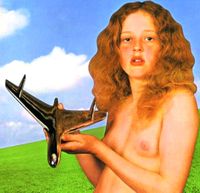
Blind Faith's controversial album cover
Blind Faith’s debut album, in fact its only album, is back on vinyl in a double-disc import edition released July 2.

The set features the original U.K. cover - the artsy-strange one with a naked pre-teen girl. In the U.S., the blah LP cover had Eric Clapton, Stevie Winwood and the rest of the band posing.

The second Blind Faith disc offers five bonus tracks, including an electric take on “Can’t Find My Way Home” and two versions of the unreleased “Sleeping in the Ground.” There’s also an “acoustic jam.”

Most of those tracks can be found on Universal’s Deluxe Edition CD of 2001, but apparently this marks their debut on vinyl.

Steppenwolf’s debut album finally made it to market on 200 gram vinyl after numerous delays; the hybrid SACD version reportedly comes out Aug. 6 from Analogue Productions.

For all its ubiquity in the late 1960s, “Steppenwolf” has been scarce in recent years, with the last domestic CD version released 23 years ago.

Cohearent Audio did the new “Steppenwolf” mastering, always good news. The LP’s psychedelic classics include “Magic Carpet Ride” and “The Pusher.”

On the space jazz front, Weather Report’s “Mysterious Traveller” streaks back to Earth via 180 gram vinyl on July 24. It’s the closest thing to a psychedelic album made by the pioneering jazz fusion outfit, opening with Josef Zawinul’s stunning “Nubian Sundance.”

The long-awaited hybrid SACD of Vangelis’ “Blade Runner,” the electronic music soundtrack - simultaneously creepy and chill - comes out July 10 from Audio Fidelity.

An hour’s worth of music with classic dialog mixed in. Cohearent Audio did the remastering (a red vinyl version just came out).

Also from the astral plane comes “In a Silent Way,” the 1969 Miles Davis record with John McLaughlin that paved the way for “Bitches Brew.” It was Davis’ initial response to the electronic psychedelic music of the day.

“Silent Way” is due on 180 gram vinyl (numbered, limited) July 10 via Mobile Fidelity (if the new 180 gram “Milestones” is an indicator, expect stunning sonics).

Yes revisits “Yesterdays,” the compilation album mined from the prog rockers’ first two albums and led off by the band’s brilliant take on “America.” It’s set for July 30 as part of Friday Music’s 180 gram vinyl series of Yes albums.

Yes man Rick Wakefield went solo in 1973 with the ambitious “The Six Wives of Henry VIII,” the concept album not surprisingly finding its biggest success in the U.K. Plastic Head brings the double-album set back to vinyl Aug. 6.

King Crimson’s “Red” is due July 16 on 200 gram vinyl, from Discipline Global Mobile. The 1974 album includes the 12-minute debut of “Starless.”

“Higher!” the Sly and the Family Stone box set from Sony Legacy, rolls in Aug. 27 in various formats, including 180 gram LPs.

“Nearly one-fourth of the contents will be previously unissued material,” Legacy says. Stone’s psych-funk classic “There’s a Riot Goin’ On” has shipped on hybrid SACD from ORG Music.

“Blood, Sweat & Tears” was the first - and by far best - BS&T album, with Al Kooper at the controls. The album, a longtime audiophile favorite, has another go with a “gold CD” just out from Impex.

The adventurous album is in stark contrast to the radio-friendly BS&T material to come. Kooper, meanwhile, has the two-fer “Black Coffee/White Chocolate” set for Sept. 17.

Other psychedelically tinged releases of note:

Dead Meadow’s first album returns remixed/remastered on vinyl (Xemu Records, Sterling Sound), Aug. 6; Todd Rundgren’s “Hermit of Mink Hollow” on 180 gram (Friday Music), Aug. 20; “Fleetwood Mac: 1969-1972″ box set on vinyl (Rhino), Aug. 20; Nick Drake’s psych-folker “Five Leaves Left” in a new single LP version, Aug. 27; and the Beach Boys’ box set “Made in California” (many unreleased tracks), Aug. 27.

And the new albums: The Arctic Monkeys “AM” on Sept. 10; MGMT’s “MGMT” on Sept. 17; Yoko Ono’s “Take Me to the Land of Hell,” Sept. 17 (check the trippy advance track); Moby’s “Innocents” with guests including Wayne Coyne, Oct. 1 (all in multiple formats including vinyl).

Just out: John Mayall’s concept album “Bare Wires” with Mick Taylor, on 180-gram LP from Music on Vinyl. The 1968 album includes the trippy tracks “Fire,” “Look in the Mirror” and “Bare Wires.”
From the mysterious land of TBA we have:
  • Roger Waters’ “Amused to Death” on a hybrid stereo SACD and 200 gram vinyl record (apparently delayed again).
  • The Grateful Dead’s “From the Mars Hotel” with a 180-gram vinyl release (Mobile Fidelity). Numbered, limited and half-speed mastered.
  • “Santana III” on vinyl from Mobile Fidelity.
  • The first two Chicago Transit Authority albums, numbered and limited on hybrid stereo SACD, from Mobile Fidelity.
  • “Highway 61 Revisited” on audiophile 45rpm discs, from Mobile Fidelity.
Note: Release dates for vinyl and SACD titles remain fluid until they actually ship. This record roundup will be updated as needed through the quarter. SACDs are all hybrids unless specified otherwise; they work on a CD player but not in advanced resolution.

Sunday, May 19, 2013

The Top 3 Best Miles Davis Albums From the 60's and 70's - And Why

Cover of "Bitches Brew"
Cover of Bitches Brew
by Donald L Malloy Jr

There is no question that Miles Davis is one of greatest artists to walk the face of the earth.

He has recorded many albums with Charlie Parker which lead to him having an extensive career as a leader where he was always at the forefront of the music.

Miles Davis was always the one to change jazz music to the next sound.

By the 1960's and 70's Miles had gone to so many different places in the world and receiving inspiration from everywhere.

Also this is my favorite time period for him.

In my opinion, these are the 3 best Miles Davis albums from the 60's and 70's.

1. The Sorcerer

The Sorcerer was recorded in May of 1967 and released in December that same year. This entire album is full of hits, and was mostly written by saxophonist Wayne Shorter and pianist Herbie Hancock.

The track Sorcerer was written by Herbie and a fast modal swing tune where drummer Tony Williams is pushing that beat hard with his polyrhythms and strong grooving beat.

Also it is different in the fact that Miles and Wayne don't take individual solos, but they trade the entire time. It is just amazing how they respond to each other and keep the energy moving.

2. Miles in the Sky

Miles in the Sky was recorded in January and May of 1968 and was released in September that same year. This was such a great recording for several reasons.

The music is great, he begins to change members in his band, and this was Miles' introduction to using electric instruments in his band. You hear George Benson doing his thing.

My favorite song on the album is Black Comedy. The melody is so simple, but the feel of it is so complex in terms of placement. Although all the songs are great Miles only performed one of them in live settings. That would be Paraphernalia.

3. Bitches Brew

Bitches Brew was recorded in August 1969 and was released January 1970. Now I don't know if this is the first album to do this but it is an inventive concept, the album plays like a seamless playlist.

The songs interweave together where you don't necessarily just know when one song ends and the next begins. This album is all about interaction, and it is all electric. Even Miles has his trumpet electrified.

He use effects like delay and distortion in various points. My favorite song is Pharaoh's Dance. The melody that Miles plays is just the perfect thing to play.

Whether you like these albums that I have chosen as the 3 best Miles Davis Albums in the 60's and 70's as much as I do, we all should agree that the man was great, and his influence on music will be felt for many years to come.

If you like Miles Davis check out New York City based trumpeter Donald Malloy.
Click here to download 4 free songs from him.

Article Source: http://EzineArticles.com/?expert=Donald_L_Malloy_Jr
http://EzineArticles.com/?The-Top-3-Best-Miles-Davis-Albums-From-the-60s-and-70s---And-Why&id=7701056

Enhanced by Zemanta