Showing posts with label Words and Chords. Show all posts

Saturday, August 27, 2016

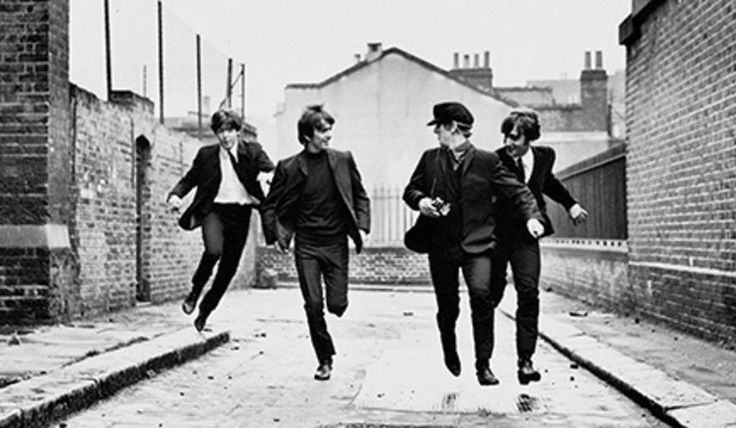
Guitarist Randy Bachman Demystifies the Opening Chord of The Beatles’ ‘A Hard Day’s Night’

by , Open Culture: http://www.openculture.com/2011/12/guitarist_randy_bachman_demystifies_the_opening_chord_of_a_hard_days_night.html


You could call it the magical mystery chord. The opening clang of the Beatles’ 1964 hit, “A Hard Day’s Night,” is one of the most famous and distinctive sounds in rock and roll history, and yet for a long time no-one could quite figure out what it was.

In this fascinating clip from the CBC radio show, Randy’s Vinyl Tap, the legendary Guess Who and Bachman-Turner Overdrive guitarist Randy Bachman unravels the mystery.

The segment (which comes to us via singer-songwriter Mick Dalla-Vee) is from a special live performance, “Guitarology 101,” taped in front of an audience at the Glenn Gould Studio in Toronto back in January, 2010. As journalist Matthew McAndrew wrote, “the two-and-a-half hour event was as much an educational experience as it was a rock’n’roll concert.”

hard days night chord

One highlight of the show was Bachman’s telling of his visit the previous year with Giles Martin, son of Beatles’ producer George Martin, at Abbey Road Studios. The younger Martin, who is now the official custodian of all the Beatles’ recordings, told Bachman he could listen to anything he wanted from the massive archive - anything at all.

Bachman chose to hear each track from the opening of “A Hard Day’s Night.” As it turns out, the sound is actually a combination of chords played simultaneously by George Harrison and John Lennon, along with a bass note by Paul McCartney. Bachman breaks it all down in an entertaining way in the audio clip above.

You can read about some of the earlier theories on The Beatles Bible and Wikipedia, and hear a fascinating account of one scholar’s mathematical analysis of the component sounds of the chord from a few years ago at NPR.

Tuesday, September 3, 2013

Mick Jagger Tells the Story Behind ‘Gimme Shelter’ and Merry Clayton’s Haunting Background Vocals

by , Open Culture: http://www.openculture.com/2013/06/mick_jagger_tells_the_story_behind_gimme_shelter.html


In the fall of 1969 the Rolling Stones were in a Los Angeles recording studio, putting the final touches on their album Let it Bleed.

It was a tumultuous time for the Stones. They had been struggling with the album for the better part of a year as they dealt with the personal disintegration of their founder and multi-instrumentalist Brian Jones, whose drug addiction and personality problems had reached a critical stage.

Jones was fired from the band in June of that year. He died less than a month later.

And although the Stones couldn’t have known it at the time, the year would end on another catastrophic note, as violence broke out at the notorious Altamont Free Concert just a day after Let it Bleed was released.

It was also a grim time around the world. The assassinations of Martin Luther King and Robert F. Kennedy, the Tet Offensive, the brutal suppression of the Prague Spring - all of these were recent memories. Not surprisingly, Let it Bleed was not the most cheerful of albums.

As Stephen Davis writes in his book Old Gods Almost Dead: The 40-Year Odyssey of the Rolling Stones, “No rock record, before or since, has ever so completely captured the sense of palpable dread that hung over its era.”

And no song on Let it Bleed articulates this dread with greater force than the apocalyptic “Gimme Shelter,” in which Mick Jagger sings of a fire “sweepin’ our very street today,” like a “Mad bull lost his way.”

Rape, murder!
It’s just a shot away

In an interview last November with Melissa Block for the NPR program All Things Considered, Jagger talked about those lyrics, and the making of the song.

One of the most striking moments in the interview is when Jagger describes the circumstances surrounding soul singer Merry Clayton’s powerful background vocals.

“When we got to Los Angeles and we were mixing it, we thought, ‘Well, it’d be great to have a woman come and do the rape/murder verse,’ or chorus or whatever you want to call it,” said Jagger.

“We randomly phoned up this poor lady in the middle of the night, and she arrived in her curlers and proceeded to do that in one or two takes, which is pretty amazing. She came in and knocked off this rather odd lyric. It’s not the sort of lyric you give anyone - 'Rape, murder/It’s just a shot away' - but she really got into it, as you can hear on the record.”

The daughter of a Baptist minister, Merry Clayton grew up singing in her father’s church in New Orleans. She made her professional debut at age 14, recording a duet with Bobby Darin.

She went on to work with The Supremes, Elvis Presley and many others, and was a member of Ray Charles’s group of backing singers, The Raelettes. She is one of the singers featured in the new documentary film, 20 Feet From Stardom.

In an interview last week with Terry Gross on NPR’s Fresh Air, Clayton talked about the night she was asked to sing on “Gimme Shelter”:

Well, I’m at home at about 12 - I’d say about 11:30, almost 12 o’clock at night. And I’m hunkered down in my bed with my husband, very pregnant, and we got a call from a dear friend of mine and producer named Jack Nitzsche. Jack Nitzsche called and said you know, Merry, are you busy? I said No, I’m in bed. he says, well, you know, There are some guys in town from England. And they need someone to come and sing a duet with them, but I can’t get anybody to do it. Could you come? He said I really think this would be something good for you.

At that point, Clayton recalled, her husband took the phone out of her hand and said, “Man, what is going on? This time of night you’re calling Merry to do a session? You know she’s pregnant.”

Nitzsche explained the situation, and just as Clayton was drifting back to sleep her husband nudged her and said, “Honey, you know, you really should go and do this date.”

Clayton had no idea who the Rolling Stones were. When she arrived at the studio, Keith Richards was there and explained what he wanted her to do.

I said, Well, play the track. It’s late. I’d love to get back home. So they play the track and tell me that I’m going to sing - this is what you’re going to sing: Oh, children, it’s just a shot away. It had the lyrics for me. I said, Well, that’s cool. So  I did the first part, and we got down to the rape, murder part. And I said, Why am I singing rape, murder? … So they told me the gist of what the lyrics were, and I said Oh, okay, that’s cool. So then I had to sit on a stool because I was a little heavy in my belly. I mean, it was a sight to behold. And we got through it. And then we went in the booth to listen, and I saw them hooting and hollering while I was singing, but I didn’t know what they were hooting and hollering about. And when I got back in the booth and listened, I said, Ooh, that’s really nice. They said, well, You want to do another? I said, well, I’ll do one more, I said and then I’m going to have to say thank you and good night. I did one more, and then I did one more. So it was three times I did it, and then I was gone. The next thing I know, that’s history.

Clayton sang with such emotional force that her voice cracked (“I was just grateful that the crack was in tune,” she told Gross).

In the isolated vocal track above, you can hear the others in the studio shouting in amazement. Despite giving what would become the most famous performance of her career, it turned out to be a tragic night for Clayton.

Shortly after leaving the studio, she lost her baby in a miscarriage. It has generally been assumed that the stress from the emotional intensity of her performance and the lateness of the hour caused the miscarriage.

For many years Clayton found the song too painful to hear, let alone sing. “That was a dark, dark period for me,” she told the Los Angeles Times in 1986, “but God gave me the strength to overcome it. I turned it around. I took it as life, love and energy and directed it in another direction, so it doesn’t really bother me to sing ‘Gimme Shelter’ now. Life is short as it is and I can’t live on yesterday.”
Wednesday, August 21, 2013

“The Lost Paris Tapes” Preserves Jim Morrison’s Final Poetry Recordings from 1971

by Josh Jones, Open Culture: http://www.openculture.com/2013/08/the-lost-paris-tapes-preserves-jim-morrisons-final-poetry-recordings-from-1971.html

Josh Jones is a writer and musician based in Durham, NC. Follow him at @jdmagness


Billed and sold as the ninth and final studio album by The Doors, An American Prayer tends to divide Jim Morrison fans.

On the one hand, it’s a captivating document of the late singer reading his free-associative poetry: dark, weirdly beautiful psychedelic lyrical fugues.

On the other hand, it’s only a “Doors album” in that the three remaining members convened in 1978 to record original music over the deceased Morrison’s solo readings.

While the resulting product is both a haunting tribute and an immersive late-night listen, many have felt that the band’s rendering did violence to the departed singer’s original intentions (listen to and download it here for free).

An American Prayer‘s readings were recorded unaccompanied in March 1969 and December 1970. In 1971, Morrison joined his long-time lover Pamela Courson in Paris. That same year, Jim Morrison died, under some rather mysterious circumstances, at the age of 27.

Before his death, however, he made what is said to be his final studio recording, a poetry reading/ performance with a couple of unknown Parisian street musicians.

Although Doors keyboardist Ray Manzarek allegedly dismissed this recording as “drunken gibberish,” Doors fans have circulated it since 1994 - combined with a 37-minute poetry reading from 1968 - as a bootleg called The Lost Paris Tapes.


While it’s true that An American Prayer is a powerful and haunting album, it’s also true that The Lost Paris Tapes represents the unadorned, unedited Morrison, in full control of how his voice sounds, and without his famous band.

I cannot help you find a copy of The Lost Paris Tapes, but many of the tracks are on Youtube, such as “Orange County Suite” (top), an affecting piece written for Pamela Courson.

Other excerpts from the bootleg, such as “Hitler Poem” (above) show Morrison in a very strange mood indeed, and show off his unsettling sense of humor.

While the work on The Lost Paris Tapes ranges in quality, all of it preserves the seductive voice and cryptic imagination that Jim Morrison never lost, even as he began to slip away into alcoholism. 

Monday, July 1, 2013

The Story Behind Simon And Garfunkel's Greatest Hit Songs: "Scarborough Fair/Canticle"

by Garrett Sawyer

Simon and Garfunkel's exquisite "Scarborough Fair/Canticle" sounds so perfect, so meticulously arranged you'd never guess the song has multiple sources.

The song actually coalesced beginning with an old English folk ballad and ending with an obscure song Simon wrote which was thrown into the pot.

Let's start with Scarborough, a seaport town in North Yorkshire, England.

The good Lord only knows who wrote it first but some minstrel hundreds of years ago wrote a ballad which drawls on for numerous verse about a young man instructing the listener to go to the singer's former lover and direct her to perform a list of absurd tasks (such as make a shirt without seams and wash it in a dry well).

If she does these ridiculous feats he will take her back.

The herbs mentioned in each verse represented personal traits. Parsley stood for comfort. Sage meant strength. Rosemary represented love. Thyme symbolized courage.

This kind of symbolism was common in those days; the Shakespereans among you may remember Ophelia's words in "Hamlet" ("There's rosemary, that's for remembrance; pray you, love, remember").

The "fair" of the title refers to a popular gathering that would start each August 15th and last 45 days, attracting visitors from all over England.

Fast forward a few hundred years. Simon is living, traveling and performing in England in 1965. While in London he learns the song from English folk singer and guitarist Martin Carthy.

It was around this time that Simon recorded a solo album with no accompaniment except his guitar, vocals and a little foot tapping, released as "The Paul Simon Songbook".

On it you will find a song called "The Side of a Hill" by someone named "Paul Kane", one of Simon's pseudonyms. This quiet antiwar song went absolutely nowhere but the lyrics were to lay dormant, not dead.

Now it's a year or two later and Simon and Garfunkel are household words thanks to their number one hit "The Sound of Silence".

For their next trick Simon reworked the arrangement he learned from Carthy while Art Garfunkel worked out a counterpoint (the "Canticle" part). The lyrics to "The Side of a Hill' were reworked into the counterpoint and, presto!

Simon wasn't the only one to benefit from Carthy's work. Loyal Bob Dylan fans are right to observe that Dylan sang part of this first in 1963 in "Girl From the North Country", which contained the lyric, "Remember me to one who lives there, she once was a true love of mine".

And I normally don't bother mentioning cover versions or other versions of songs because there are so many but I'm going to make an exception here.

In 1968 Sergio Mendes and Brasil '66 recorded "Scarborough Fair" again but changed the time signature to standard 4/4 (instead of Simon and Garfunkel's 3/4 version) with Lani Hall and Bibi Vogel singing lead and a gorgeous, dreamy jazz arrangement complete with a fabulous Wurlitzer electric piano solo.

Of course, it's irrelevant whose version of "Scarborough Fair" you adore: Simon and Garfunkel's, Bob Dylan's or Sergio Mendes'.

The song hits home no matter who's singing it. But I must confess I'm partial to the S&G version. Now, alas, if I could only learn to play Simon's guitar part properly ...

If you like Simon and Garfunkel's "Scarborough Fair/Canticle" then you'll like a song inspired by the story of a young soldier who returned from Iraq. For a limited time only you can download that song for FREE by clicking HERE.

Download your free song at:
http://www.garrettsawyer.net/am/

Article Source: http://EzineArticles.com/?expert=Garrett_Sawyer
http://EzineArticles.com/?The-Story-Behind-Simon-And-Garfunkels-Greatest-Hit-Songs:-Scarborough-Fair/Canticle&id=7636592

Monday, June 24, 2013

You Aren't Like Them: Timothy Leary

by Retro Kimmer: http://www.retrokimmer.com/2013/06/you-arent-like-themtimothy-leary.htm


“Admit it. You aren’t like them. You’re not even close. You may occasionally dress yourself up as one of them, watch the same mindless television shows as they do, maybe even eat the same fast food sometimes. But it seems that the more you try to fit in, the more you feel like an outsider, watching the “normal people” as they go about their automatic existences.
 

For every time you say club passwords like “Have a nice day” and “Weather’s awful today, eh?”, you yearn inside to say forbidden things like “Tell me something that makes you cry” or “What do you think deja vu is for?” Face it, you even want to talk to that girl in the elevator.
 

But what if that girl in the elevator (and the balding man who walks past your cubicle at work) are thinking the same thing? Who knows what you might learn from taking a chance on conversation with a stranger? Everyone carries a piece of the puzzle. Nobody comes into your life by mere coincidence. Trust your instincts. Do the unexpected. Find the others…”. - Timothy Leary.

Thanks to Paul Metler for reminding us ...

Sunday, November 4, 2012

The Best Bob Dylan Lyrics - And Why

Cover of "Highway 61 Revisited"
Cover of Highway 61 Revisited
by Johnny Clark

Bob Dylan has always been considered as a great writer, some have "raised" him to the status of a poet, and his lyrics are literally scrutinized.

Even though I think we shouldn't separate his words from his music and take his songs as a whole, nobody can deny that some of his lines stand on their own.

Let's get a look at the best Bob Dylan Lyrics and select those that are truly outstanding:

  • "Oh God said to Abraham, "Kill me a son" / Abe says, "Man, you must be puttin' me on" / God say, "No." Abe say, "What?" / God say, "You can do what you want Abe, but / the next time you see me comin' you better run"", from "Highway 61 Revisited". This is a classic form of lyric used by B. Dylan during the first period of his work of art. It's highly influenced by the talking blues form that he takes here a step further with this very rhythmic dialogue.

  • "He not busy being born is busy dying" from "It's Alright Ma (I'm Only Bleeding)". One of the greatest Dylan one liners, the reality of its content acts like ice water in your veins as this verse is sharp as a double edged knife, with no handle: there is no doubt that the singer-songwriter who is constantly reinventing himself follows this guideline.

  • "I wish that for just one time / You could stand inside my shoes / You'd know what a drag it is / To see you" from "Positively 4th Street". A perfect example of Mr. Dylan's sarcastic side. The construction of the sentence makes the reader start to feel empathy for the narrator and the burden of being in his shoes before the punch line comes stripping the latter of his victim's clothes.

  • "If you ever go to Austin / Fort Worth or San Antone / Find the Barrooms I got lost in / And send my memories home." From "If You Ever Go To Houston". You can see with this one how important the form of a verse can be. This line could make it to the top only for having "lost in" to rhyme with "Austin". Just add to this the content's power that clearly depicts the desperation and nostalgia of a world that no longer exists.

  • "I'm going to raise me an army / Some tough sons of bitches / I'll recruit my army / From the orphanages" from "Thunder On the Mountain". Another great rhyme: "bitches" /" orphanages" even though it is a false one. This proves that Bob Dylan doesn't use random rhymes and that the sense can be underlined with style so that the reader doesn't miss the thunder pounding on the Mountain.

While it is true that a lot of great songs have very simple lyrics, Bob Dylan is an artist that makes it obvious that good lyrics clearly add value to a song.

If you like Bob Dylan and want to expand your horizon than you might also check out Frans Schuman. His first two albums are made of guitar and harmonica only tracks with interesting lyrics that I think you might like. Click here to download a copy of his latest single for free.

Cheers, Johnny Clark.

Article Source: http://EzineArticles.com/?expert=Johnny_Clark
http://EzineArticles.com/?The-Best-Bob-Dylan-Lyrics---And-Why&id=7352149

Enhanced by Zemanta

Sunday, October 28, 2012

Bob Dylan Poetry: True Lies Or Real Fraud?

Bob Dylan at Massey Hall, Toronto, April 18, 1...
Bob Dylan at Massey Hall, Toronto, April 18, 1980 - Photo by Jean-Luc Ourlin (Photo credit: Wikipedia)
by Johnny Clark

Is Bob Dylan a poet or a songwriter?

While the artist born Robert Allen Zimmerman changed his name to Bob Dylan in reference to Dylan Thomas, many argue that whereas a poem stands up by itself, a song can only come to life when the lyrics are sung.

Moreover, one way or the other, is he a true artist? From the very beginning, the human being has always been under the influence. Of his surrounding, of various kinds of products, of his own story and/or of History. And this is mostly true for artists. Let's see if there is such an object as the Bob Dylan poetry and outline some major facts.

1. "Yippee! I'm a poet, and I know it. Hope I don't blow it". While it is obvious that B. Dylan was influenced by Woody Guthrie on the songwriting side, it is also evident, since they have become friends, that he knew the works of beat poet Allen Ginsberg. But if you dig further, you will find such names as French poets Arthur Rimbaud, Paul Verlaine, Charles Baudelaire (whose Fleurs du Mal offers lots of oxymoron, a figure of speech often used by Dylan) but also William Shakespeare, John Milton, William Butler Yeats or T.S. Eliot.

2. An extended study of his poetry has led some to suspect more than just influences but cases of plagiarism. In Working Man Blues #2, Bob Dylan writes "In the dark I hear the night birds call, I can hear a lover's breath. I'll sleep in the kitchen with my feet in the hall, Sleep is like a temporary death". These lines may seem very familiar to anyone who came across Henry Timrod's Two Portraits which contains the following verse: "Which, ere they feel a lover's breath, Lie in a temporary death".

Mr. Dylan has indeed confessed reading civil war material prior to releasing the album Modern Times, some of which might have been from contemporary poet H. Timrod. As to whether this is plagiarism, he has answered the question in a recent interview ...

3. What nobody can deny is that Bob Dylan, who started covering/rewriting talking blues, masters the poetic form and has made a trademark of his by underlining the meters of his lyrics through his notorious phrasing. All of which emphasize the rhythm of his songs which we have described below for It's All Over Now, Baby Blue.

HIGH-way is for GAM-blers, better USE your sense
TAKE what you have GA-thered from co-IN-cidence
[Rhythm: DAH-dah-dah-dah DAH-dah-dah-dah DAH-dah-dah]
The EM-pty-handed PAIN-ter from your STREETS
Is DRAW-ing crazy PAT-terns on your SHEETS
[Rhythm: Dah -DAH-dah-dah-dah DAH-dah-dah-dah DAH]

The point is that Bob Dylan is a master at playing with his art form and whatever you might think about his inspiration, the question is would you ever have heard about Henry Timrod without Modern Times?

And how would you ever hear about Frans Schuman without B. Dylan? His first two albums are made of guitar and harmonica only tracks. Some are folk songs and some have a different feel. But I think you might like it.

Click here to download a copy of his latest single for free.

Cheers, Johnny Clark.

Article Source: http://EzineArticles.com/?expert=Johnny_Clark
http://EzineArticles.com/?Bob-Dylan-Poetry:-True-Lies-Or-Real-Fraud?&id=7341293

Enhanced by Zemanta

Saturday, March 17, 2012

The Beatles "Yesterday" Classic Example of the AABA Song Form

John LennonCover of John LennonBy Leemanuel Hightire

The AABA song.

How many of you out there pay attention to song forms?

How many of you recognize the classic Beatles song "Yesterday" as being a great example of the AABA song form?

While it is modified a bit, it's definitely AABA. The other thing that's pretty incredible about the original song is that they get in and get out very quickly. It's a little over 2 minutes.

Now I know that these days, most songs live in the 3 - 4 minute time frame, but I'm really intrigued by McCartney and Lennon's efficiency. I think a great short song makes it more likely that you want to listen to it again and again.

Now if you're not familiar with the AABA song form, I'll tell you a bit about it. But a great way to learn is to listen to the Beatles song "Yesterday"

You do want to have some synergy between your music and lyric. Looked at from a straight musical idea/theme standpoint, the A sections would all be the same or very similar and the B section would represent either a "bridge" or a different musical idea/theme from the "A" section.

From a lyric standpoint the AABA song form is a series of verses. The "B" section often will represent a counterpoint to the lyric idea presented in the other section, but this isn't an etched in stone rule.

Similar to the "A-A-A" song forms, AABA lends itself to telling a story without having to interrupt itself to make room for a Chorus.

Most often the title is placed at the first line, last line, or both of each "A" section. Some very creative folks may even stick the title in the middle of the verse. And if you work the title into the "B" section again, all the better for you ... repetition being very important to having your song become memorable.

I'm sure that most of you are familiar with "Yesterday" so I won't write out the lyric here (besides I might need permission to do that), but notice how each "A" section verse begins and ends with the same opening words. In two "A" sections it's the word "yesterday" and in another "A" section it's the word "suddenly".

The "B" section of the song opens our eyes up to the reason for the singer's lament in the first two verses "why she had to go, I don't know" and ending with longing for yesterday. The title again appearing.

Now, this song does repeat the B section, so you could call it a modified AABA song, but this is a classic AABA song form and one that is worthy of modeling some of your own work on.

And when you strip away all of the cool sounds and fancy beats, it's important that there's still a song there. A melody that can be sang, and words with meaning. So, if you care about great songs, let Leemanuel become part of the soundtrack of your life.

Take a test drive with 3 free songs at http://ez.leemanuel05.com

Article Source: http://EzineArticles.com/?expert=Leemanuel_Hightire
http://EzineArticles.com/?The-Beatles-Yesterday-Classic-Example-of-the-AABA-Song-Form&id=6911902
Enhanced by Zemanta

Saturday, December 19, 2009

How to Play Fast Part 1 - A Lesson From John Petrucci

By Reynato Basister

When John Petrucci started to learn to play fast he was emulating Steve Morse and Al de Meola. He picks every note when practicing like Steve and Al and then he switches gears into a legato mode. Legato means playing all the notes with only his left hand fingers and his right hand doing nothing.

When he was younger he saw those guys playing and it looks like cheating but its not and it sounds really smooth and fast. Playing fast is not about cheating but it involves technique. When you have enough technique you can play fast at your desired speed and you can take your speed to the next level. To give you an example, try this pattern in figure 1 shown below in tablature form.

e---------------------------------------------------------

B---------------------------------------------------------

G-------7----4----5----7--------------------------------

D--------------------------------------------------------

A--------------------------------------------------------

E--------------------------------------------------------

Figure 1

Play it repeatedly with picking each note. Start slowly then gradually increase your speed. Now in figure 2, play it with legato by picking only the first note then pull off and hammer on the remaining notes.

e---------------------------------------------------------

B---------------------------------------------------------

G------7-----5----4----5-----7-------------------------

D--------------------------------------------------------

A--------------------------------------------------------

E--------------------------------------------------------
Figure 2

Then after that, try to play the combination of the two picking each note and then the legato.

Taking that licks further and makes more licks out of it. The next example in figure 3 below is picking the first note which is the G in D string in 5th fret instead of the G string. Picking the first four notes and pull off the next two notes which is the C# and D in G string. Then end up by picking the G note in D string in 5th fret.

e---------------------------------------------------------

B---------------------------------------------------------

G------------2----4----5-----4------2------------------

D-------5-------------------------------------5---------

A--------------------------------------------------------

E--------------------------------------------------------
Figure 3

In the case of this licks it uses fingers 1, 3 and 4 which is a bit difficult and you need dexterity between fingers 3 and 4 which is really difficult to do. But you can do exercises to practice your weak points. You can do hammer on and pull off exercises that you can thrill those two fingers. It might be easier to do that licks if you use fingers 1, 2 and 4 rather than 1, 3 and 4. You must try to concentrate on your weak points to do the combination of these licks.

Watch out for the second part of this lesson from John Petrucci. Learn more about improving your guitar playing Visit My Site.

Reynato Basister has been playing guitar for more than 15 years and willing to help you to develop your own guitar playing.

Article Source: http://EzineArticles.com/?expert=Reynato_Basister
http://EzineArticles.com/?How-to-Play-Fast-Part-1---A-Lesson-From-John-Petrucci&id=3348193

Saturday, September 19, 2009

The Easiest Guitar Song in the World

By Keith Dean

You don't have to take guitar lessons very long before you realize that many of the hit songs you've heard on the radio over the years, are actually composed with only a handful of chords.

That revelation tends to shock many new guitar students, previously under the impression that most popular music is complicated and musically out of reach.

The fact is that the three chord song form is one of the most common in modern music. From blues to rock to country to pop, three chord songs are everywhere. For a beginning guitarist this is great news. It means that the newbie only has to learn a few basic open chords, and will have everything they need to play a ton of popular songs. Today we will make it even easier by learning the "easiest guitar song" in the world!

I don't make that statement based on any official claim or scientific research. It's solely based on the fact that in my 30 years as a gigging guitar player I have played a million three chord songs, a half a million two chord songs - but rarely a one chord song!

But here it is, the song is called "Coconut", and was made popular in 1971 by Harry Nilsson. The most famous line in the song is "you put the lime in the coconut and drink it all up...". This song has been re-recorded by several artists so chances are you've heard at least one of the versions.

There is one chord in this song, C7. That's it!

Here's the way it can be played:

E------------------------------------------------------------------

B------------1------------1----------------1-------------1-------

G----------------3-------------3---------------3-------------3---

D----------------2-------------2---------------2-------------2---

A-------3-------------------------------3--------------------------

E---------------------3-------------------------------3------------

The best way to play this is to hold your hand in a C7 chord in the open position.

Then play the root note, C (3rd fret of the 5th string) followed by the notes of the C7 chord as indicated.

Next, using your 3rd finger, but still keeping the C7 chord positioning, play the G note on the 3rd fret of the 6th string, followed by the notes of the C7 chord as indicated.

This is a common "alternating bass" pattern that you can use for many songs.

The whole song is played simply by holding the C7 chord position and alternating the 3rd finger between the bass notes on the 3rd fret of the 5th string and the 3rd fret of the 6th string. Easy!

Actually, the hardest part of playing this song is also the easiest because holding your hand in the same position for four and a half minutes can get tiring after a while.

So now, even if you only know one chord on the guitar (C7), you can play a complete song from beginning to end!

Enjoy!

Over 40, 50, 60? For Free Video Guitar Lessons designed for Active Adults go to: http://www.adultguitarlessons.com/amember/free_lessons-1225ez.php.

Keith Dean is founder of http://www.AdultGuitarLessons.com and a 30 veteran of stage and studio. He toured extensively as a road musician throughout the US and Europe, was a former lead guitarist for Jason Aldean, and has shared stages with Little Big Town, Wild Rose, Winger, Confederate Railroad and more. He is a published songwriter, owned and operated a successful music store, and has instructed numerous students in guitar.

Article Source: http://EzineArticles.com/?expert=Keith_Dean
http://EzineArticles.com/?The-Easiest-Guitar-Song-in-the-World&id=2896527

Sunday, August 30, 2009

Blues Guitar Lesson - The Way to the Roots of Modern Music

By Chris Smith

If you want to learn to play the guitar then you should look at learning the techniques of the blues guitar with a blues guitar lesson or two. The thing is that the blues is considered the root of all music. From its humble beginnings believed to be back in Africa, the sounds of the blues were sung out by the plantation workers (initially slaves) who lived in the Mississippi Delta. At night these sounds were interpreted onstage by a number of great blues musicians included some notable guitarists.

These night time jaunts took place at the "juke joints" that were once the mainstay of nightly entertainment for these plantation workers all throughout the state of Mississippi. In fact highway 61 is known as the blues highway as it runs from the jazz point of the blues in New Orleans, all the way up to Memphis, which is the mainstay home of the blues. The blues route does however continue on to Chicago as the largest city that has a blues flavor.

Blues guitar has a fundamental influence on the structure of all modern music you hear today and this is why blues guitar lessons are important to understand the foundation of this great music and bring out the notes, scales and modes in your own playing. With an understanding of the blues you will have a great knowledge of how music is made and you will be able to take your playing to a whole new level. If it wasn't for the blues, Elvis wouldn't have made his break in to popular culture, John Lennon wouldn't have picked up the guitar and the face of world music would be very different to how it is today.

I highly recommend you find a either some online resources for a blues guitar lesson. Alternatively you may want to find a local teacher to give you some blues guitar lessons.

Article Source: http://EzineArticles.com/?expert=Chris_Smtih
http://EzineArticles.com/?Blues-Guitar-Lesson---The-Way-to-the-Roots-of-Modern-Music&id=2812629

Sunday, January 25, 2009

Learning How to Play Guitar Like The Beatles

The Beatles - Last photo sessionImage by oddsock via Flickr

Beatles Guitar Lessons by Edgar Z. Johnson

If you want to learn to play guitar like the greatest rock band of all time, The Beatles, then I congratulate you on your choice. It will be a very rewarding experience for you to learn how to play in the style of John Lennon, Paul McCartney, & George Harrison.

Instead of hiring an expensive local guitar teacher to teach you how to play guitar, I definitely recommend trying online guitar lessons. They are cheaper and in many cases they are actually more effective. The best online guitar lessons have everything you need to learn to play guitar like The Beatles (or anyone else for that matter).

If you are mostly interested in playing acoustic guitar then you should consider learning one of the songs listed below first.

Acoustic Guitar Beatles Songs

"Blackbird" - This may be the ultimate Beatles song to learn on solo acoustic guitar. It will certainly impress people if you can learn to play it just like Paul McCartney did and if you do it will also be a great learning experience for you. That's one of the great things about learning how to play their music, you will learn so much about music. You will become a better musician and a better songwriter (if you are interested in writing songs).

"Yesterday" - Another McCartney classic. Much easier to play than "Blackbird" but it's also more dependent on a nice vocal to go with it, while "Blackbird" sounds great all on it's own.

"Julia" - John Lennon played this song from the legendary 1968 self-titled album that is better known as The White Album. It's a beautiful song that will teach you good fingerpicking technique.

"Here Comes The Sun" - You will need a capo to capture the same sound that George Harrison got out of his guitar in 1969. Another timeless Beatles classic.

Download Jamorama Online Guitar Lessons.

The Music Blog.

Article Source: http://EzineArticles.com/?expert=Edgar_Z._Johnson
http://EzineArticles.com/?Beatles-Guitar-Lessons&id=1912257

Reblog this post [with Zemanta]

Saturday, January 17, 2009

Wish You Were Here - Guitar and Vocal Sections

Cover of Cover of Wish You Were Here

Wish You Were Here by David Gilmour of Pink Floyd - Guitars Parts and Vocals by Ameen Jabbar

Wish You Were Here by David Gilmour of Pink Floyd is always pleasing to the ear and is an inspiration for guitar players, because of it's soothing melody, guitar parts and wise lyrics. Many might think that it was made by and belongs to David Gilmour, but it is actually the band's song and most probably written by Roger Waters, the band's bass player, just like many other songs.

Wish You Were Here comes from the album of the same name, which is strongly dedicated to their very early band member, Syd Barrett. However, it is said by Roger Waters that Wish You Were Here is not entirely aimed at Syd Barrett, but it is about Waters's feelings of alienation from other people.

The first slight leap of the song was brought by David Gilmour playing a riff on his acoustic guitar which inspired the creation to Wish You Were Here for Roger Waters and the rest of the band. The melody, sound and feel of the song were mainly created by David Gilmour through his musical ideas coming from his guitar playing. The lyrics were already written by Roger Waters and then immediately put into use with this song.

Basically, David Gilmour wrote and played the introduction for Wish You Were on his acoustic guitar. He also sang the verse and chorus and also played the middle and acoustic guitar solos.

Wish You Were Here is well worth a listen and certainly needs to be played on guitar if you're a guitarist. Why not learn guitar from this very song with the chords C, D Am and G? If you would like to hear a sample of Wish You Were Here, or learn to play the chords and intro to Wish You Were Here by David Gimour of Pink Floyd go to http://www.pinkfloyd-guitar.com.

Article Source: http://EzineArticles.com/?expert=Ameen_Jabbar
http://EzineArticles.com/?Wish-You-Were-Here-by-David-Gimour-of-Pink-Floyd---Guitars-Parts-and-Vocals&id=1877741

Reblog this post [with Zemanta]

Wednesday, December 24, 2008

Another Brick in the Wall (Part 2) and Comfortably Numb - The Meaning of the Songs by Pink Floyd

Another Brick in the Wall (Part 2) And Comfortably Numb - The Meaning of the Songs by Pink Floyd by Ameen Jabbar

So you have heard about the songs, Another brick in the Wall (Part 2) and Comfortably Numb by Pink Floyd. They are both terrific songs which come from the album 'the Wall' and are both itching to be played, especially with the great guitar solo of Comfortably Numb. Great! But maybe you can learn about what the songs are actually about. Well.. Lets get started.

Album 'The Wall'

The Wall was made in 1979 and is heavily inspired by Roger Water's experience in life, his parents and how he sees life in society. That is generally what both of the songs are about. However I shall explain in more detail.

Another Brick In The Wall (part 2)

Another Brick in the Wall Pt 2 was written by Roger Waters and started off by the fact that his mother was so obsessed with education. This is combined with his views of education and how he felt, himself and others were treated whilst attending school. With the bricks in the wall being that all students were perceived as the same, with nothing, and that they were being molded into society. You can see this in The Wall movie when students are passed along a conveyor belt and immediately dropped into a molding container. The graphics are quite intriguing I have to say. The views of this person, Roger, is portrayed as the character, Pink as seen in the movie.

The song was made as a single when Bob Ezrin approached the band with his view of including children singing in the background stating that it will become a potential hit when released. So the band approached a school in Islington and successfully acquired some students to sing in the background, "We Don't Need no Education". As we might have guessed, Roger Waters was extremely satisfied. When released, Another Brick In The Wall ended up as a hit single and it spent 8 weeks in the Billboard number 1 spot in the US and appeared number 1 in the UK too.

Comfortably Numb

The lyrics of Comfortably Numb refer to The Wall's character Pink, arguably Syd Barrett. Pink Floyd's former leader who is a burned out and drugged rock star who has passed out in his hotel room, being too drugged to perform. Because of what happened to Syd Barrett, the founder of Pink Floyd, many believe that the song and character was influenced by him. The verses, sung by Waters, are the words of the doctor treating Pink, while the chorus, sung by Gilmour, is Pink's vision and thoughts whilst he is passed out answering questions about his feelings and reactions, etc, to treatment of being revived from his idle state. But answering only to himself.

There were many debates and arguments between Waters and Gilmour over the song with issues concerning the drum rhythm and Roger's lyrics and probably most of the song. There were many arguments between the two during their times and Comfortably Numb boasts much of these arguments.

What makes this song fantastic is the long and spine tingling guitar solo at the end. It just makes your day listening to it. It is personally the best guitar solo I have heard by a great guitar player, David Gilmour.

As of many, you may have listened to Another brick in the Wall (part 2), due to it being released as a single. I really recommend that you listen to Comfortably Numb too as it is more of a meaty song as many will agree.

To read more or to see Another Brick In The Wall Part 2 and Comfortably Numb song lyrics, or even to learn how to play these songs on your guitar then go to pinkfloyd-guitar.com

Article Source: http://EzineArticles.com/?expert=Ameen_Jabbar
http://EzineArticles.com/?Another-Brick-in-the-Wall-(Part-2)-And-Comfortably-Numb---The-Meaning-of-the-Songs-by-Pink-Floyd&id=1628717

Comfortably Numb Tabs - A Guide to Playing It!

Comfortably Numb Tabs - A Guide to Playing It! by Ameen Jabbar

Personally, Comfortably Numb is one of the greatest songs because of its outrageous guitar solo at the end. In this article, I shall show get you started on one the Comfortably Numb tabs, the first solo called the Intro solo.

Before I explain to you the one part of the Comfortably Numb tabs, it is important to practice properly. Go through this tab or any other tab slowly taking the tab apart and practice. Remember to get it right without rushing as 'Speed is the bypass of Accuracy'.

Here is the start of the tab which is played in B minor.

Comfortably Numb Tabs Intro Solo - Play it yourself

1. Using your index finger, place your finger on the E thinnest, 10th fret.

2. Quickly slide up or play the 14th fret on the same string and add vibrato.

3. Play this same note on the 14th fret, but this time muted the string with right hand.

4. Play this same note again on the 14th fret then perform a full string bend then release the bend. This is bending the string upwards.

5. Quickly, perform a full string bend on the B string, 15th fret adding some vibrato.

6. After, play the note on the same string 15th fret, then again same string, 14th fret twice. Play string G, 14th fret and play string D, 14th fret sliding down two frets. finally, play the 12th fret on string D. Add some vibrato.

7. Perform a string rake on the last 3 strings and then bend the thinnest E string and the release the bend.

8. Then quickly bend the B string, 15th fret.

9. Play the 15 fret on string B, then 14th fret, same string.

10. Play the 14th fret, string G and 14th fret string D.

11. Perform a half bend at the 11th fret on string D followed by playing the 9th fret and then the 7th fret all on the same string. Finish with some vibrato.

Go through this slowly and accurately until you get it perfect. To get the similar tone as David Gilmour's it is best not to use excessive distortion and aim for a nice bluesy sound. So, I recommend you add some compression, sustain, medium gain, reverb and delay to get close to Gilmour's sound.

Until next time have fun playing!

If you would like to play the rest of the Comfortably Numb tabs or other tabs, and also get hold of your FREE Pink Floyd tabs guide, please visit http://www.pinkfloydguitartabs.com

Article Source: http://EzineArticles.com/?expert=Ameen_Jabbar
http://EzineArticles.com/?Comfortably-Numb-Tabs---A-Guide-to-Playing-It!&id=1662531

Hotel California Words and Guitar Chords

Hotel California Words and Guitar Chords by Ricky Sharples

After many years Hotel California is still a classic. The words and chords are sought after items by guitar players young and old. Below are the words to Hotel California with the chord names inserted into the lines in brackets to avoid the complications we often get trying to publish lyrics and words together in articles. So the name of the chord actually appears just before the word where the chord change occurs. If you are familiar with how the song sounds, it will not be a problem.

Once you have learnt the chords and can sing and play them at the same time, I advise you to practice until the song is second nature because you really should try doing some improvising or at least writing your own solo to go with this song.

The chords you are going to be using are:

B minor which is (from sixth string to first string) 2 2 4 4 3 2

B minor seventh 2 2 4 2 3 2

F sharp 2 4 4 3 2 2

A major 0 0 2 2 2 0

E major 0 2 2 1 0 0

G major 3 2 0 0 0 3

D major x 0 0 2 3 2

E minor 0 2 2 0 0 0

Bm, Bm7 and F# are all barre chords at the second fret. Here are the words and chords:

(Bm) On a dark desert highway

(F#) cool wind in my hair

(A) Warm smell of colitas

(E) rising up through the air

(G) Up ahead in the distance

(D) I saw a shimmering light

(Em) My head grew heavy

and my sight grew dim

(F#) I had to stop for the night

(Bm) There she stood in the doorway

(F#) I heard the mission bell

(A) And I was thinking to myself

this could be (E) heaven or this could be hell

(G) Then she lit up a candle

(D) and she showed me the way

(Em) There were voices down the corridor

(F#) I thought I heard them say

(G) Welcome to the Hotel Cali

for (D) nia

(Em) Such a lovely place

such a (Bm7) lovely face

(G) Plenty of room at the Hotel Cali

for (D) nia

Any (Em) time of year (any time of year)

you can (F#) find it here

(Bm) Her mind is Tiffany twisted

(F#) she got the Mercedes bends

(A) She got a lot of pretty, pretty boys

(E) that she calls friends

(G) How they dance in the courtyard

(D) sweet summer sweat

(Em) Some dance to remember

(F#) some dance to forget

(Bm) So I called up the captain

(F#) "Please bring me my wine."

(A) "We haven't had that spirit here since

(E) nineteen sixty-nine"

(G) And still those voices are calling

from (D) far away

(Em) Wake you up in the middle of the night

(F#) just to hear them say

(G) Welcome to the Hotel Cali

for (D) nia

(Em) Such a lovely place

such a (Bm7) lovely face

They (G) livin' it up at the Hotel Cali

for (D) nia

What a (Em) nice surprise (what a nice surprise)

bring your (F#) alibis"

(Bm) Mirrors on the ceiling

(F#) the pink champagne on ice

And she said (A) "We are all just prisoners here

(E) of our own device

(G) "And in the master's chambers

(D) they gathered for the feast

(Em) They stab it with their steely knives, but they

(F#) just can't kill the beast

(Bm) Last thing I remember, I was

(F#) running for the door

(A) I had to find the passage back

to the (E) place I was before

(G) "Relax" said the night man

"We are (D) programmed to receive"

(Em) "You can check out anytime you like, but

(F#) you can never leave"

There are many versions of Hotel California, including parodies, and I suggest you listen to them all. To move on and make Hotel California or any other song your own, you need to get over it. Get it out of your system. Listening to many different versions will help with this as will intensive practice. Three very differing examples are by The Gipsy Kings, The Cat Empire and a solo acoustic guitar version by Hank Marvin with some very nice licks.

Do you want to learn to play the guitar? Learn How To Play A Guitar For Free is a constantly updated blog which contains all the resources you need for: learning to play solo guitar, how to learn guitar chords, how to learn to read and play easy acoustic guitar tabs, finding a free online guitar tuner, looking for free guitar lessons online, and how to learn guitar scales.

Article Source: http://EzineArticles.com/?expert=Ricky_Sharples
http://EzineArticles.com/?Hotel-California-Words-and-Guitar-Chords&id=1684811