Showing posts with label Opinion. Show all posts

Tuesday, July 25, 2017

10 Best Guest Performances on Beatles Records

by Jim Beviglia, Culture Sonar: http://www.culturesonar.com/beatles-records-guest-performances/


They were known as the Fab Four, and it usually took only John, Paul, George and Ringo to create musical magic. But, every once in a while, The Beatles looked outside the core four for others to help them out. Occasionally they didn’t know how to play whatever instrument the song required. Other times it was a matter of improving band dynamics by bringing in an outside artist as a kind of special guest. Many of the names on this list may be obscure to all but the most hardcore Beatle fans, but all of their contributions were essential to some of the most memorable songs in the band’s esteemed catalog.

1. Andy White on “Love Me Do” (1962)
Even though Ringo Starr was already a band member, session drummer White handled the skins on the recording of the band’s first-ever single release as The Beatles. It’s not the most complicated song for drummers — and Starr played it just fine on the album version — but White, at the very least, didn’t get in the way of it becoming a Top 20 hit in Britain, assuring the band would get another shot in the studio. They would turn that shot into the smash hit “Please Please Me,” starting Beatlemania in earnest.
2. Johnnie Scott on “You’ve Got To Hide Your Love Away” (1965)
John Lennon’s beautiful, bereft ballad from the Help! soundtrack received an integral instrumental assist from an unlikely source when Scott added a flute part at the song’s end. That little bit of the exotic took the song from being just a typical acoustic waltz with Dylanesque tendencies and transformed it into something a bit more mysterious and unique.
3. George Martin on “In My Life” (1965)
This classic ballad caused a stir in later years when both Lennon and McCartney claimed to have done the bulk of the writing. What can’t be denied is that the baroque piano solo played midway was a bit more involved than any of the group members could handle. Martin couldn’t quite do it either, but his idea to play the solo half-speed and then speed up the tape was just what the song ordered.
4. Alan Civil on “For No One” (1966)
One of McCartney’s most heartbreaking slow ones on Revolver gets a big boost from the French horn played by Civil in the instrumental break. Civil reportedly chafed at McCartney’s insistence on extra takes, but it paid off; his part captured the wounded dignity of the song’s hapless protagonist, who seems to be the last one to know that his love is imploding and there’s nothing he can do about it.
5. David Mason on “Penny Lane” (1967)
During the early sessions for Sgt. Pepper’s Lonely Hearts Club Band, McCartney was mesmerized by a high-pitched trumpet one night while watching a television performance of a Bach piece. He decided then and there that it would be just the thing to embellish this song detailing childhood memories of Liverpool, so Mason added the majestic flourish of the piccolo trumpet.
6. Anna Joshi, Amrit Gajjar, Buddhadev Kansara, Natwar Soni on “Within You Without You” (1967)
Harrison’s lone composition on Sgt. Pepper’s Lonely Hearts Club Band brilliantly melded his fascination with Eastern music with his grasp of Western song structure. The Indian musicians listed above managed to create a hypnotic rhythmic foundation from which Harrison’s wending melody springs, creating an aural experience unlike anything most Beatle fans had encountered up to that point.
7. Eric Clapton on “While My Guitar Gently Weeps” (1968)
Harrison was apparently fed up by bickering between band members and brought in Clapton, already a legend on electric guitar, to do the weeping guitar bit in this brooding standout off The White Album. Clapton managed to deliver an anguished bit of guitar commentary on Harrison’s enigmatic lyrics and did so without pulling the song out of The Beatles’ comfort zone.
8. Chris Thomas on “Piggies” (1968)
Thomas was deputized as temporary band producer while George Martin took a brief vacation during the sessions for The White Album. He also stepped in to play the harpsichord on Harrison’s satire of greed and excess. The Victorian feel of the instrument is the perfect counterpoint to Harrison’s story of swine that turn on their own and need a “damn good whacking.”
9. Billy Preston on “Get Back” (1970)
Here was another situation where Harrison tried to make the other Beatles play nice by bringing in a respected musician from outside the group to defuse some of the tension. The group loved Preston’s work so much that he ended up playing keyboards all over the songs from the Let It Be sessions. Perhaps his most memorable and soulful turn comes on McCartney’s boogeying hit single.
10. Brian Jones on “You Know My Name (Look Up The Number)” (1970)
Jones had already passed away by the time this long-in-gestation, comic B-side was released in 1970. But his squawking saxophone solo is a fitting way to end this list. After all, his ability to play a variety of unusual instruments, including marimba, sitar and flute, meant that The Rolling Stones, The Beatles’ chief rivals for British Invasion supremacy, rarely needed guest musicians for the special flourishes in their songs.
– This is Jim Beviglia‘s first post for CultureSonar. Welcome!
PS. Some of the above names are in the mix in our post In Search of The Real Fifth Beatle. What do you think? Plus, you may also enjoy our posts The New “Sgt. Pepper” Box Set Is Truly Super-Deluxe and Ringo’s Replacement Gets a Big Screen Treatment.
Photo credit: Keystone/Stringer (courtesy Getty Images)

Wednesday, August 7, 2013

The Best Carly Simon Songs You've Been Missing Out On, Part 5: Teenage Boys And Laughing Bats

by Garrett Sawyer

By this stage in her career Carly Simon's songs were at a consistently high artistic level. Not only was she creative but she was innovative as well, coming up with song ideas out of left field that other artists could only envy. Here are some more examples:

1) In Times When My Head

The song begins with her relationship to James in a pleasant and comfortable state; she even enjoys the visual attention her husband gets from other women. It's Simon who strays first (no reason given) and can't get over it.

Now the looks from other women feel like a threat, not a complement. She desperately looks for evidence of his unfaithfulness to assuage her guilt and misses the ease that she felt before her infidelity.

This moody ballad with thundering toms (think "You're So Vain" and you've got the essentials) is also probably lyrical license. If Simon ever strayed on James Taylor during their marriage she hid it impressively well.

This song is pretty convincing evidence, though that she must have at least thought about it (Sample lyric: In times when my head was together about you I was an expert at silence").

2) Boys In The Trees

This soft, wistful little acoustic guitar-laden melody is an unsung gem. She's reminiscing about the summer home she grew up in at an age when she first became conscious of boys.

Her intense physical desire is all mixed together with confusion, uncertainty, guilt and a host of other emotions that overwhelm girls this age.

You can practically see the pubescent young Carly daydreaming out the window, fantasizing about this boy or that (Sample lyric: "Last night I slept in sheets the color of fire. Tonight I lie alone again and curse my own desires, sentenced first to burn and then to freeze").

3) De Bat (Fly In Me Face)

I just had to include this one. The goofy sense of humor Simon cultivated as a child is on full display here, tongue firmly planted in cheek. This song is pure slapstick.

In the same way that the Pink Panther's Inspector Clouseau was comically ambushed each time he came home by his assistant, Cato, Simon's home now features a bat who's taken up residence and who thinks it's fun to blind-side her when she's not looking. He's fast, he's devious and he's out to get her.

James Taylor himself provided the guitar in a Caribbean arrangement punctuated by a cast of background vocalists who not only sing but provide commentary as well.

Simon herself cracks up on the mike at one point, the engineer caught it and it made it to the final mix; God only knows what made her laugh. I challenge you to listen to this song without smiling (Sample lyric: "De bat he rat got wings. All the children know that. What I need to know from the lord is how you get de wings on the cat").

Now don't you wish you could write like that? I do. Sometimes I wish I were her trashcan; the songs Carly Simon throws out are probably better than what most of us mortals manage to produce on a good day.

If you like Carly Simon then you'll like a song inspired by the story of a young soldier who returned from Iraq. For a limited time only you can download that song for FREE by clicking HERE.

Download your free song at: http://www.garrettsawyer.net/am/

Article Source: http://EzineArticles.com/?expert=Garrett_Sawyer
http://EzineArticles.com/?The-Best-Carly-Simon-Songs-Youve-Been-Missing-Out-On,-Part-5:-Teenage-Boys-And-Laughing-Bats&id=7910839

Saturday, August 3, 2013

The Best Carly Simon Songs You've Been Missing Out On, Part 4: Servitude And Absentee Dads

by Garrett Sawyer

I promised more overlooked pearls in my last article. And here they are!

1) Slave

Between the infamous cover photo and songs like this one Simon's fifth album, "Playing Possum", didn't do as well as it ought to have, sales-wise. Co-written with Jacob Brackman this was easily the most infamous song.

On the surface it would seem that Simon was single-handedly undoing much of what the women's movement had achieved (comparing yourself to a slave is not something that would endear yourself to the women's liberation movement, especially when you do so as vividly as this).

Not only does Simon express utter self-debasement but sexual longing as well. You wouldn't be faulted if you came away with a first impression of a woman who was totally dependent, like the unfortunate women of earlier generations.

Yet Simon disputed that interpretation by pointing out in interviews that the song was meant to address unfinished issues that needed attention, i.e. that despite all that has been accomplished to strengthen women and their roles in the family and society Simon still had deeply entrenched feelings of dependency which cry out for redress.

To be fair to her she never said she liked feeling this way. Give it a listen with this in mind (Sample lyric: "The clock beside my pillow has ticked away the night, like a heartbeat mocking me until the light").

2) Half A Chance

This is another song co-written with Jacob Brackman. It's the leadoff song from the follow-up album to "Playing Possum", 1976's "Another Passenger". The lyrics aren't groundbreaking: a simple exhortation to stick with a relationship even though the going gets rough.

However, if I had to pick one song of Carly Simon's that wasn't a hit that should have been this would probably be the one. It's got "Top 10" written all over it (Sample lyric: "There's always times when your legs feel broken but you still don't drop out of the dance").

3) Fairweather Father

No matter how many times Simon told people how James Taylor was not a "fairweather father" (she even said so in the liner notes) few people believed her. You can hardly blame them.

Even Simon herself once said of James fathering skills "He's a great... appreciator." Not exactly the most ringing endorsement in the world you must admit.

To give credit the song was not completely autobiographical; by all accounts Simon was an exceptionally devoted mother to Sally and Ben so the verse about her abandoning father and baby only to be found in a "seedy Greek diner" is lyrical license.

For your interest the worst Carly ever did was spend the night in a hotel early in their marriage after a knock-down drag-out fight one evening in 1975 immediately after the last guest had left a birthday party she had thrown for him (Sample lyric: But the mother advertised as a bargain wife. She'd make things easy for the rest of his life").

You might not agree with my choices of unsung Carly Simon songs but you have to concede that the lady was churning music and lyrics out at a steady rate of impressive quality. Not bad for a "slave".

If you like Carly Simon then you'll like a song inspired by the story of a young soldier who returned from Iraq. For a limited time only you can download that song for FREE by clicking HERE. Download your free song at: http://www.garrettsawyer.net/am/

Article Source: http://EzineArticles.com/?expert=Garrett_Sawyer
http://EzineArticles.com/?The-Best-Carly-Simon-Songs-Youve-Been-Missing-Out-On,-Part-4:-Servitude-And-Absentee-Dads&id=7908494

The Best Carly Simon Songs You've Been Missing Out On, Part 3: Sibling Rivalry and Romantic Secrets

by Garrett Sawyer

Carly Simon's songs are one of the best deals around. Since when has someone ever had something refreshing to say about love? Or when has sibling envy been this infectious? Check out these examples:

1) We Have No Secrets

It might come as a bit of a surprise to you but the title song to Simon's blockbuster third album never made it to the charts. Pity. Songwriters have hacked the male-female relationship to death so it's pretty unlikely somebody would come up with a new angle to it.

Simon succeeded with this lavish number about being so intimate with someone that you know all their innermost thoughts ... then discovering that you preferred not knowing them.

Once the genie is out of the bottle you can't put him back in (Sample lyric: "In the name of honesty, in the name of what is fair you always answer my questions but they don't always answer my prayers").

2) Embrace Me, You Child

This haunting ballad captures the bittersweet relationship Simon had with her father. For the uninitiated Richard Simon was the Simon of Simon and Schuster publishing fame. He was a powerful, imposing man but not always the easiest to please.

And the stress of running one of the most successful publishing houses in American history eventually took its toll on his health, leading to an incapacitating heart attack then finally a fatal one.

The elder Simon had hoped for a son so after two daughters (Carly's older sisters) he was quietly disappointed to have another girl. Carly's sisters felt stable love from him but, sadly, Carly didn't. The unfinished business of their relationship came out here.

Initially she sees her father as strong, magical and all-powerful, just like God himself. Until he has his heart attack and dies, that is. Afterward their power fails and Carly is left with feelings of abandonment that she still grapples with.

The song itself is made all the more effective by the heavenly choir-like background vocals (Sample lyric: "Then one night Daddy died and went to Heaven and God came down to earth and slipped away").

3) Older Sister

This lighthearted romp is the flip side of her relationship with her father. Carly was good-naturedly jealous of her older sisters. Joanna, the eldest, became an opera singer. Lucy, the next eldest, wrote songs for the theater. Joanna was sophisticated, Lucy beautiful.

This left very little room for the gawky, awkward, lanky Carly except to be the family comedian, a role encouraged by her mother.

The envy she felt at the exciting, romantic lives she thought they were leading came pouring out in this jazzy, tongue-in-cheek song, backed by producer Richard Perry's baritone punctuation.

Jealousy simply never sounded this delicious (Sample lyric: "Their silver I.D.'s and sororities, they tinker with love in their Model T's. Oh Lord, won't you let me be her for just one day!").

This kind of almost brutally open candor in songwriting is rare, but not in Carly Simon's songs. What's even rare is being able to fuse this kind of honesty with a sense of humor. In my next article I'll continue showering you with unsung gems from her canon of work.

If you like Carly Simon then you'll like a song inspired by the story of a young soldier who returned from Iraq. For a limited time only you can download that song for FREE by clicking HERE. Download your free song at: http://www.garrettsawyer.net/am/

Article Source: http://EzineArticles.com/?expert=Garrett_Sawyer
http://EzineArticles.com/?The-Best-Carly-Simon-Songs-Youve-Been-Missing-Out-On,-Part-3:-Sibling-Rivalry-and-Romantic-Secrets&id=7905505

Thursday, August 1, 2013

The Best Carly Simon Songs You've Been Missing Out On, Part 1: Birthday Parties And Reunions

by Garrett Sawyer

We all know the hits Carly Simon has had. But you'd be pleasantly surprised by all the gorgeous songs she's produced that never made the charts or received much airplay, if they got any at all. I've been listening to these songs for ages.

So here's my list of the best Carly Simon songs you probably never heard about.

1) The Best Thing

When Simon gets personal the results are so intimate you'd swear you were reading her secret diary. She wrote this song after seeing a picture of herself blowing the candles out at her own fifth birthday party.

In case you haven't seen the picture I can report to you that the five-year old Carly was one adorable little girl (although given her height and physique it's safe to say she didn't stay little for very long afterward).

The result was this tender little ballad from her first album where she reminisces about an affair, now lost, and juxtaposes it to her own innocent, early childhood, asking, "How was I to know it was the best thing to come along for a long time?"

2) Another Door

I include this on the list because even though it wasn't her most memorable lyrically it was musically one of her most underrated songs. Simon once told an interviewer that she likes to use unusual chord changes and she does so here in the introduction/refrain.

Actually, the lyrics aren't half bad, describing the futility of searching for answers to life and love only to find that each question answered inevitably leads to another unanswered question (Sample lyric: But all I find is that behind each new door is another door").

3) Reunions

Here's another song that could have come straight out of a diary, this one co-written with Eddie Kramer and Bill Mernit (who had once been a camper where Simon taught guitar).

This gentle tune captures the mood and feel of a heartwarming winter reunion among old friends: The girls are happily chatting; there's a crackling fire; people are sharing photographs, wine and memories.

But amongst the joy of seeing old friends again there's a quiet sorrow because someone special to the singer didn't come, someone the singer was looking forward to seeing. Her friends raise a toast to the absent friend but it's just not the same without him.

The song ends with friends tearfully parting, each one noting how all of them have changed (Sample lyric: First one in the city wearin' all those grass stained jeans. Nothing is forgotten, everyone is pleased).

4) The Love's Still Growing

Simon didn't write this one. It was written by Buzzy Linhart. I included this one for the same reason as above, because musically it was the kind of tune that lingers long after the song is over.

Folky in flavor and simple in statement this guitar laced ballad is highlighted by gorgeous harmony vocals on the refrain.

All of these were from Simon's first album, 1971's eponymously titled "Carly Simon", which yielded the familiar hit "That's The Way I've Always Heard It Should Be."

But you'd be cheating yourself if you listened to it and stopped there because the rest of the album contained pearls like the ones above.

If you like Carly Simon then you'll like a song inspired by the story of a young soldier who returned from Iraq. For a limited time only you can download that song for FREE by clicking HERE.

Download your free song at: http://www.garrettsawyer.net/am/

Article Source: http://EzineArticles.com/?expert=Garrett_Sawyer
http://EzineArticles.com/?The-Best-Carly-Simon-Songs-Youve-Been-Missing-Out-On,-Part-1:-Birthday-Parties-And-Reunions&id=7897045

The Best Carly Simon Songs You've Been Missing Out On, Part 2: Comical Dependency

by Garrett Sawyer

Start playing the album after "Anticipation". Play "No Secrets" and skip over "The Right Thing To Do" and "You're So Vain".

Just listen to the rest of the albums and you'll realize the truth in what I've been saying: the rest of Carly Simon's songs are just as good as the best of Carly Simon's songs.

1) Legend In Your Own Time

Is this a put-down or a lament? It's hard to know. Simon had written "Anticipation" for Cat Stevens, her beau at the time. This one was also written for Stevens but had other elements folded into it.

The title itself came from the headline of an article about the late Hank Williams being read by a man standing in front of Simon while she stood in line at the passport office, waiting to get a passport so she could go to London to make her next album.

Her mind began to wander to all the singer-songwriters she had been attracted to and the contrast between the love that was lavished upon them while onstage and the loneliness she imagined they felt after the show, alone at parties, bars and hotel rooms once the show is over (Sample lyric: "But a legend's only a lonely boy when he goes home alone").

2) The Girl You Think You See

Rarely is the candor about the desire to please on display as it is here, redeemed by Simon's quirky sense of humor as she describes in vivid, comic detail how far she would go to please her man.

In Simon's eyes it basically means a total loss of identity, assuming whatever role her boyfriend's pampered ego needs. If it weren't for the fact that you're not sure she's totally serious you'd feel genuinely sorry for a girl who's this desperate to cling to her man.

Kudos to Jacob Brackman, who co-wrote the song - you'd never know he had a hand in it (Sample lyric: "Whoever you want is exactly who I'm more than willing to be. I'll be insane, a mathematical brain, you Tarzan, me Jane to please you").

3) The Carter Family

This is the song from "No Secrets" that's sandwiched between the leadoff hit "The Right Thing To Do" and the blockbuster "You're So Vain".

Co-written with Jacob Brackman again, the moody fadeout to "The Carter Family" is the last thing you hear just before Klaus Voormann's immortal bass roll introduction to Simon's number one smash. In your desire to get to the latter you could be forgiven if you got impatient during the former.

But you'd be cheating yourself because this is a wonderfully revealing song about outgrowing people and relationships only to realize (and regret losing) what made them special in the first place (Sample lyric: "The Carter family lived next door for almost 14 years with Gwen and I inseparable from rag dolls through brassieres").

Now wasn't that pleasant? Next time you give these albums a spin in the old CD player you'll start at track number one and hit the "play" button instead of scrolling to one or two songs and then quitting.

If you like Carly Simon then you'll like a song inspired by the story of a young soldier who returned from Iraq. For a limited time only you can download that song for FREE by clicking HERE.

Download your free song at: http://www.garrettsawyer.net/am/

Article Source: http://EzineArticles.com/?expert=Garrett_Sawyer
http://EzineArticles.com/?The-Best-Carly-Simon-Songs-Youve-Been-Missing-Out-On,-Part-2:-Comical-Dependency&id=7900399

Wednesday, July 10, 2013

The Best John Lennon Songs That Never Made The Charts, Part 2

by Garrett Sawyer

John Lennon's first two solo albums were back-to-back masterpieces: "Plastic Ono Band" and "Imagine". Here are more of the best John Lennon songs that didn't make it to the Billboard top 40:

1) "God"

This song was a composite. Lennon told Rolling Stone how he put it together "from three songs, almost". Musically it was arranged like "Mother", except with Billy Preston added on piano.

He starts by expressing his view of God as a measurement of pain, explaining to Rolling Stone that when he wrote the line he felt like he had been crucified, "So, I know what they're talking about now."

The second part rolls into a litany of people and things that Lennon didn't believe in. When he wrote the song the first few just rolled out.

He later joked that it had become like a shopping list, even considering adding a line with a blank so that the listener could fill in whoever they didn't believe in.

He finally ended with "Beatles", as if we needed to be reminded of the finality with which the Beatles had broken up. (Sample Lyric: "The dream is over. What can I say?").

2) "Gimme Some Truth"

Here's John Lennon's catalogue of disasters. In verse after verse he lists all of the people he can't stand, slaps them all around a lot and ends each entry with "All I want is the truth. Just gimme some truth."

Among the targets of Lennon's acid pen were hypocrites, politicians, chauvinists, and primma donnas all lovingly blasted to bits. In the refrain he takes aim directly at Richard Nixon, whose "tricky dicky" nickname had been a standard for years.

Unnamed in the song (but one of its biggest inspirations) was Lennon's frustration with the cover-up of the My Lai massacre. Thus, when he demands the truth you know what he's talking about.

This was another quasi-Beatle effort, with George Harrison playing lead electric guitar. (Sample Lyric: "I'm sick to death of seeing things from tight-lipped, condescending, mamas little chauvinists").

3) "How Do You Sleep?"

The good news for Paul McCartney was that he wasn't featured in "Gimme Some Truth". The bad news is that he was featured in this one. When McCartney released "Ram" the leadoff song "Too Many People" took a couple of swipes at Lennon. Lennon promptly returned the favor.

The innumerable references and put downs are unmistakable. Lennon even started the song with a low cacophony of voices similar to those found at the beginning of Sgt. Pepper's Lonely Hearts Club Band and begins singing the words "So Sgt. Pepper took you by surprise ... ".

Again, George Harrison played lead slide guitar. We can only speculate how much pleasure he took in doing so. (Sample Lyric: "The sound you make is muzak to my ears. You must have learned something in all those years").

In my final segment I'll finish with more of the best John Lennon songs from the last part of his solo career that never made it to the charts.

If you like John Lennon's songs then you'll like a song inspired by the story of a young soldier who returned from Iraq. For a limited time only you can download that song for FREE by clicking HERE.

Download your free mp3 at: http://www.garrettsawyer.net/am/

Article Source: http://EzineArticles.com/?expert=Garrett_Sawyer
http://EzineArticles.com/?The-Best-John-Lennon-Songs-That-Never-Made-The-Charts,-Part-2&id=7848206

Tuesday, July 9, 2013

The Best John Lennon Songs That Never Made The Charts, Part 1

by Garrett Sawyer

John Lennon wasn't just a prominent figure in the world of rock and roll. He was rock and roll. Only Elvis could be said to be more dominant than the Beatles.

As a solo artist Lennon was unique, producing a string of chart hits. But even some of his lesser songs are powerful and memorable.

Here's my personal version of the best John Lennon songs from the early part of his solo career that never made it to Billboard's top 40.

1) "Mother"

This was the leadoff track from his first true solo album "Plastic Ono Band" and the song that he intended to be a single (it never made it).

He and Yoko were undergoing Primal Scream with Dr. Arthur Janov at the time; Lennon was dealing with the breakup of the Beatles and the death of his mother, who was run over by an off-duty police officer named Eric Clague when he was only 17.

Lennon started the song with a church bell which he had slowed down in order to make it sound more ominous. The instrumentation was simple and sparse: Lennon on piano, Klaus Voorman on Bass and Ringo on drums.

Lennon simply played the chords, letting the harmonics of the piano notes do the rest to fill the spaces in the measures.

The lyrics are raw: personal loss at full volume, his mother to death and his father to work (he was a seaman). In the end he repeats over and over again "Mama, don't go! Daddy, come home!" rising with each repetition to a childlike scream.

Lennon added the screams after the rest of the vocals were finished. He kept trying this night after night. The results were double-tracked, reverbed and echoed to achieve the final shattering result (Sample Lyric: "Children, don't do what I have done. I couldn't walk so I tried to run").

2) "Working Class Hero"

This song was a bit of a misnomer because Lennon, for whatever personal heartaches he suffered, was actually raised middle class. You'd never know that from listening to this song, however, because he nails it perfectly.

This just goes to show you how far you can go with just your voice, a single acoustic guitar and a truckload of real talent. Lennon strums and sings a vivid picture of growing up scared, abused and confused.

As Lennon himself told Rolling Stone "I think it's for the people like me who are working class - whatever, upper or lower - who are supposed to be processed into the middle classes, through the machinery, that's all. It's my experience, and I hope it's just a warning to people" (Sample lyric: "As soon as you're born they make you feel small by giving you no time instead of it all").

In my next segment I'll continue with more of the best John Lennon songs from the early part of his solo career. If you haven't heard these by now you've got a treat in store.

If you like John Lennon's songs then you'll like a song inspired by the story of a young soldier who returned from Iraq. For a limited time only you can download that song for FREE by clicking HERE. Download your free song at: http://www.garrettsawyer.net/am/

Article Source: http://EzineArticles.com/?expert=Garrett_Sawyer
http://EzineArticles.com/?The-Best-John-Lennon-Songs-That-Never-Made-The-Charts,-Part-1&id=7841432

Thursday, July 4, 2013

Classic Rock: Drum Evolution Through the Ages

by Michael Pickett

There's a vast difference between the sounds that Ringo Starr and Neil Peart gave their respective bands from behind the drum kit over the decades.

Beyond that, the technology to record and shape percussion sounds has transformed into something artists in the 60s and even 70s probably never could have envisioned.

Power-drumming is nothing new. Drummers have always liked to be loud, and the elder generation of Keith Moon and certainly John Bonham kept that tradition intact. But capturing the sounds of these diverse sounds of drummers was somewhat limited in the 60s.

Classic performances from Ringo, The Doors' John Densmore or Charlie Watts from the Rolling Stones were often grabbed in a single take with a solitary overhead microphone.

Stereo wasn't a mandatory element just yet, and with a limit of perhaps four tracks to get an entire song laid down, acts had to actually perform with some proficiency in the studio.

Computers were still a Star Trek novelty and the ones that did exist filled entire rooms and labored to power the Apollo spacecraft.

By the 70s, bands like Pink Floyd and The Who were experimenting with stereo and even quadraphonic sound. As more recording tracks became available in studios, drummers might even get two or - at the outside - a whopping four tracks to capture the sounds of their instruments and performances.

Led Zeppelin's guitarist/producer, Jimmy Page started to experiment with distant miking of John Bonham's drumkit, and with songs like 'When the Levee Breaks', we got some of the most potent, crushing drum performances ever laid to tape.

But technology wasn't the only thing that was evolving. Drummers like Carl Palmer and Styx' John Panozzo were crafting weighty, almost orchestral drum parts for their bands.

Probably one of the standout drummers of this era - and even today - was Rush's Neil Peart. Immediately grabbing the recording world by storm with complex, adventurous drum parts that still capture the imagination almost 40 years later.

In the 80s, electronic percussion started to become the norm.

And while this afforded drummers a greater range of sounds and syncopation, record producers often took the invention to an unfortunate end, to the point where many drummers were actually never even recorded, but had a Roland drum machine or a Synclavier subsituting in their place.

While certain pop songs benfited from this new, digital evolution; many drummers were incensed that the art and craft of their place in a band had simply been eliminated by suit-and-tie record executives.

The 90s saw a knee-jerk reaction in the other direction as grunge took hold, and while phenomenal drummers like Nirvana's Dave Grohl brought the uber-drummer back to his throne, some of the drum sounds of the grunge-era records came off dated and derivative, though drummers like Grohl and others continued to advance the state-of-the-art.

With decades of tape in its archives, classic rock now catalogs an incredible variety and evolution of drummers, recording techniques and whether you're a Stewart Copland (The Police) fan, a head-banging Niko McBrain (Iron Maiden) loyalist or someone who would love to hear that Keith Moon/John Bonham drum battle in heaven, you have an incredible variety of drum sounds, performances and recording evolution to choose from in the annals of classic rock.

Craving the sound of classic rock? ... check out Pickett's free music at: http://www.m-overdrive.com/pickett.

Article Source: http://EzineArticles.com/?expert=Michael_Pickett
http://EzineArticles.com/?Classic-Rock:-Drum-Evolution-Through-the-Ages&id=7622870

Wednesday, July 3, 2013

Classic Rock: The Lineage of the Bassist Extraordinaire

by Michael Pickett

Most bassists still cite Paul McCartney, John Entwhistle or Jack Bruce as influences on their particular instrument.

The early bass sounds and styles that anchored hits by The Beatles, The Who and Cream are the underpinnings of classic rock radio nearly as far back as it goes.

Some of the instruments of this era are absolutely collectible: the Fender Jazz Bass, the Thunderbird, the Rickenbacker and Paul McCartney's signature instrument.

The sounds these earlier instruments produced was comparatively bright and punchy compared to many of the basses that would follow, with active pickups and other onboard electronics allowing players to color and mellow their respective sounds.

Still, pioneers like Yes' Chris Squire, Rush's Geddy Lee and Iron Maiden's Steve Harris had wildly divergent styles ... many mirroring the thundering lines of seminal artists like Led Zep's John Paul Jones and the aforementioned Entwhistle (The Who).

Squire's incredibly busy lines were a solid fit for Yes' progressive rock leanings. This style would go on to influence Canada's virtuosic Geddy Lee, as he covered a staggering amount of territory and stylistic color in Rush's music.

From rock and metal to reggae and the slap-pop of funk, Geddy Lee still stands head and shoulders above most of the rest of classic rock royalty on his instrument.

Black Sabbath's Geezer Butler and Iron Maiden's Steve Harris would carve out a niche seemingly a world away from the simple, solid lines of Judas Priest's Ian Hill, and Harris would often go head-to-head with Geddy Lee in rock and metal bass polls conducted by magazines like Circus and Cream back in the day.

As the 80s opened up, pop started to have a hefty say in what would later become classic rock. Sting of The Police and John Taylor of Duran Duran became standout players on their instruments and still hold their own some 30 years later.

While rock and metal continued to create bass waves (Ozzy's Bob Daisley and Billy Sheehan from David Lee Roth's band absolutely advanced the state of the art), U2's Adam Clayton and the seminal John Deacon from Queen created some of the best and most instantly recognizable bass lines in classic rock during this time, with 'Another One Bites the Dust', 'Under Pressure' and 'With Or Without You' being standout examples of tone and composition.

As players like Michael Anthony (Van Halen, Chickenfoot), Mike Porcaro (Toto) and Richard Page (Mr. Mister) continued to anchor their bands in bass greatness, players from four decades literally helped lay an absolute foundation for classic rock as we know it today.

Love the sound of classic? ... check out Pickett's free music at: http://www.m-overdrive.com/pickett.

Article Source: http://EzineArticles.com/?expert=Michael_Pickett
http://EzineArticles.com/?Classic-Rock:-The-Lineage-of-the-Bassist-Extraordinaire&id=7622914

Tuesday, July 2, 2013

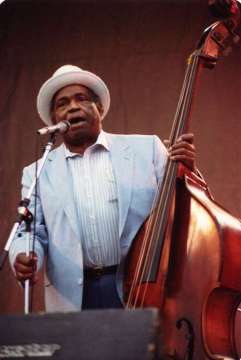
Willie Dixon: I Am The Blues

by The Blues Blogger: http://thebluesblogger.com/692/willie-dixon-i-am-the-blues  

Today music legend Willie Dixon would have been 98 years old. The following is a piece I wrote in the spring of 2009. 

I’ve decided to re-post it to commemorate the man and this day in music history. And also for those who missed the article the first couple times around.
In The Year 1970
My brother and several of his friends packed their bags and followed their dreams. Their brash youthful spirit drove them to bigger places as they made a serious attempt at a career in the music business.

For me at the time, I was glum. I missed those magical moments when the boys would rehearse in the basement of our house … and so did The Big F who was my brother’s oldest friend.

The Big F was the roadie/bodyguard for the bands my brother was in. When my brother left town, he adopted me as a kid brother and often picked me up to hang out. One thing for sure, I never had a problem with bullies whenever I hung around with The Big F.

The man loved his music and would invite me over to his place where I marveled at his record collection. He would let me pick any album I wanted to listen to … I recall Willie Dixon’s I Am The Blues being a very intriguing choice back then…

The Big F had a drum kit in the basement of his house, and always played along to the tunes. And would often spring off his stool, grab some spoons and continue to tap along the walls, lamps, light switches and beverage glasses …
I Am the Blues
This is an album featuring some of Dixon’s classic material but this time with Willie showcasing his own creations. Willie Dixon was a force to be reckoned with and his presence continues to be felt in even today’s most modern blues and rock performers.

Here are the tracks on this album and some of the popular artists that performed them:

"Back Door Man" - The Doors
"I Can’t Quit You" - Led Zeppelin
"The Seventh Son" - Sting
"Spoonful" - Cream
"I Ain’t Superstitious" - The Yardbirds
"You Shook Me" - Led Zeppelin
"I’m Your Hoochie Coochie Man" - Muddy Waters
"The Little Red Rooster" - The Rolling Stones
"The Same Thing" - Muddy Waters

This album only represents a small portion of Willie Dixon’s contribution to the music world. Many people today are unaware that Dixon was the original composer of many of the classic songs we know and love …

His singing on I Am The Blues may not be as distinct as those who adopted these tunes, but it’s very humbling to hear the master voice his own work.

If you haven’t heard this album before, or just looking to rediscover a gem, you’ll love this terrific piece of music history … very cool and inspiring indeed.
Willie Dixon
Willie Dixon was born July 1, 1915 in Vicksburg, Mississippi. Dixon was first introduced to blues as a teenager when he served time on prison farms in Mississippi. He wrote poetry and adapted them into songs.
“The blues will always be, because the blues are the roots of all American music. As long as American music survives, so will the blues.”
In 1936 Dixon left Mississippi for Chicago. He stood tall and weighed in at over 250 pounds. Taking up boxing; he became successful enough that he won the Illinois State Golden Gloves Heavyweight Championship (Novice Division) in 1937.

Dixon even turned professional and worked briefly as Joe Louis’ sparring partner. His brief boxing career ended after getting into a money dispute with his manager.

After composing and playing in many local groups, Dixon eventually signed to Chess Records as a recording artist. He began performing less and started getting more involved with the label.

Dixon became a full time employee with Chess in 1951, where he acted as producer, A&R talent scout, session musician and staff songwriter. His relationship with the label was nervy at times, but his output and influence was extraordinary.

He worked with all the greats such as Chuck Berry, Muddy Waters, Howlin’ Wolf, Little Walter and Sonny Boy Williamson II, just to name a few.

Later in his life, Willie Dixon became a diligent representative of the blues and a vocal supporter for his peers founding the Blues Heaven Foundation.

The organization works to preserve the genre’s legacy and protect copyrights and royalties for blues musicians who were exploited in the past. The foundations’ current vice president is Willie’s grandson Alex Dixon …

Willie Dixon was granted a Grammy Award in 1989 for his album Hidden Charms. He was also inducted into the Rock and Roll Hall of Fame in the “early influences” (pre-rock) category in 1994.

It’s impossible to cover the incredible legacy of Willie Dixon in just one post. So I won’t even attempt it … Dixon was undeniably the greatest blues songwriter of his era and is credited with writing more than 500 songs by the end of his life.

Now it’s time to turn this post over to the readers … So what are your feelings? How familiar are you with his 1970 release I Am The Blues? Any Dixon tunes covered by other bands or musicians that are your favorites? Your comments and birthday wishes are welcome below …

The Blues Blogger - See more at: http://thebluesblogger.com/692/willie-dixon-i-am-the-blues#sthash.c74Vnwyy.dpuf

Saturday, June 29, 2013

Who Is Bobby Z?

by Kathy Unruh

I like to refer to my favorite folk singer as Bobby Z (A.K.A. Bob Dylan) whose real name is Robert Zimmerman. He changed his last name to Dylan (after the Welsh poet Dylan Thomas) very early in his career.

One of his most popular songs, Knockin On Heaven's Door, was written for a movie score about Pat Garrett and Billy the Kid...

One of the reasons I like Bob Dylan, is because he isn't afraid to speak his mind. His lyrics can be painfully honest and very convicting too. They make an impact on the listener, often providing them with a different perspective to consider.

Bob often stuck his neck out on controversial issues during the Civil Rights movement and the Viet-Nam War era which caused a great divide among people. They either loved him, or hated him, but no one could ever ignore him.

He, himself doesn't really seem to care what anyone thinks. He just does his own thing and remains who he is. There is no hype.

Like all musician/songwriter's, Dylan's songwriting drew from people he admired, the most important influence in his early years being the American folk singer Woody Guthrie.

Woody was a man who cared about and spoke for the people of his generation through songs like This Land Is Your Land.

Woody's son, Arlo Guthrie, was a contemporary of Dylan's who also became famous during the sixties. Arlo wrote the song "Alice's Restaraunt" among others, and was one of the many well known rock icons who performed at the Woodstock festival.

In 1979 Dylan declared that he had become a "born-again Christian" and was heard playing harmonica on the album "No Compromise" with the popular contemporary-Christian recording artist Keith Green.

Dylan later went on to win his first Grammy Award that same year with a Contemporary Chirstian album of his own called "Slow Train Coming."

Bob Dylan's influence on the direction of popular music is legendary. He was inducted into the Rock and Roll Hall of Fame in 1989.

During the ceremony Bruce Springstein said Bob Dylan ... "broke through the limitations of what a recording artist could achieve, and changed the face of rock and roll forever."

Other notable artists such as Jimi Hendrix, The Byrds, Eric Clapton, Gun's and Roses, have covered Dylan's songs and re-created their own hit versions of ...

- All Along the Watchtower - Jim Hendrix
- Hey Mr. Tambourine Man - The Byrds
- Knockin On Heavens Door - Eric Clapton / Guns and Roses

Undoubtedly, the songs that Bob Dylan gave us will continue to inspire musicians and songwriters for years to come.

Free Guitar Lesson Video:
Knockin On Heaven's Door

Article Source: http://EzineArticles.com/?expert=Kathy_Unruh
http://EzineArticles.com/?Who-Is-Bobby-Z?&id=7639941

Friday, June 28, 2013

Keep Your Political Views Out of My Music! The Demise of Protest Songs

by Ahmed Salifou

Like most industrial operations, the business of creating and selling music is consumer-driven. That is to say, if music buyers want to have their cake and eat it too, music sellers must be able to whip up one mean Red Velvet in order to compete effectively.

Faced with a diverse clientele, individuals tasked with marketing and selling music have to meet an array of demands that encompass all sorts of musical preferences.

So, for instance, if demographic trends suggest that teenage girls respond more favorably to feel-good dance music (for lack of a more stereotypical example), it is up to marketing gurus to introduce them to what would surely be the next Katy Perry or One Direction radio hit.

Music consumers, depending on factors such as age, socioeconomic standing and gender, crave countless varieties of songs; however, if there is a certain musical species that has, over the years, become endangered due to waning consumer interest, it is that of protest music-the genre-less musical domain that, more or less, pushes for social change through political advocacy.

Protest music has left an indelible mark in the annals of music history courtesy of rebellious songs such as Bob Dylan's "The Times are Changing, Gil Scott-Heron's "The Revolution Will Not be Televised" and Public Enemy's "Fight the Power."

Unfortunately, over the past decade, such music has increasingly been passed over in favor of more lighthearted tunes-a phenomenon that has sparked the curiosity of many music critics, myself included.

There are many theories in circulation as to why music consumers are demanding less political inspiration from their favorite artists, most of which posit an overall decrease in political awareness on the part of younger generations.

But, before getting to the meat of such theories, it would be best to revisit the past as a way of getting a better understanding of the extent to which protest music - a melodic medium that once captured the essence of living in an imperfect world-has been reduced to nothing more than an antiquated form of expression.

WWII, Vietnam, Apartheid and Other Reasons to Condemn the Establishment

The WWII era would mark the emergence of protest music in America.

As growing pro-communist sentiments began to transform the political landscape of the mid 40s, musicians such as Woody Guthrie would further such transformation by composing politically-driven folk songs such as "This Land is Your Land"- a popular oldie whose vague lyrics often mask the anti-private ownership message that underlies it.

As Guthrie and fellow folklorists, including renowned artists Alan Lomax and Lead Belly, popularized protest folk music in the 40s, artists such as Bob Dylan would take the sub-genre to new heights in the 60s.

In 1964, Dylan released what many critics consider to be the quintessential protest song: "The Times They Are-a Changing." The song, as the title suggests, serves as an admonition against rejecting the social change that transpired during the Civil Rights Movement.

And if Dylan redefined protest music in the 60s, Marvin Gaye would rejuvenate the very essence of the genre in the early 70s.

Released in 1971 and widely regarded as Gaye's magnum opus, "What's Going On" can be aptly described as a mellifluous commentary on not just the Vietnam War era, but much of the political and social turmoil that plagued an early 70s America.

By the 80s, the domain of protest music had transformed into a vast musical empire whose boundaries encompassed a variety of musical genres, from heartland rock, as Bruce Springsteen's "War" would suggest, to reggae, as evidenced by Bob Marley's "Redemption Song."

As the late 80s/early 90s arrived, the protest music empire would expand to even greater proportions with the emergence of politically-driven rap.

As legendary icons such as Public Enemy reproached police brutality and institutionalized racism with heated rhythmic rhetoric, most notably "Fight the Power," protest music would begin to exude a certain grittiness the likes of which had previously been a rarity in music.

Such grittiness would become all the more common in protest music when Tupac Shakur would steal the hip-hop limelight in the late 90s with the release of unforgettable hits such as "Changes."

As the 90s culminated in mainstream radio subsuming protest music, the 20th century would forever stand as a testament to the latent popularity of exercising free speech through songs.

As previously mentioned, politics has had an everlasting impact on the art of music; however, if there is one major difference between the protest music of today and that of the 20th century, it is that the latter gained the admiration, approval and acceptance of an increasing number of music consumers.

The former, however, since the arrival of the 21st century, has played a diminishing role in the mainstream media. Such phenomenon has struck the curiosity of many critics, including renowned songwriter Billy Bragg who condemned contemporary music for its political naivety.

"Look at what's happening in the world: the credit crunch; our young people getting maimed in a war that nobody knows how to resolve," opined Bragg in an interview with The Guardian.

"When I was first plying my trade, people were willing to talk about these issues. Now they'd rather write about getting blasted than changing the world," he added.

Bragg's sentiments are shared by many fans of protest music: The truth is protest music no longer appeals to music consumers as it once did.

But why? For one, it would not be implausible for one to argue that there is a positive correlation between political awareness and liking for protest music.

And considering the fact that the younger generation, which makes up a considerable portion of music consumers, is not as well-informed as previous generations, it also would not be implausible for one to theorize that an overall decline in political awareness among music buyers has contributed to the fall of protest music.

In the book Young People and Social Change, author Andy Furlong argues, "The trend towards less engagement in politics among the young appears to signal a generational change," adding, "Any decline in political participation among the current generation of young people has to be set against what was perhaps a relatively high level of involvement among the 'baby-boomers' generation who were particularly active in youth counter-cultures."

To the theorist, it is the younger generation's lack of political interest that has contributed to the fall of protest music.

But to the politically-attuned music listener, there is one truth and one truth only: Protest music is slowly sinking into oblivion ... and unless we, music consumers, demand it, music may never again serve as medium through which one can push for a righteous cause while bringing out your inner dancer.

Article Source: http://EzineArticles.com/?expert=Ahmed_Salifou
http://EzineArticles.com/?Keep-Your-Political-Views-Out-of-My-Music!-The-Demise-of-Protest-Songs&id=7816647

Wednesday, June 26, 2013

Bob Dylan's Greatest Hits By The Numbers

Bob Dylan holds a cue card in the music video ...
Bob Dylan holds a cue card in the music video for "Subterranean Homesick Blues" (Wikipedia)
by Garrett Sawyer

You'd think that with a legendary career like Bob Dylan's that he would have an extremely long "greatest hits" list.

Ironically he hit Billboard's American Top 40 a grand total of only twelve times.

For anybody new to Dylan here's a rundown of the few songs that actually charted, in reverse order from lowest to highest:

Subterranean Homesick Blues, #39 in 1965

His first hit, it contained the classic line, "You don't need a weather man to know which way the wind blows."

George Jackson, #33 in 1971

This was a tribute to the Black Panther leader, George Jackson. Jackson had been shot and killed by guards at San Quentin Prison on August 21, 1971. The famous Attica Prison riot was partially attributed to the shooting.

Hurricane, Part 1, #33 in 1976

This was the first portion of Dylan's eight minute leadoff song from "Desire" about how Rubin "Hurricane" Carter was allegedly framed for a 1966 triple murder in Patterson, New Jersey.

Just Like A Woman, #33 in 1966

Rumored to be about Edie Sedgwick this was a song whose lyrics Dylan, according to historian Sean Wilentz, improvised in the studio by singing "disconnected lines and semi-gibberish". Don't you wish you could improvise like this?

Tangled Up In Blue, #31 in 1975

With his marriage to Sara Lowndes falling to pieces Dylan penned this epic allegory of their relationship, how they came together, fell apart, came back together and fell apart again.

Gotta Serve Somebody, #24 in 1979

Dylan became a born-again Christian in the late 1970s, recorded two albums of gospel music, and lost a few fans (again). This was Dylan's way of reminding everybody (perhaps himself included) that no one is ever totally their own master.

I Want You, #20 in 1966

Rolling Stone declared "Blonde on Blonde" to be the ninth greatest album of all time. It yielded this hit.

Knockin' On Heaven's Door, #11 in 1973

Isn't it nice when you can star in a movie and get a hit song out of it? That's exactly what happened when Dylan starred in Pat Garrett and Billy the Kid.

Positively 4th Street, #7, charted for 7 weeks in 1965

Laden with imagery of retribution this was supposedly Dylan's response to so-called "friends" from the folk community who, from the sound of it, stabbed Dylan in the back (figuratively, of course).

Lay Lady Lay, #7, charted for 11 weeks in 1969

Suddenly Dylan lurched country, recording with Nashville musicians and doing a duet with Johnny Cash.

Rainy Day Women #12 and 35: #2 for one week in 1966

He practically laughed all the way through this gleeful litany of a double entendre. Everybody's got to get stoned, like the adulterous woman in the Gospels nearly was, only to find that he's probably talking about getting high the whole time.

Like A Rolling Stone, #2 for two weeks in 1965

There's not much you have to say about this song. Rolling Stone proclaimed it the single greatest song of all time. In an era when hit songs weren't supposed to run for more than about three minutes or so Dylan's accusatory anthem ran on for over six unprecedented minutes.

And these are just the ones that charted! All this goes to show is that innumerable terrific songs don't necessarily sell, make it to the Top 40 charts or get the radio airplay they genuinely deserve.

The rest of Bob Dylan's "Greatest Hits", if you judge by the quality of the songs themselves, would doubtless make a list that would run several pages.

If you like then you'll like a song inspired by the story of a young soldier who returned from Iraq. For a limited time only you can download that song for FREE by clicking HERE.

Download your free song at: http://www.garrettsawyer.net/am/.

Article Source: http://EzineArticles.com/?expert=Garrett_Sawyer
http://EzineArticles.com/?Bob-Dylans-Greatest-Hits-By-The-Numbers&id=7813232

Enhanced by Zemanta

Tuesday, June 25, 2013

The Fleetwood Mac Story

by RetroKimmer: http://www.retrokimmer.com/2013/06/the-fleetwood-mac-story.html

There are  three  Fleetwood Mac lineups. One of them is the blues-oriented band of the late sixties, which arrayed three guitarists (Peter Green, Jeremy Spencer and Danny Kirwan) around the rhythm section of Mick Fleetwood and John McVie. 


Green inspired B. B. King to say, "He has the sweetest tone I ever heard; he was the only one who gave me the cold sweats".

Green was eventually diagnosed with schizophrenia and spent time in psychiatric hospitals undergoing electroconvulsive therapy during the mid-1970s. Many sources attest to his lethargic, trancelike state during this period.

Early in 1971, a born-again Jeremy Spencer abruptly left the band during a U.S. tour to join the Children of God.


The second key configuration found Fleetwood, McVie and Kirwan joined by keyboardist Christine McVie (born Christine Perfect, she’d married bassist McVie) and guitarist Bob Welch, a Southern Californian who became the group’s first American member and a harbinger of new directions.

This configuration produced a pair of ethereal pop masterpieces, Future Games (1971) and Bare Trees (1972). Kirwan, who was having personal problems, was asked to leave in August 1972.

The remaining foursome, joined by new recruits Dave Walker (vocals) and Bob Weston, recorded Penguin (1973); sans Walker, they cut Mystery to Me (1973).

Drummer Fleetwood heard a tape of theirs at a studio he was auditioning, and the pair were drafted into the group without so much as a formal audition. This lineup proved far and away to be Fleetwood Mac’s most durable and successful.


Finally, the platinum edition of Fleetwood Mac came together in 1975 with the recruitment of Lindsey Buckingham and Stevie Nicks. The San Francisco duo had previously cut an album together as Buckingham-Nicks.

In addition to the most solid rhythm section in rock, this classic lineup contained strong vocalists and songwriters in Buckingham, Nicks and Christine McVie. Male and female points of view were offered with unusual candor on the watershed albums Fleetwood Mac (1975) and Rumours (1977).

Thursday, June 20, 2013

Mods Versus Rockers: Brighton, 1964

Battle of the Mods & Rockers. Hastings 1964.
Battle of the Mods & Rockers. Hastings 1964. (Photo credit: Phil Sellens)
by Andy J Wilson

The Mods, with their sharp Italian suits and parkas, contrasted totally with the leather-coated and long-haired rockers.

The mods regarded the rockers as old-fashioned, grubby and oafish, while the rockers regarded the mods as being effeminate, snobbish and weedy.

There is a clear contrast between the metropolitan and the rural shades of Britain which the mod/rocker dichotomy illustrates.

The musical tastes differed markedly too. Mods favored Jazz, Reggae and Soul while the rockers revered the giants of the rock n' roll era such as Elvis Presley and Eddie Cochran.

Throughout the early 1960s, mods and rockers would engage in brawls in many of Britain's seaside towns, particularly along the South coast. Towns such as Margate, Bournemouth, Brighton and Clacton were the scene of much gang-warfare at this time.

In 1964, news-stories appeared which gave the impression of a full-scale war between the two tribes. The media's role in the conflict was central from the outset.

Consequently the mod/rocker war became a subject of interest for the sociologists, psychologists and other society-pundits.

Some saw the conflict as typical male-youth behavior while others regarded it as a new phenomenon; this being relevant when we consider that the growth of technology and the economy had now made possible mass-ownership of scooters and bikes.

The mod scene had been noted for its sophistication and fashion-savvy; it now found itself somewhat unfairly recast as the tribe for deviants and hooligans.

Battles between the two often occurred where territories overlapped, or where rival factions happened on one another. As noted, there was an urban-rural split, meaning that the groups could only fight if brought together by some co-incidence.

Most often, such a scenario would involve an encounter at one of the seaside towns; the getaway destination of choice for British youth in an era before mass air-travel.

In these battles, mods would often be armed with fish-hooks and razors which they had sewn into their jacket-lapels to shred the fingers of an assailant. This was a common tactic of the Teddy Boy gangs of the late 1950s.

Weapons were used by both sides of course, including flick-knives, coshes and bike-chains. The various brawls and conflicts escalated throughout the early 1960s, culminating in Clacton in 1964 during the Easter weekend.

The second round of the violence that began in Clacton occurred a month later during the Whitsun weekend break, when large numbers of rocker and mod gangs descended on Margate, Brighton and Broadstairs, each side unaware they had decided on the same rallying destination.

The rival gangs were openly fighting, often tearing up deckchairs or whatever breakable objects came to hand. Brighton saw the worst of the violence, which raged for two days before moving on to Hastings.

It then spilled back into Brighton where one group of rockers had become trapped on the beach there. Despite attempts by the police to protect them, they were assaulted by gangs of mods.

The newspapers lapped it up, describing the battles as being of "disastrous proportions". The mods and rockers were labeled as "sawdust caesars" and "louts".

Many newspaper editorials fanned the flames of hysteria, with the Birmingham Post in 1964 warning that the mods and rockers were "internal enemies" in the UK. If unchallenged, it went on, they (the mods and rockers) would "bring about the disintegration of a nation's character".

The magazine Police Review argued that the mods and rockers purported lack of respect for law and order would cause violence to "surge and flame like a forest fire".

Some sociologists argued that as media-hysteria about knife-wielding violent mods increased, the image of the fur-collared parka and scooter was bound to provoke punitive reactions among the public.

As a result of the media-coverage, two British MPs visited the seaside areas to survey the damage. This lead to MP Harold Gurden calling for a resolution of intensified measures to control hooliganism.

Prosecutors in the trial of some of those arrested during the fighting in Clacton had argued that neither faction had "serious views" and lacked respect for law and order.

However, there was some suspicion that the media had in some cases used false photographs, interviews and fictional characters to get mileage from the events, many proving unrelated to the mod/rocker issue.

When the media had exhausted real news items, they would publish deceptive headlines with loaded sub-headers such as 'Violence'; often above a report which contained no description of violence at all.

This constant branding by free-association to all things violent and criminal, saw the mods and rockers linked with any critical social issue of the day, such as teen-age pregnancy, drug-abuse and violence.

In this light, the events of Brighton in 1964 can be seen as being a huge media-hype of a situation that had not been planned for, in marked contrast to what was implied by the stream of press-reports at the time.

Its effect was to tarnish the mod image of sophisticated cool with an altogether more sinister aspect; totally distracting from the enormously significant impact that the mod-scene had on British pop and fashion culture; enriching it and paving the way for a more diverse and multicultural society.

The author operates an online clothing shop that specialises in mod t shirts. We stock a large selection of designs including scooter and mod target roundel t shirts.

Article Source: http://EzineArticles.com/?expert=Andy_J_Wilson
http://EzineArticles.com/?Mods-Versus-Rockers:-Brighton,-1964&id=7725967

Enhanced by Zemanta

Saturday, May 25, 2013

"Buy the Ticket, Take the Ride": Tom Wolfe, Hunter S. Thompson

English: Hunter S. Thompson, Miami Book Fair I...
Hunter S. Thompson, 1988 (Wikipedia)
by Cristina Owen, Chronicles of a Travel Addict: http://chroniclesofatraveladdict.com/2011/09/25/buy-the-ticket-take-the-ride/

I first heard of the expression, “buy the ticket, take the ride” when I read Tom Wolfe’s The Electric Kool-Aide Acid Test.

At the time, while I tripped along the words, riding along in the Magic Bus with Ken Kesey and his gang of acid-trippin’ hippies (including Neal Cassady and Hunter S. Thompson), I had never read anything by Hunter S. Thompson.

I had the fortune to see the movie “Fear and Loathing in Las Vegas”, starring Johnny Depp and Benicio del Toro while I was living in Santa Monica, getting my bachelor’s degree in American Literature and Culture.

Kind of ironic, if you think about it, that the very man Tom Wolfe deemed the twentieth century’s greatest writer in the English language would never appear in any of the coursework I took at UCLA. Maybe he had been discussed in another class’s coursework, but none of mine.

Anyhow, when I first saw “Fear and Loathing”, it made me feel like I was on some serious hard-core drugs. And, at that point, I hadn’t done anything beside drink and smoke pot. A quasi-square, if you will. Well, not really.

I don’t know why, but it took me about nine years to get around to reading the book. It was one of those that you get sucked into, the depravity, paranoia, and excess fascinating you just as much as it repulses you.

It makes you laugh because of how ridiculous the characters are, and because you can also identify with the protagonist and his side-kick- at least just a little bit.

Truthfully, reading the book made me very anxious and weary for sometime after it, which testifies not only to the connection Thompson was able to establish with his readers, but also to his powerful writing abilities.

Hunter S. Thompson believed that writers were rock stars, and I fail to come up with a better way to describe his lifestyle.

I don’t profess to be an expert on his writing or his life, but after watching “Gonzo: The Life and Writing of Hunter S. Thompson” and “Buy the Ticket, Take the Ride”, I’m convinced more than ever that this man was truly a gem of a human being.

Definitely a drugged-up, violent, balls-out kind of gem in all of his lunacy, but still something special nonetheless.

Here was a man who drank a bottle of Wild Turkey a day, did a vast rainbow of drugs (uppers, downers, hallucinogenics, you name it), had 22 loaded guns in his home, ran with the Hells Angels, tripped with the Kensian Hippies, drove crazy fast, woke up at 5pm to start his day and ended up shooting his brains out the way Hemingway had.

He was unprofessional, individualistic to an extreme, and lived in mad, mad ways that many upstanding citizens couldn’t even construe in their wildest nightmares.

Aside from that, his journalistic style was reflective of his inability to divorce reality from fantasy, and most of the time revolved around his antics rather than the events he was supposed to be reporting on.

Aside from the craziness, whether or not one is willing to admit it, Thompson was also a brilliant writer and photographer that blazed massive trails into this fictionalized, hallucinatory new type of journalism.

I think what’s most interesting about his character (and he was a character, one that he created and would have to live up to) was how much he cared about society.

He believed in the right to the American Dream, in people’s rights to live however the fuck they wanted, and was very politically involved (he even ran for Mayor of Aspen, the two-thumbed Gonzo fist becoming his character’s personal logo).

He cared deeply about his “doomed generation”, and from what I’ve seen, it pained him greatly to see his country being consistently faced with adversity, whether it be war, anti-drug policies, or the loss of faith in freedom.

People were drawn to this man - actors, artists, women - and I can see why. I’ve been thinking a lot lately about squares and how many people are trapped in their way of living so as not to appear a certain way to others, or so that others will open their doors to them.

I think that the economic hardships that have plagued our country in the past three or four years, individuality has suffered a great deal, for everyone is trying to fit into that cookie-cutter image in order to find and maintain a job.

Maybe that’s not so for others, but I personally have felt this kind of pressure to act, think, behave and dress in such a boring fashion in order to find gainful employment that it makes me yearn for more and more craziness.

I don’t necessarily promote the violence or boyish antics that he employed, but do believe that Thompson lived his life in a big, colorful, vibrant manner. He was constantly in the face of death, on the brink, toeing the edge - and there’s a lot to say about that.

To play it safe is to drown in boredom. To me, life isn’t about staying in check; it isn’t about behaving so as to please the masses. It’s about passion and doing what makes your head spin and your heart smile, and sometimes about telling the status quo establishments to fuck off.

What can I say, I think Hunter S. Thompson’s life and body of work are great sources of inspiration. We have to remember that life is meant to be lived, and not simply endured.
Enhanced by Zemanta

Saturday, April 13, 2013

Classic Rock: The Groundbreakers

English: Led Zeppelin, January 1975, Chicago
Led Zeppelin, January 1975, Chicago (Wikipedia)
by Michael Pickett

With the enduring popularity and classic status of bands like The Beatles, The Who, Led Zeppelin, Rush and others, we sometimes lose sight of how groundbreaking these bands were when they first hit the airwaves and stereos of music fans decades ago.

Having just seen the huge splash of acts like Elvis, Chuck Berry and Buddy Holly, The Beatles were something of a groundbreaking act back in the early 1960s.

They had harmonies, they played their own instruments, and their songwriting was superb.

Previously, artists were recording songs mandated by their record companies or even covering established hits. The Beatles were one of the first acts to write and record their own original material (and actually have huge hits come on the heals of this unheard of activity).

Just a few years later, The Who took the mod look and their edgier pop sound and began to add heavier elements to their songs, recordings and performances.

Songs like 'My Generation' would give way to the crushing 'Won't Get Fooled Again' and Who performances would quickly incorporate exploding drum-kits and smashed guitars at the hands of Keith Moon and Pete Townsend.

Longer songs with intricate keyboard sequences and dynamic movements and sections started to border on the progressive.

In the meantime, bands like Cream and Led Zeppelin were also creating more intricate material with heavy, hyper-amplified rock as the underpinnings.

While Zeppelin and Cream refer to themselves as beginnings of heavy metal; darker, heavier groups like Black Sabbath and Judas Priest would end up becoming the benchmark by which all early metal was judged.

As bands like Zeppelin had hinted at elements of progressive rock, Genesis, Yes and Rush made the genre all their own. With incredibly long and convoluted songs sometimes taking up the entire side of a vinyl album, these bands not only saw less airplay, but blew the doors off of what was considered high levels of musicianship.

Eventually, all three bands would find their way back onto the airwaves with shorter, more concise songs. Side-by-side with progish bands like Kansas and Styx, these acts became classic rock staples as they also packed arenas around the world with fans hungry for the incredible levels of musicianship each band encapsulated.

Within the span of just a decade, a wide variety of acts had broken ground in incredible ways, turning the record industry on its ear time and time again.

Today, as we look back through the annals of classic rock, many of these acts have been taken for granted because of the distance between their initial pioneering efforts and today's entertainment climate.

The fact is, without some of these groundbreaking acts, music would simply not sound the way it does today.

Craving the sound of classic rock in the style of Def Leppard or U2? ... check out Pickett's free music at: http://www.m-overdrive.com/pickett.

Article Source: http://EzineArticles.com/?expert=Michael_Pickett
http://EzineArticles.com/?Classic-Rock:-The-Groundbreakers&id=7625204

Enhanced by Zemanta