Showing posts with label Psychedelic Obscurities. Show all posts

Tuesday, November 14, 2017

The Creme de la Creme of Cream’s Jack Bruce

by John Montagna, Culture Sonar: 
http://www.culturesonar.com/creams-jack-bruce/


Legendary bassist, vocalist and composer Jack Bruce passed away just over three years ago. His groundbreaking work with Cream in the 1960s made him a household name and bonafide rock star. But his unpredictable, genre-defying solo catalog is where the real goodies are to be found. 

Originally hailing from the tough streets of Glasgow, John Symon Asher Bruce began his career as a jazz bassist in his teens. Later he studied cello and composition at the Royal Scottish Academy of Music and Drama, but the Academy frowned upon its students playing jazz; they demanded he choose between school and his jazz gigs. Fortunately Jack (wisely) quit school and ultimately made his way to London and its vibrant jazz and R&B scene. 

Keeping company with top players such as Alexis Korner, John Mayall, Graham Bond, and (of course) Ginger Baker and Eric Clapton, his bold, melodic approach on acoustic AND electric bass set him apart from the pack. 

It is that spirit of adventure and experimentation that makes Jack Bruce’s solo work so captivating and addictive. He was equally adept at the fearless improvisation of jazz, the raw power of the blues and rock and roll, and harmonically rich compositions that reflect his early classical training. He was also unconcerned with the commercial potential of his solo recordings, choosing instead to follow wherever his muse led him. 

With such a rich and eclectic body of work it’s difficult to choose which of his albums to start with, but in my opinion these three are the purest examples of Jack Bruce at his essential best. If you’ve only heard him with Cream, you don’t know Jack.


A Question of Time (1989)
An excellent primer, possibly the closest Jack ever came to making a “mainstream pop” album. But don’t let the smooth, streamlined production fool you. 

The full spectrum of Jack’s unique musical language is represented here, from head-banging rock (“Life On Earth”) to greasy funk (“Grease The Wheels”), down-and-dirty blues (“Blues You Can’t Lose”) and a dreamy, soulful ballad based on an old Scottish folk song (“Make Love”). 

Jack glues it all together with thick bass lines from his Warwick fretless (some of his most potent playing on record) and his then-45-year-old voice, still strong and full of emotional power. Guests include Living Colour’s Vernon Reid, P-Funk’s Bernie Worrell, legendary jazz drummer Tony Williams, blues master Albert Collins, and his old Cream mate Ginger Baker. A stunner.
Things We Like (1970, recorded in 1968)
Jack’s solo career is marked by bold choices. His first move after the demise of Cream was a return to the upright bass for this frenetic “free jazz” session featuring drummer Jon Hiseman, saxophonist Dick Heckstall-Smith, and guitarist John McLaughlin (yes, THAT John McLaughlin). 

Egged on by old mates from his London jazz days, Jack mercilessly attacks his upright like Charles Mingus after a quart of Irish coffee (one wonders why he didn’t record on upright more; he’s a monster!).

Jack claims to have written most of the tunes on TWL when he was twelve years old, and the quartet gets right down to post-bop business using them as springboards for some mind-blowing group improvisation. Lean, mean and uncompromising, Things We Like is (dare I say it) far more compelling than the “live” half of the double Wheels of Fire album!

Harmony Row (1971)
In 1970 Jack toured sporadically with Tony Williams’ Lifetime, but the pioneering fusion group only saw marginal success. Returning home to London, Jack wrote an entire series of songs in one afternoon, and by January 1971 he was committing them to tape at Command Studios with ace session guitarist Chris Spedding and Soft Machine drummer John Marshall. 

The music on Harmony Row is unlike anything Jack (or anyone else) has produced: atonal harmonies, unorthodox song structures that allow for fiery group improvisation, and abstract lyrics by Jack’s longtime collaborator Pete Brown about post-war Britain, societal decay and complicated relationships.

Jack later referred to HR as his favorite album, and it’s easy to see why. Taking the album’s title from a tenement street in Glasgow not far from where he grew up, the nod to his humble roots and the personal nature of the music make Harmony Row a singular artistic statement by a singular artist. It feels like the musical heart of Jack Bruce: restless, always exploring new territory, sometimes dangerous and confusing, other times beautiful and profound.
PS.  A meditation on a legendary musical instrument and how it shaped rock and jazz … and an interview with another English blues-lover who shaped rock music.
Photo: Pierre Manevy (Express/Hulton Archive/Getty Images)

Tuesday, October 31, 2017

Bootleg Series #21: Jack Bruce & Friends: Fillmore East, New York, NY, USA // 31st January 1970

Jack Bruce has long been one of my all time favourite bassists due to his work with Cream but I’m ashamed to say that aside from his 1969 solo album Songs For A Tailor, I’m not overly familiar with the rest of his solo career. However that changed after hearing this excellent recording of a show he played at Fillmore East in New York with Jack Bruce & Friends, which includes Mitch Mitchell on drums, Larry Coryell on guitar and Mike Mandell on organ. The band only played seventeen dates together between the 24th January and 1st March 1970 and sadly there are less than a handful of live recordings of them. Thankfully, however, this late show recording from the 31st January is one of them.
The band open with the Cream song Politician. Immediately it’s obvious that Bruce has no hesitation in playing old material from previous bands unlike Eric Clapton who refused to play any Cream songs in Blind Faith aside from the odd track when the crowds demanded it. From Bruce’s point of view, he wrote them, so why shouldn’t he play them? While this version of Politician lacks Clapton’s explosive lead guitar work you can really get a sense of how the song sounds with an expanded lineup and the addition of a keys player. Mike Mandell on organ doesn’t do anything extraordinary here but he manages to lay down beautiful tones behind the bass, guitar and drums that gives the song a steady foundation that perhaps wasn’t there in the Cream version. It’s an extremely enjoyable listen which makes me wonder if this is what Cream’s sound would have gone on to become had they invited Steve Winwood to join them.
  1. Politician
  2. Weird Of Hermiston/Tickets To Waterfalls
  3. HCKHH Blues
  4. We’re Going Wrong
  5. The Clearout
  6. Sunshine Of Your Love
  7. Smiles And Grins (Jam)
A two song medley follows Politician which features two tracks from Bruce’s 1969 debut album Songs For A Tailor. The first is Weird Of Hermiston which is one of my favourite tracks on the album. Before listening to this bootleg I hadn’t heard a live version of this song before and while parts of the song are a little different in a live setting, I absolutely love it. Bruce’s strong vocal performance dominates the song and manages to control the band and audience perfectly. The band themselves are on top form here and you can really sense they are starting to get into things as they go straight from Weird Of Hermiston into Tickets To Waterfalls. The two songs are actually the other way around on the studio album but the rotation works perfectly and the band kick it up a notch in the process. The jam sections of this particular song are some of the best from the whole show and emphasise how great the band sound together, even though they were only a unit for a short amount of time.
The fourth song is taken from Bruce’s 1970 solo album Things We Like which was actually recorded when he was still with Cream in August 1968. The album wouldn’t be released until late 1970 in the UK but the band performed the song HCKHH Blues at Fillmore East. Whereas the studio version is all jazz the band transform the song into a blues/rock monster reminiscent of Cream with the addition of a more jazz based guitarist and an organ. It’s a wonderful track with an incredible amount of energy from start to finish. This is the first time you get to fully appreciate Mitch Mitchell on drums who lays down some incredible grooves from start to finish in a way only he can. It’s a sublime performance that lasts just short of nine minutes and even though the track changes directions numerous times the band never lose the energy or focus. We’re Going Wrong comes next which gives the show a needed mellow moment after the previous track. It’s impossible to compare these Cream numbers to when Cream actually performed them because they are just so different. The music may be the same, the lyrics might not have changed, but the way the songs are performed are different with Jack Bruce & Friends. It’s a really good rendition with the organ playing a key role although it’s sometimes difficult to hear on this particular recording.
After a brief break the band return with a song Bruce originally wanted to include on Cream’s 1967 album Disraeli Gears called The Clearout. This song can be heard being played by Cream in the studio on the expanded set Those Were The Days which was released in 1997 but it was left off and eventually included on Bruce’s debut Songs For A Tailor. It’s a great track and to be honest suits his solo album a lot more than Cream so I think it was the right choice in the end, although I would have liked to have heard a finished Cream version. While the album version is just two minutes and forty three seconds long the band here extend it to seven minutes which really gives it the life and depth that it deserves as a song. It’s great. Then, out of nowhere, the explosive riff that could only be Sunshine Of Your Love sends tremors through the auditorium and the crowd goes wild. The organ here sounds excellent paired with the bass and guitar, giving the riff some added depth. Mitch Mitchell on drums lays down the kind of grooves that he did when performing the track with Hendrix and then it hits you that two members of arguably the two best trios of all time are playing together on stage. It’s a monumental moment.
Nine minutes later the final song begins called Smiles And Grins, a song which wouldn’t be released in studio format until Bruce’s 1971 album Harmony Row. The studio song itself wasn’t recorded until a full year after this show so this is an early jam rendition which rounds the show of perfectly. In 1970 there were a lot of bands that copied Cream’s lead of jamming entire songs like The Allman Brothers Band and the Grateful Dead so it’s great to hear Bruce do what he did best in Cream once again. I’ve long thought that jamming brings out the best in musicians to the point where they have to think things up on the spot and this is exactly what happens here. The audience obviously feels the same as they explode with applause as the song comes to an end, capping off a magnificent show.
Peter Iacontino – Audience Member: “I was at that show. Mountain was also on the bill, we went to see Jack. I think Jack opened the show, Mountain was the headliner. Jack and the band were good. Played about one hour, I remember it filled the whole 60 minute tape. It was a more jazzy show with Larry Coryell on guitar, Mitch Mitchell on drums and Mike Mandel on organ. I think Jimi Hendrix was at the show also! It was a great night for music!
The cassette recorder I used for the show was new technology for 1970. It had a built in mic. The reason I’m telling you is because we had first row seats. I put the recorder on the stage. No one said anything. The Fillmore East was such a cool place to see concerts!”
I’d spoke to Peter previously about other concerts at Fillmore East including Derek and the Dominos, so to find out that this recording of Jack Bruce & Friends was his was very special. There are a vast number of great bootlegs recorded at Fillmore East and it was obviously a very special place not only to go and see bands but also to bootleg. As Peter says, no-one said anything to him when he put his recorder on the stage. And as far as recordings go it is extremely good to the point where a bit of remastering could result in an official live album, or at least some kind of official bootleg release like The Allman Brothers Band have done over the years.
This particular period of Bruce’s career isn’t widely talked about which is disappointing given the great music the band played right here on this bootleg. And as I mentioned at the beginning of this article, Jack Bruce & Friends weren’t together for that long and less than a handful of good recordings are known to exist. But thankfully Peter brought his cassette recorder that night because it was a great show. We can’t thank him enough.

Monday, October 23, 2017

VIDEOS: Watch David Gilmour Play the Songs of Syd Barrett with the Help of David Bowie and Richard Wright

by , Open Culture: http://www.openculture.com/2017/10/watch-david-gilmour-play-the-songs-of-syd-barrett-with-the-help-of-david-bowie-richard-wright.html

Though he eventually disappeared from the public eye, Syd Barrett did not fade into obscurity all at once after his "erratic behavior," as Andy Kahn writes at JamBase, "led to his leaving" Pink Floyd in 1968. The founding singer/songwriter/guitarist went on in the following few years to write, record, and even sporadically perform new solo material, appearing on John Peel’s BBC show in 1970 and giving a long Rolling Stone interview the following year. He even started, briefly, a new band in 1972 and worked on new recordings in the studio until 1974.
Barrett released two solo albums, The Madcap Laughs and Barrett, in 1970. Like the solo work of Roky Erickson and Skip Spence—two other tragic psychedelic-era geniuses with mental health struggles—Barrett’s later compositions are frustratingly rough-cut gems: quirky, sinister, meandering folk-psych adventures that provide an alternate look into what Pink Floyd might have sounded like if their original intentions of keeping him on as a non-performing songwriter had worked out.
Assisting him during his studio sessions were former bandmates Roger Waters, Richard Wright, and David Gilmour. The band still admired his singular talent, but they found working, and even speaking, with him difficult in the extreme. As Gilmour has described those years in interviews, they carried a considerable amount of guilt over Barrett’s ouster. In addition to the heartbreaking tribute “Shine on You Crazy Diamond,” Gilmour has often performed Syd’s solo songs onstage in affecting, often solo acoustic, renditions that became all the more poignant after Barrett’s death in 2006.
In the videos at the top, you can see Gilmour play two songs from Barrett’s The Madcap Laughs—“Terrapin” and “Dark Globe”—and further up, see him play “Dominoes” from Barrett, with Richard Wright on Keyboards. Gilmour has also revisited onstage Pink Floyd’s earliest, Barrett-fronted, days. Just above, we have the rare treat of seeing him play the band’s first single, “Arnold Layne,” with special guest David Bowie on lead vocals. And below, see Gilmour and Wright play a version of the early Floyd classic “Astronomy Domine,” live at Abbey Road studios.
It was, sadly, at Abbey Road where the band last saw Barrett, when he entered the studio in 1975 during the final mixes of Wish You Were Here. Overweight and with shaved head and eyebrows, Barrett was at first unrecognizable. After this last public appearance, he felt the need, as Waters put it, to “withdraw completely” from “modern life.” But the tragic final months with Pink Floyd and few sightings afterward should hardly be the way we remember Syd Barrett. He may have lost the ability to communicate with his former friends and bandmates, but for a time he continued to speak in hauntingly strange, thoroughly original songs.
This collection of videos comes to us via JamBase.

Saturday, September 16, 2017

A Symphony of Sound (1966): Velvet Underground Improvises, Warhol Films It, Until the Cops Turn Up

by , Open Culture: http://www.openculture.com/2012/09/ia_symphony_of_soundi_1966_the_velvet_underground_improvises_warhol_films_it_until_the_cops_turn_up.html


"We’re sponsoring a new band," announced Andy Warhol at the end of the 1966 documentary posted here yesterday. "It’s called the Velvet Underground.” Brian Eno would much later call it the band that inspired every single one of its listeners to start bands of their own, but that same year, Warhol produced The Velvet Underground: A Symphony of Sound.

The film shows the group, which features young but now much-discussed rock iconoclasts like John Cale, Lou Reed, and (on tambourine) the German singer Nico, performing a 67-minute instrumental improvisation.

Shooting at his New York studio the Factory, Warhol and crew intended this not as a concert film but as a bit of entertainment to be screened before actual live Velvet Underground shows. It and other short films could be screened, so the idea developed, their soundtracks and visuals intermingling according to the decisions of those at the projectors and mixer.

"I thought of recording the Velvets just making up sounds as they went along to have on film so I could turn both soundtracks up at the same time along with the other three silent films being projected," said director of photography and Factory member Paul Morrissey, best known as the director of Flesh, Trash, and Heat.

"The cacophonous noise added a lot of energy to these boring sections and sounded a lot like the group itself. The show put on for the group was certainly the first mixed media show of its kind, was extremely effective and I have never since seen such an interesting one even in this age of super-colossal rock concerts." Alas, someone's noise complaint puts an end to the Symphony of Sound experience: one policeman arrives to turn down the amplifier, and Warhol tries to explain the situation to the others. But the bustle of the Factory continues apace.

Monday, July 17, 2017

VIDEOS: Psychedelic Scenes of Pink Floyd’s Early Days with Syd Barrett, 1967

by Mike Springer, Open Culture: http://www.openculture.com/2013/09/psychedelic-scenes-of-pink-floyds-early-days-with-syd-barrett-1967.html

Roger Waters of Pink Floyd turns 70 years old today. Waters was the principal songwriter and dominant creative force during the band's famous 1970s period, when it released a string of popular and influential concept albums such as Dark Side of the Moon, Wish You Were Here and The Wall. But today we thought it would be interesting to take you all the way back to 1967, when Waters was 23 years old and the band was led by his childhood friend Syd Barrett.
The video above is from a May 14, 1967 broadcast of the BBC program The Look of the Week. Pink Floyd hadn't released an album yet. Only two nights earlier the band had staged its attention-getting "Games for May" concert at the Queen Elizabeth Hall. In the TV broadcast, Pink Floyd plays its early favorite "Astronomy Domine" before Waters and Barrett sit down for a rather tense interview with the classically trained musician and critic Hans Keller. It's amusing to watch Keller's face as he expresses his extreme irritation at the band's loud, strange music. "My verdict is that its a little bit of a regression to childhood," he says with a grimace. "But after all, why not?"
Waters and Barrett manage to hold their own during the interview. Barrett comes across as lucid and well-spoken, despite the fact that his heavy LSD use and mental instability would soon make him unable to function within the band. By December of 1967, Pink Floyd would add guitarist David Gilmour to the lineup to compensate for Barrett's erratic behavior. By March of 1968 -- only 10 months after the BBC broadcast -- Barrett would quit the group.
We'll close with an even earlier video of Pink Floyd onstage. Filmed on January 27, 1967 at the legendary UFO club in London, the clip is from the February 7, 1967 Granada TV documentary So Far Out It's Straight Down. It shows the band playing another major song from its psychedelic era, "Interstellar Overdrive."

Wednesday, April 12, 2017

VIDEOS: Pink Floyd Performs on US Television for the First Time: American Bandstand, 1967

by , Open Culture: http://www.openculture.com/2016/04/pink-floyd-performs-on-us-television-for-the-first-time-american-bandstand-1967.html


Pink Floyd - Apples And Oranges - 1967 American... by pentathlonstart

You may have noticed we’ve been in the midst of a mini-sixties revival for the past decade or so - what with the retro soul of Alabama Shakes or the late Amy Winehouse, the garage rock of Ty Segall, and the California psych of Australia’s Tame Impala.

That’s to name but just a few students of sixties’ sounds; many hundreds more populate events like the Psych Fests of Austin and Liverpool. And before these bands, late eighties/early nineties brought us a British re-invasion of sixties garage rock and pop like the Jesus and Mary Chain, the Chameleons, the Stone Roses, Oasis, and many other jangly, fuzzy, dreamy bands.

All of that is to say it’s nearly impossible to hear anything sixties rock with fresh ears. Not only has the incessant nostalgia dimmed our senses, but we’ve seen the ideas of the sixties evolve into myriad subcultures variously indebted to the decade, but no longer even in need of direct reference.

What would it mean, however, to hear the far-out sounds of a band like Pink Floyd for the first time, a band who may at times sound dated now, but much of whose more obscure catalog remains shocking. And it’s easy to forget that when Pink Floyd - or “The Pink Floyd” as they tended to be called - got their start with original singer and songwriter Syd Barrett, they made a much different sound than those we’re familiar with from The Wall or Dark Side of the Moon.

If you haven’t heard the sound of the band circa 1967, when they recorded their first album Piper at the Gates of Dawn, then you may nod along with Dick Clark’s ambivalent introduction of them to U.S. audiences in the ’67 American Bandstand appearance above - their first visit to the States and first time of TV.

They do indeed make “very interesting sounds”: specifically, “Apples and Oranges,” the third single and the final song Barrett wrote for the band before he suffered a psychotic break onstage and was replaced by David Gilmour. There isn’t much in the way of performance (but stick around for the interviews around 3:25).

As pretty much everyone did at the time, Barrett, Roger Waters, Nick Mason, and Richard Wright mime to a pre-recorded track. And Barrett looks particularly out of it. He was close by this point to the crippling mental health crisis that would eventually end his career.


But Syd Barrett did not disappear from music right away. The unreleased “Scream Thy Last Scream,” slated to be the next single released after Piper at the Gates of Dawn, gave much indication of the musical direction he took in two 1970 solo albums, The Madcap Laughs and Barrett.

Like later Barrett, early Pink Floyd is not music for everyone. Instead of the familiar stomping funk of “The Wall” or the soaring blues of “Comfortably Numb,” the songs meander, twist, turn, and wobble, often indicating the state of Barrett’s troubled soul, but just as often showcasing his brilliant compositional mind. Barrett is gone, as is keyboardist Richard Wright, and Pink Floyd is no more. But their legacy is secure. And we still have mad geniuses like Austin psych legend Roky Erickson to kick around, as well as all the many thousands of musicians he and Barrett inspired. 

Josh Jones is a writer and musician based in Durham, NC. Follow him at @jdmagness


Friday, March 3, 2017

The History of Spiritual Jazz: Hear a Transcendent 12-Hour Mix Featuring John Coltrane, Sun Ra, Herbie Hancock and More

by , Open Culture: http://www.openculture.com/2016/09/the-history-of-spiritual-jazz.html


Jazz has inspired a great many things, and a great many things have inspired jazz, and more than a few of the music’s masters have found their aspiration by looking - or listening - to the divine. But that doesn’t necessarily mean they subscribe to traditional religion.

As befits this naturally eclectic music that grew from an inherently eclectic country before it internationalized, its players tend to have an eclectic conception of the divine. In some of their interpretations, that conception sounds practically all-encompassing. You can experience the full spectrum of these aural visions, from the deeply personal to the fathomlessly cosmic, in this four-part, twelve-hour playlist of spiritual jazz from London online radio station NTS.

“During the tumultuous ’60s, there was a religious revolution to accompany the grand societal, sexual, racial, and cultural shifts already afoot,” writes Pitchfork’s Andy Beta. “Concurrently, the era’s primary African-American art form reflected such upheaval in its music, too: Jazz began to push against all constraints, be it chord changes, predetermined tempos, or melodies, so as to best reflect the pursuit of freedom in all of its forms.”

This culminated in John Coltrane’s masterpiece A Love Supreme, which opened the gates for other jazz players seeking the transcendent, using everything from “the sacred sound of the Southern Baptist church in all its ecstatic shouts and yells” to “enlightenment from Southeastern Asian esoteric practices like transcendental meditation and yoga.”

It goes without saying that you can’t talk about spiritual jazz without talking about John Coltrane. Nor can you ignore the distinctive music and theology of Herman Poole Blount, better known as Sun Ra, composer, bandleader, music therapist, Afrofuturist, and teacher of a course called “The Black Man in the Cosmos.”

NTS’ expansive mix offers work from both of them and other familiar artists like Alice Coltrane, Earth, Wind & Fire, Herbie Hancock, Gil Scott-Heron, Ornette Coleman, and many more (including players from as far away from the birthplace of jazz as Japan) who, whether or not you’ve heard of them before, can take you to places you’ve never been before.

Start listening with the embedded first part of the playlist above; continue on to parts two, three, and four, and maybe - just maybe - you’ll come out of it wanting to found a church of your own.


Sunday, December 1, 2013

VIDEOS: Watch the Rolling Stones Write “Sympathy for the Devil”: A Highlight in Godard’s ’68 Film One Plus One

by , Open Culture: http://www.openculture.com/2013/11/godard-films-rolling-stones-writing-sympathy-for-the-devil.html

Josh Jones is a writer and musician based in Durham, NC. Follow him at @jdmagness


Naissance de "Sympathy for the devil " (one+one... by cinocheproduction

After the Rolling Stones’ partly misguided, partly inspired attempt at psychedelia, Their Satanic Majesties Request, the band found its footing again in the familiar territory of the Delta Blues.

But with the 1968 recording of Beggar’s Banquet, they also retained some of the previous album’s experimentation, taken in a more sinister direction on the infamous “Sympathy for the Devil.”

In the studio, with the band during those recording sessions, was none other than radical French New Wave director Jean-Luc Godard, who brought his own experimental sensibilities to a project he would call One Plus One, a document of the Stones’ late sixties incarnation - including an increasingly reclusive Brian Jones.

Godard punctuates the fascinating studio scenes of the Stones with what Andrew Hussey of The Guardian calls “a series of set pieces - an incoherent stew of Situationism and other Sixties stuff”:

Black Panthers in a disused car park execute white virgins; a bookseller reads aloud from Mein Kampf to Maoist hippies; in the final scene the bloodied corpse of a female urban guerrilla is raised to the Stones’ soundtrack as Godard himself darts about like a demented Jacques Tati waving Red and Black flags. You just don’t find this sort of thing at the local multiplex anymore.

For all of its heavy use of leftist Sixties iconography, its anarchic attempt to fuse “art, power and revolution,” and its fascinating portraiture of rock and roll genius at work, the film crash landed in France, earning the contempt of arch Situationist theorist Guy Debord, who called it “the work of cretins.”

Critics and audiences apparently expected more from Godard in the wake of the abortive May ‘68 student uprising in Paris, and the general neglect of the film meant that Godard missed his chance to, as he put it, “subvert, ruin and destroy all civilised values.”


The film’s producer, Iain Quarrier, also found it disappointing. Without the director’s permission, Quarrier decided to retitle One Plus One with the more commercially-minded Sympathy for the Devil and tack a completed version of that song to the last reel, a move that provoked Godard to punch Quarrier in the face.

But not everyone found Godard’s effort off-putting. In a 1970 review, the New York Times’ Roger Greenspun called it “heavily didactic, even instructional ... the prospective text of some ultimate, infinitely complex collectivism.” Greenspun also decried Quarrier’s unauthorized interventions.

In his retrospective take, Andrew Hussey admits that Godard’s political posturing is “bollocks,” but then concludes that One Plus One is “great stuff: a snapshot of a far-off, lost world where rock music is still a redemptive and revolutionary force.”

And it’s both - ridiculous and sublime, a powerful crystallization of a moment in time when all the Western world seemed poised to crack open and release something strange and new.

Watch Godard’s original film, One Plus One here (with Spanish subtitles); the trailer for the recast Quarrier version directly above; and the scenes where Godard captured the Stones’ giving birth to “Sympathy for the Devil” at the top.

It may be perfect viewing on “Black Friday,” that most absurd celebration of mindless consumerism.

Thursday, November 28, 2013

VIDEO: Sun Gazing

Sunday, September 15, 2013

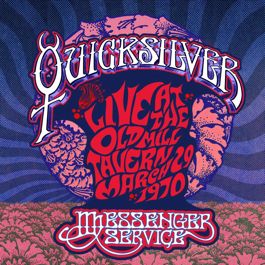
ALBUM REVIEW: A Shot of Quicksilver at the ‘Old Mill Tavern’

Quicksilver Messenger Service live album 1970
by , Psychedelic Sight: http://psychedelicsight.com/9420-quicksilver-live-cd/

The holy grails for Quicksilver Messenger Service fans are, alas, the stuff of dreams, and no more.

There will never be a classic studio album that captured the original lineup of the San Francisco band in its fiery glory - a record that enshrines them in the psychedelic music pantheon.

Nor will there surface another live set of the primo quality of “Happy Trails.”

Into the gap have come a stream of live recordings, some barely above bootleg quality.

A startling exception came in April, with the release of “Live at the Fillmore - June 7, 1968,” a double CD from Purple Pyramid (Cleopatra) Records.

Now we have the label’s follow-up, “Live at the Old Mill Tavern - March 29, 1970.” It captures Quicksilver as it entered (or re-entered) the Dino Valenti era, as a six-piece, before the singer-songwriter turned the remains of the band into his supporting cast.

The late Valenti often got the Yoko Ono treatment for the downfall of the original psychedelic Quicksilver, justifiably so to some extent. “From many accounts,” Dave Thompson writes in the liner notes, Valenti “was already treating his bandmates as though they were hired hands.”

But this set finds Valenti bringing strengths to the lineup, as does ace pianist Nicky Hopkins. The band had just released “Shady Grove,” which (perhaps tellingly) gets no promo push in the set list. Instead, we get five new Quicksilver songs (out of eight), none of them yet recorded.

Personnel on the single-CD album are Valenti, Hopkins and the classic quartet - Gary Duncan (guitar, vocals), John Cipollina (guitar), David Freiberg (bass, vocals) and Greg Elmore (drums). The audio is better than you’d expect, a bit trebly but OK.

This being live Quicksilver, there’s “Mona,” and it’s a corker. Clocking in at a relatively restrained 8 minutes. Guitarists Cipollina and Duncan are up to their old tricks, weaving lines like jazz masters. Check out the killer wah-wah, the power of Elmore’s tribal pounding and the bar-band roll of Hopkins’ keyboards.

Valenti’s singing on “Mona” is strong and direct, hard to fault - there’s a powerful bit when the band steps up to sing gruff harmony, on the “need you baby and it ain’t no lie” line.

The album opens with “Subway” (“I’m just a country boy”) which wouldn’t find its way on record until 1970 (“What About Me”). It’s focused and obviously the most-rehearsed number.

The next song, the snappy blues “The Truth,” came out in ’71. And the other solid original, the hard rocker “Mojo,” remained on ice until 1972.

“Baby, Baby,” another song from “What About Me,” is so new Valenti half-seriously asks the audience for suggestions on how to make it work: “We’ve never heard it before we walked up on the stage.” It has a ragged charm, unlike the lame eco-protest “Rain” that follows.

For some, the five new songs will simply be prelude to two extended jams with the harp player James Cotton - adding up to about 23 minutes.

The first piece (“Stepping Out”) is a terrific piece of blues rock, with Cotton snake-charming the band. You half expect to hear Paul Butterfield’s vocals kick in. The lengthy second jam (“Flip Flop and Fly”) is more of the same, with extended soloing.

Liner notes writer Thompson argues that this record is proof that, at least for the moment, “one of the finest jam bands in history (wasn’t) becoming a folky-rocky-pop vehicle for singer-songwriter Valenti.” History, he writes, “can take a flying jump.”

Liner notes: Bo Diddley, composer of “Mona,” lived on some land outside Gainesville, Fla., in the late 1970s. My pal Bill wrote a feature article about the old Chess Records rocker, who wasn’t getting much run in those days. Newspaper editors around the country were eager to print the story, though. I was along for the ride when Bill brought Diddley a stack of clippings.

Diddley was gruff but nice enough. He spent much of our hourlong visit complaining about the people who’d robbed him of his music and his money. At one point, he broke out one of his famous cigar-box-shaped guitars and played some of those immortal riffs, standing there in a field.

When he opened the guitar case, he pulled out a T-shirt advertising some oldies concert and threw it my way (I wore it to tatters).

Anyway, I asked Bo Diddley what he thought of Quicksilver Messenger Service and their half-hour takes on his songs. He looked at me through half-closed eyes and said he’d never heard of them. But, he was sure, they were robbing him of his music and his money.

Tuesday, September 10, 2013

VIDEO: Psychedelic Scenes of Pink Floyd’s Early Days with Syd Barrett, 1967

by , Open Culture: http://www.openculture.com/2013/09/psychedelic-scenes-of-pink-floyds-early-days-with-syd-barrett-1967.html


Roger Waters of Pink Floyd turns 70 years old today.

Waters was the principal songwriter and dominant creative force during the band’s famous 1970s period, when it released a string of popular and influential concept albums such as Dark Side of the Moon, Wish You Were Here and The Wall.

But today we thought it would be interesting to take you all the way back to 1967, when Waters was 23 years old and the band was led by his childhood friend Syd Barrett.

The video above is from a May 14, 1967 broadcast of the BBC program The Look of the Week.

Pink Floyd hadn’t released an album yet. Only two nights earlier the band had staged its attention-getting “Games for May” concert at the Queen Elizabeth Hall.

In the TV broadcast, Pink Floyd plays its early favorite “Astronomy Domine” before Waters and Barrett sit down for a rather tense interview with the classically trained musician and critic Hans Keller.

It’s amusing to watch Keller’s face as he expresses his extreme irritation at the band’s loud, strange music. “My verdict is that its a little bit of a regression to childhood,” he says with a grimace. “But after all, why not?”

Waters and Barrett manage to hold their own during the interview. Barrett comes across as lucid and well-spoken, despite the fact that his heavy LSD use and mental instability would soon make him unable to function within the band.

By December of 1967, Pink Floyd would add guitarist David Gilmour to the lineup to compensate for Barrett’s erratic behavior. By March of 1968 - only 10 months after the BBC broadcast - Barrett would quit the group.

We’ll close with an even earlier video of Pink Floyd performing at the legendary UFO club in London.

Filmed on January 27, 1967, the clip is from the February 7, 1967 Granada TV documentary on British youth culture, So Far Out It’s Straight Down. Pink Floyd plays another major song from it’s psychedelic era, “Interstellar Overdrive.”

Thursday, September 5, 2013

VIDEO: A Symphony of Sound (1966): Velvet Underground Improvises, Warhol Films It, Until the Cops Turn Up

by , Open Culture: http://www.openculture.com/2012/09/ia_symphony_of_soundi_1966_the_velvet_underground_improvises_warhol_films_it_until_the_cops_turn_up.html


“We’re sponsoring a new band,” announced Andy Warhol at the end of the 1966 documentary posted here yesterday. “It’s called the Velvet Underground.”

Brian Eno would much later call it the band that inspired every single one of its listeners to start bands of their own, but that same year, Warhol produced The Velvet Underground: A Symphony of Sound.

The film shows the group, which features young but now much-discussed rock iconoclasts like John Cale, Lou Reed, and (on tambourine) the German singer Nico, performing a 67-minute instrumental improvisation.

Shooting at his New York studio the Factory, Warhol and crew intended this not as a concert film but as a bit of entertainment to be screened before actual live Velvet Underground shows.

It and other short films could be screened, so the idea developed, their soundtracks and visuals intermingling according to the decisions of those at the projectors and mixer.

“I thought of recording the Velvets just making up sounds as they went along to have on film so I could turn both soundtracks up at the same time along with the other three silent films being projected,” said director of photography and Factory member Paul Morrissey, best known as the director of Flesh, Trash, and Heat.

“The cacophonous noise added a lot of energy to these boring sections and sounded a lot like the group itself. The show put on for the group was certainly the first mixed media show of its kind, was extremely effective and I have never since seen such an interesting one even in this age of super-colossal rock concerts.”

Alas, someone’s noise complaint puts an end to the Symphony of Sound experience: one policeman arrives to turn down the amplifier, and Warhol tries to explain the situation to the others. But the bustle of the Factory continues apace.

Colin Marshall hosts and produces Notebook on Cities and Culture. Follow him on Twitter at @colinmarshall.

Monday, August 26, 2013

Robert Crumb Illustrates Philip K. Dick’s Infamous, Hallucinatory Meeting with God (1974)


“I saw God,” Fat states, and Kevin and I and Sherri state, “No, you just saw something like God, exactly like God.” And having spoke, we do not stay to hear the answer, like jesting Pilate, upon his asking, “What is truth?” - Philip K. Dick, VALIS.

In the months of February and March, 1974, Philip K. Dick met God, or something like God, or what he thought was God, at least, in a hallucinatory experience he chronicled in several obsessively dense diaries that recently saw publication as The Exegesis of Philip K. Dick, a work of deeply personal theo-philosophical reflection akin to Carl Jung’s The Red Book.

Whatever it was he encountered - Dick was never too dogmatic about it - he ended up referring to it as Zebra, or by the acronym VALIS, Vast Active Living Intelligence System, also the title of a novel detailing the experiences of one very PKD-like character with the improbable name of “Horselover Fat.”
LSD-triggered psychotic break, genuine religious experience, or something else entirely, whatever Dick’s encounter meant, he didn’t let the opportunity to turn it into art slip by him, and neither did outsider cartoonist and PKD fan Robert Crumb.

In issue #17 of the underground comix magazine Weirdo, Crumb narrated and illustrated Dick’s meeting with a divine intelligence in the appropriately titled “The Religious Experience of Philip K. Dick” (see the comic in motion in the awkward, amateur video above).

The comic quotes directly from Dick’s telling of the event, which began with a wisdom tooth extraction and was ultimately triggered by a golden Christian fish symbol worn around the neck of a pharmaceutical delivery girl.

Most PKD fans will be familiar with the story, whether they treat it as gospel or not, but to see it illustrated with such empathetic intensity by Crumb is truly a treat.

If you only know Crumb as the creator of lascivious Rubenesque women and schlubby, druggy horndog hipsters (like Fritz the Cat), you may be surprised by these emotionally realist illustrations.

If you know Crumb’s more serious work, like his take on the book of Genesis, you won’t. In either case, fans of Dick, Crumb, or - most likely - both, won’t want to miss this.

Friday, August 23, 2013

The 10-Minute, Never-Released, Experimental Demo of The Beatles’ “Revolution” (1968)

by by Josh Jones, Open Culture: http://www.openculture.com/2013/08/the-10-minute-never-released-experimental-demo-of-the-beatles-revolution.html

Josh Jones is a writer and musician based in Washington, DC. Follow him at @jdmagness
 

What is a “Revolution”? The question might precede a lengthy disquisition on political philosophy; it might presage a manifesto redefining an old, worn-out term; it might open up a vinyl-era flight of theoretical fancy over the qualitative dimension of Revolutions Per Minute.

As an opening gambit to a discussion of The Beatles’ “Revolution” (and “Revolution 9”), perhaps the question ventures on the truth of versions, alternates, “takes,” as much a part of history as toppling regimes and mass movements.

How does all of this heaviness get into pop music? Ask John Lennon. Well, no, ask his music. Ask the history of his music, the alternates, the hidden intentions, false starts, discarded revolutionary movements.

Ask, “Revolution Take 20,” the alternate take of “Revolution” that you hear above. “Revolution 20” has a lot to say.

It tells us about how a noisy, upbeat shooby-doo-wop blues proclaiming the power of love over violence did not originally do so with such starry-eyed optimism and comforting pop brevity (the kind of thing that sells Nikes, for instance).

“Revolution” had other intentions, which we only glimpse in the song’s severed vestigial tail “Revolution 9,” and which we may have had quite enough of, thank you, in the arty weirdness of Yoko Ono’s most experimental work.

You see, “Revolution” and non-Nike-worthy “Revolution 9” once belonged to the same animal, a creature that evolved from Lennon’s (and Ono’s) fascination with musique concrète, and with deconstructing rock music into something unrecognizable.

The kind of revolution “Revolution 20” stages isn’t the dichotomous option between peace and love theatrics or reactionary violence.

It’s a revolution of form, which is what Lennon seems to be after here, a new way of being that dissolves contradictions in the silly Freudian shtick of Paul McCartney and George Harrison singing “Mama … Dada …” over and over as the classical tropes of rock and roll warp and wobble around them in disintegrating pitch shifts, radio noise, and spoken word non-sequiturs.

At over ten minutes in length, “Revolution Take 20” - which appeared as a mono mix on a 2009 bootleg CD called Revolution: Take … Your Knickers Off (after a piece of Lennon humor at the intro) - is more than an alternate take.

It’s an alternate history, one in which Lennon doesn’t just lay in bed for peace; he lays down on the studio floor to record his vocals, and all the while his mind actively disassembles rock and roll.

As the recording engineer Brian Gibson remembers the session: “John decided he would feel more comfortable on the floor so I had to rig up a microphone which would be suspended on a boom above his mouth. It struck me as somewhat odd, a little eccentric, but they were always looking for a different sound; something new.”

That Lennon ultimately decided to divide this monster into Revolutions 1 and 9 does not mean that he’d given up on making “something new.”

Perhaps it was a marketing decision; maybe he realized that he had a hit on his hands. Less, cynically, perhaps he felt that pop music could not contain the weight of his desire to move beyond, or to dissolve, the seeming false choices on offer.

Friday, July 26, 2013

VIDEO: Savoy Brown - "Looking In" (1970)


by sociallylubricated70
Savoy Brown - "Looking In" from the album "Looking In" (1970)

Thursday, July 25, 2013

VIDEO: Shiva's Headband - California Mountain Klopper

by christos christaras

Shiva's Headband, an early Texas psychedelic rock band, formed in Austin in 1967. The group was the house band at the Vulcan Gas Company, a late 1960s Austin nightclub.

The band is credited with a significant role in the founding of the Armadillo World Headquarters. The bands first royalty check opened the club and hired Eddie Wilson as manager. Shiva's Headband was also the first band to perform there.

Throughout the 1960s and early 1970s, the band played with touring acts such as Spirit, Steppenwolf, ZZ Top, Janis Joplin, Canned Heat and Steve Miller.

Austin psychedelic bands contemporary to Shiva's Headband included the 13th Floor Elevators and Conqueroo.

Shiva's Headband's Capitol Records album, Take Me To The Mountains, produced by bandleader Spencer Perskin with Fred Catero, became the first record released nationally by an Austin-based rock band. The album cover featured artwork by Jim Franklin.

In 1973, the band had an onscreen performance in the film, The Thief Who Came to Dinner, a Houston-based production that starred Ryan O'Neal and Jacqueline Bisset.

Tuesday, July 23, 2013

VIDEO: Pink Floyd: Atom Heart Mother (Live in Saint Tropez 1970)


by Daniela Aurora

David Gilmour: vocals, guitar
"Mick" Mason: drums, percussion
Roger Waters: vocals, bass
Richard Wright: organ, piano

Monday, June 24, 2013

You Aren't Like Them: Timothy Leary

by Retro Kimmer: http://www.retrokimmer.com/2013/06/you-arent-like-themtimothy-leary.htm


“Admit it. You aren’t like them. You’re not even close. You may occasionally dress yourself up as one of them, watch the same mindless television shows as they do, maybe even eat the same fast food sometimes. But it seems that the more you try to fit in, the more you feel like an outsider, watching the “normal people” as they go about their automatic existences.
 

For every time you say club passwords like “Have a nice day” and “Weather’s awful today, eh?”, you yearn inside to say forbidden things like “Tell me something that makes you cry” or “What do you think deja vu is for?” Face it, you even want to talk to that girl in the elevator.
 

But what if that girl in the elevator (and the balding man who walks past your cubicle at work) are thinking the same thing? Who knows what you might learn from taking a chance on conversation with a stranger? Everyone carries a piece of the puzzle. Nobody comes into your life by mere coincidence. Trust your instincts. Do the unexpected. Find the others…”. - Timothy Leary.

Thanks to Paul Metler for reminding us ...

Saturday, December 15, 2012

VIDEO: 9:Las Vegas Tango Part One 1/2 by Soft Machine

Hi readers,

This is great - the early days of prog rock with Soft Machine? What do you think?

Uploaded to YouTube by derkriegistauf