Showing posts with label Eric Clapton Tributes. Show all posts

Tuesday, April 4, 2017

CLASSIC ALBUM SERIES #15: Eric Clapton - From The Cradle

by Tom Caswell: https://tomcaswell.net/2017/04/01/classic-album-series-15-eric-clapton-from-the-cradle/

English: Eric Clapton Rotterdam June 23, 1978
Eric Clapton Rotterdam June 23, 1978 (Wikipedia)
For the 15th instalment of my CLASSIC ALBUM SERIES I turn to Eric Clapton’s incredible 1994 album From The Cradle, an album which saw him return to electric blues with one hell of a bang.

Two years earlier Clapton had recorded and released his Unplugged live album which contained a number of high quality acoustic blues performances and From The Cradle certainly expanded on his return to the blues.

The album opens with a fantastic version of the Leroy Carr song Blues Before Sunrise with influence taken from the Elmore James version. 

It’s a roaring rendition which certainly sets the tone for the rest of the album with Eric playing slide guitar, something he doesn’t usually do but has done occasionally over the years. He sounds great here and plays with authority, classic Clapton. 

The Willie Dixon song Third Degree comes next which sees Clapton supply some tasteful blues kicks throughout. It’s a slow blues number and Chris Stainton also plays some great piano here which compliments Eric’s playing exquisitely. 

But it’s perhaps the Lowell Fusion number Reconsider Baby where Eric really hits his stride. From a personal point of view it’s my favourite song on the album and it’s difficult to think of the last time Eric played the blues so perfectly before this. It’s a performance that was captured live on Later … with Jools Holland when Eric made an appearance on the show in 1995 and you can tell that Eric really gets into it, and the same can be said for the studio version here. It is absolutely stunning and reminds you that even after the multiple rock albums since 1970, he is primarily a blues guitarist. And one of the all time best.
  1. Blues Before Sunrise
  2. Third Degree
  3. Reconsider Baby
  4. Hoochie Coochie Man
  5. Five Long Years
  6. I’m Tore Down
  7. How Long Blues
  8. Goin’ Away Baby
  9. Blues Leave Me Alone
  10. Sinner’s Prayer
  11. Motherless Child
  12. It Hurts Me Too
  13. Someday After A While
  14. Standin’ Around Crying
  15. Driftin’
  16. Groaning The Blues
Hoochie Coochie Man comes next and the band as a whole really sound great here. It’s a song that has been covered by a wide range of artists over the years and it’s perhaps this version that has inspired blues bands and performers since it’s release on this album. I know it has with me. 

The great Five Long Years is the fifth song on the album and Eric really goes off here both vocally and on guitar. His guitar playing is explosive to say the least and on vocals he gives one of his finest performances on the whole album. It’s a great song which was originally recorded by Eddie Boyd in 1952 and hugely satisfying to listen to with Eric supplying some great guitar playing, something this album has in abundance.

The Sonny Thompson penned track I’m Tore Down is a song that was originally performed by the great Freddie King, a huge influence of Clapton dating back to when he first took up the guitar. It was of course Freddie King’s album Let’s Hide Away And Dance Away that was hugely influential on Clapton upon its release in 1962.

The acoustically driven How Long Blues follows the electrifying I’m Tore Down and sees Clapton in a more laid back mood, showing that the blues isn’t always fast paced Chicago Blues numbers. It’s the second Leroy Carr song on the album after the opener and features some great harmonica playing from Jerry Portnoy who had previously toured with the legendary Muddy Waters. His harmonica paired with Eric’s slide guitar and Stainton on piano results in a beautifully delivered song.

Goin’ Away Baby follows and again features Portnoy on harmonica where he mimics Clapton’s vocal lines while also performing a really good solo towards the end. Blues Leave Me Alone is a slow shuffle blues with forceful drumming and sees Eric deliver yet another fine vocal display. He’s obviously known mostly for his guitar playing but there’s no doubt that he’s become one of the finest blues singers the genre has ever seen, and this song captures him at his very best. 

Sinner’s Prayer features one of my favourite Clapton guitar tones on this album. It’s thick, muddy, and overdriven. Perfect for the kind of blues the album contains. The next song, Motherless Child, is my least favourite song on this album although it’s probably the most well known. It’s an ok song but for me personally I prefer the kind of blues that features in the next song, It Hurts Me Too. 

Just like Blues Before Sunrise, Eric takes on slide guitar duties and blows everything away in the process. There’s footage of him and his band playing this song on tour which shows the Gibson guitar he plays slide on, but it’s perhaps this studio version here that features the better tone which is certainly more focused. His slide playing here is phenomenal and from a personal point of view it’s a song, and a performance, that inspired me to start playing slide too. 

Another Freddie King song comes next in the form of Someday After A While and there’s no doubt that Clapton is at his very best when playing Freddie King songs. He nails it every time. There were a number of other King songs he played while touring this album, often played consecutively, and his playing on all of them is up there with the best guitar playing he has ever done. And Someday After A While is no exception.

Standin’ Around Crying by Muddy Waters is the third to last song and it’s a great rendition of a classic song. A slow blues number, the whole band sound fantastic here with the harmonica being one of the standout parts. 

Things then turn acoustic for the last time on the album with Driftin’, a song and a performance that could have been taken from his Unplugged album two years earlier. In a live setting this song would turn into an electric beast with the running time extended to 8 minutes or more while also including multiple key changes. But here it’s a 3 minutes acoustic blues track and sounds great for it. Simple, basic, pure acoustic blues. 

To end the album Eric turns thing up to 10 with a roaring rendition of Groaning The Blues. Vocally he is a man possessed here, ending the album on a high. His guitar playing dominates the song as well. There are a number of songs that are more band songs on the album but here, to end the album, it’s all Eric. The rest of the band take a back seat and let him do his thing the way only he could.

In terms of impact it’s a fantastic blues album and in many ways, in regards to his playing, it’s a perfect successor to the Bluesbreaker album he released with John Mayall in 1966. His blues playing here is absolutely incredible and showed the world and his doubters that Eric Clapton is, was and always will be a GOD.

Friday, September 2, 2016

CLASSIC ALBUM SERIES #6: Blind Faith – Blind Faith

00602537803637-cover-zoomby Tom Caswell: https://tomcaswell.net/2016/08/31/classic-album-series-6-blind-faith-blind-faith/

1969 saw the formation of one of rocks most underrated and under-appreciated supergroups in the form of Blind Faith. 

Formed by Eric Clapton and Steve Winwood initially, bassist Ric Grech and drummer Ginger Baker would join a little later and the outcome of this musical melding of minds was their self titled album, Blind Faith, released in August 1969.

The album opens with Had To Cry Today which gives you your first taste of this gorgeous album. Clapton’s guitar playing is immediately infectious but in a different manner to his playing in Cream. The tone is softer, the playing is more delicate and there’s more intimacy between each of the band members. Steve Winwood is sublime on vocals and that’s a trend that continues throughout the whole album.

Can’t Find My Way Home is the second song which is dominated by acoustic guitar. Without taking anything away from the other songs, it’s by far the stand out track on the album. Winwood’s singing is as good as you’ll ever hear him but it’s the guitar that really stands out the most. There are two versions of this song, the acoustic on the album and an electric version which wasn’t officially released until the deluxe edition came out in 2001. Both are superb but the acoustic guitars add a beauty to it that is indescribable.
  1. Had To Cry Today
  2. Can’t Find My Way Home
  3. Well All Right
  4. Presence Of The Lord
  5. Sea Of Joy
  6. Do What You Like
Well All Right is a Buddy Holly cover and the only cover on the album. It’s a fun rendition with the band on top form just like the two previous songs. The piano and guitar playing fit together seamlessly while Baker does his thing on drums as only he could. With this song you really start to understand the direction Blind Faith are going with their music, with each of the songs sounding nothing like anything the band members had done previously in their previous bands.

Presence Of The Lord comes next which is an original Clapton number but Winwood takes lead vocal duties thanks to the insistence of Clapton himself. Clapton would eventually sing the song over a year later with Derek and the Dominos but with Blind Faith it was up to Winwood to do his thing which he does brilliantly. The solo section towards the middle/end of the song is superb, Clapton’s only lead part of the song. 

Sea Of Joy and Do What You Like are the final two songs, bringing the relatively short album to a close. Sea Of Joy is a Winwood original and a song that is often under-appreciated on the album as a whole. There’s a wonderful violin section played by bassist Ric Grech which adds another element to the band and their music, a unique aspect which continued in a live setting when they were on tour. There are a few photos of Grech playing violin with the band on their US tour.  

Do What You Like is a song written by Ginger Baker and the longest song on the album due to the inclusion of a long drum solo. It’s an extremely pleasing song to listen to though and Clapton’s guitar solo before the drum solo is unlike anything he ever played before. It’s superb.

Overall Blind Faith is a fantastic album and will (sadly) remain under-appreciated compared to other albums from that time period. It doesn’t help that the band are yet to be inducted into the Rock And Roll Hall Of Fame, something that is well overdue considering the amount of rubbish that manages to get in instead. Hopefully that changes soon and more people become aware of this gem of an album.

Saturday, August 20, 2016

BOOTLEG SERIES #15: Eric Clapton – Frost Amphitheatre, Stanford University, Palo Alto, CA, USA // 9th August 1975


Eric’s return to to the stage in 1974 saw him free from a certain demon for the first time since his Dominos period but a new demon had taken it’s place in the form of alcohol. As a result, there are a number of bootlegs from shows in 1974 that show Eric at his very worst. Unable to sing in key, unable to play like he once did, it’s one of the saddest things to listen to as a Clapton fan. 

But there were a number of shows where things came together brilliantly and this show at Frost Amphitheatre at Stanford University on the 9th August 1975 is one of them.

The band open with Layla which Eric originally recorded with Derek and the Dominos five years earlier. Compared to versions from bootlegs in 1974, Eric is on form vocally and the band sound incredibly tight. I don’t think any version of Layla post-1970 can be compared to when Derek and the Dominos played the song live on tour due to the lack of Jim Gordon and Duane Allman, but Clapton and George Terry manage to do the song justice.

Knockin’ On Heaven’s Door is the second song which, personally, is an odd choice. It’s a good rendition but after six minutes of explosiveness in Layla it kills off any kind of momentum the band gathered since beginning the show. Tell The Truth manages to save things magnificently though and you immediately get the feeling that this should have followed straight after Layla

The opening guitar riff sets the tone well and Clapton sounds great on vocals, as does the rest of the band on their respective instruments. The guitar solo sections sound great and Carl Radle’s trusted and solid bass playing drives the song further and further towards blues/rock heaven.
  1. Layla
  2. Knockin’ On Heaven’s Door
  3. Tell The Truth
  4. Can’t Find My Way Home
  5. Key To The Highway
  6. Carnival
  7. Take Me Down To The River
  8. Badge
  9. Better Make It Through Today
  10. Blues Power
  11. Ramblin’ On My Mind
  12. Let It Rain
  13. Eyesight To The Blind (with Carlos Santana)
Things then turn acoustic with a laid back version of Blind Faith’s Can’t Find My Way Home. The song picks up brilliantly as it goes on with a well played harmonica solo in the mix. 

It’s followed closely by Key To The Highway which at this point is the third song to feature from Clapton’s Derek and the Dominos period. Whereas the version that featured on the Layla album contained explosive guitar playing from Clapton and Duane Allman, this version is more laid back. Clapton sounds good on vocals and when he takes a guitar solo mid-way through the song it resembles some of his former glory with the Dominos resulting in a thoroughly enjoyable performance. The song builds and builds over its near nine minute length after which the willing crowd roars its approval. 

The song Carnival follows which would feature on Clapton’s next studio album No Reason To Cry a year later in 1976. He introduces it as a “new one” before the band perform an extremely enjoyable rendition of the song, cemented by Jamie Oldaker’s superb drumming. The guitar playing on this track is nice too and you can sense the enjoyment coming from the band.

After Carnival comes Take Me Down To The River which takes the show in a different direction, but sadly the song is nothing more than a filler track. The band sound great but it pales in comparison to Badge, the song that follows. Clapton is in fine form here and the instrumental section is one of the highlights of the entire show with each member of the band firing on all cylinders. When you think things come to an end near the five minute mark, you’re hugely mistaken, because Clapton re-enters with that downward chord progression that makes Badge so enjoyable to listen to. 

Things then head in a more mellow direction with Better Make It Through Today from 1975’s There’s One In Every Crowd album. The song begins beautifully with Clapton singing from his soul before he turns things up a notch with a wah drenched solo mid-way through the song. The band and their ability to change the tone of this song is superb as they end it the way it begin, laid back and mellow before immediately feeding straight into Blues Power from Clapton’s debut 1970 solo album. 

This song was one of the most explosive when played by Derek and the Dominos, especially on their US tour of 1970, and the explosiveness returns in full force here, albeit in a slightly different form due to the larger band. Clapton shows why he is considered one of the greatest guitarists of all time magnificently well here with a fine solo beginning at around the three minute mark.

Clapton then goes back to basics with a rendition of the Robert Johnson number Ramblin’ On My Mind, a song he first recorded with John Mayall and the Bluesbreakers nearly a decade previously. The song is completely different to the Mayall version but Clapton’s heart and soul remain the same, resulting in a fantastic performance. This version actually resembles The Sky Is Crying from There’s One In Every Crowd when it comes to song structure. Same beat, same guitar, very similar indeed. But still great.  

Let It Rain comes next with those familiar opening chords before the full band come in, with Clapton arguably giving his best vocal performance of the entire show. On some songs you can hear the difference in his voice compared to that of five years previously with Derek and the Dominos, but with this version of Let It Rain he sounds exactly the same in delivery. 

The whole song is a fine band effort and a fantastic way to bring the show to an end, but only until they re-appear with Santana in tow for a run through of Eyesight To The Blind from The Who’s film Tommy. It’s fantastic to hear these two guitar greats go at it and at one point you can hear Clapton lay down a few licks from the song All Your Love from the Bluesbreakers album. Very special.

Overall it’s a fantastic show and a great quality bootleg. Clapton shows during 1974 and 1975 were very hit or miss but this one at at Frost Amphitheatre at Stanford University is one of the best available with Clapton on fine form and at the top of his game musically and vocally. A joy to listen to.

CLASSIC ALBUM SERIES #4: John Mayall & The Bluesbreakers – Blues Breakers with Eric Clapton

Blues Breakers with Eric Clapton
Blues Breakers with Eric Clapton (Photo credit: Wikipedia)


July 22nd 1966 saw the release of what has become the greatest British blues albums of them all, Blues Breakers with Eric Clapton. 

The album set the benchmark for all blues albums that followed, cemented by Clapton’s explosive guitar tone thanks to the majestic bonding between a Gibson guitar and a Marshall amplifier. 

Not only is it the greatest British blues album but it’s also one of the great albums of all time, period.

The album opens with the Otis Rush number All Your Love, a cracking way to begin. The song manages to capture everything great about the Bluesbreakers from Mayall’s unique vocals, Clapton’s explosive guitar, McVie’s pounding bass and Flint’s driving rhythm that is the back bone of the entire song. 

It’s followed by Hideaway which has arguably become the standard version of the song, the original of course being by the late great Freddie King who Clapton was hugely influenced by at the time. Even though it’s a song largely dominated by Clapton’s guitar, the entire band shine brightly and showcase their abilities as Britain’s premier and best British blues band. 

The first Mayall penned track comes next in Little Girl. Apart from Mayall’s vocals, Clapton again takes centre stage with a blistering guitar solo over the ruthless rhythm section of John McVie and Hugh Flint, both of which really take this song to another level. Another Man is pure Mayall drenched with some of the best harmonica playing you’ll ever hear.
  1. All Your Love
  2. Hideaway
  3. Little Girl
  4. Another Man
  5. Double Crossing Time
  6. What’d I Say
  7. Key To Love
  8. Parchman Farm
  9. Have You Heard
  10. Ramblin’ On My Mind
  11. Steppin’ Out
  12. Ain’t It Right
Things then slow down a tad with Double Crossing Time, a fantastic number written by Mayall and Clapton. It’s a wonderful slow blues which clocks in at just over three minutes in length which is the only downside as you feel it deserves to go on for at least another few minutes. 

The opening riff of What’d I Say, originally by Ray Charles, is next and this particular version remains one of the most exciting ever recorded. Mayall gives one of his best vocal performances and it’s the first time on the album so far where you’re able to bask in the magnificence of Hugh Flint’s drumming, as he plays a superb solo section halfway through the song. 

The rest of the band then return with a Day Tripper-esque riff to bring the song to a close. Next up is Key To Love which is another Mayall original. Flint is an abslute force of nature with some of the best drumming you’ll ever hear, and Clapton returns for another ear drum attacking guitar solo.

The great Parchman Farm comes next which was originally recorded by Bukka White in 1940 and then covered by a host of musicians including Mose Allison, Johnny Winter, Bobbie Gentry and Hot Tuna to name just a few. Mayall is a man possessed on harmonica here, arguably giving his finest musical performance of the entire album. 

The slow blues number Have You Heard then takes things in a slower direction, at least at first. When it comes to electric guitar solos this song certainly contains one of the finest ever recorded with Clapton showing exactly why the nickname “God” was so fitting. The things he managed to do with a guitar during this song are second to none in my opinion, firmly placing him as the greatest British blues guitarist of all time.

Ramblin’ On My Mind remains to this day as one of Robert Johnson’s most well known songs, helped by the legendary status of this version featuring Clapton on lead vocals. And it’s the fact that Clapton took lead vocal duties on this song that made it so legendary, after all this is the first time he ever sang lead on a song. Even though he used to sing backing vocals with The Yardbirds it’s a strong vocal performance with guitar accompaniment including a tasty solo, backed up by Mayall on piano. It’s probably the most pure blues song of the whole album and a song that opened up Clapton both vocally and musically, as he would go on to call Robert Johnson one of his main influences and as a eventually record Me & Mr. Johnson, a tribute album to his idol, in 2004.

Steppin’ Out is the second guitar lead instrumental after Hideaway and a song Clapton would continue playing with Cream up until their final active year in 1968. It’s a superb number with Clapton yet again showcasing his guitar abilities fantastically. The final song is It Ain’t Right which sees the album end on a wonderful note. Originally recorded by Little Walter, Mayall lays down some fine harmonica while the rest of the band hit hard like a freight train. A perfect way to end the album.

Overall it’s a faultless album, a solid 10/10 if there ever was one. Not only do you get to witness the evolution of Eric Clapton but you get to listen to British blues at it’s very finest. The band as a whole were fantastic. John Mayall, Eric Clapton, John McVie, Hugh Flint. Four of the finest musicians to ever play and the blues is richer today because of them.

Friday, August 16, 2013

VIDEO: Eric Clapton’s Favorite Guitar Solo: Duane Allman on Wilson Pickett’s 1968 Cover of the Beatles’ ‘Hey Jude’

by Open Culture: http://www.openculture.com/2013/08/eric-claptons-favorite-guitar-solo.html

Ask a group of guitarists to name their favorite guitar solo, and there’s a pretty good chance someone will mention Eric Clapton’s solo on the live recording of “Crossroads,” from Cream’s 1968 Wheel’s of Fire album.

So then, whose solo does Eric Clapton like? On more than one occasion he has singled out Duane Allman’s breakthrough performance on Wilson Pickett’s R & B cover of the Beatles’ “Hey Jude.”

In late 1968 Allman was about 22 years old and had not yet formed the Allman Brothers Band. Eager to make a name for himself, he showed up at Rick Hall’s now-legendary FAME Studios in Muscle Shoals, Alabama, to offer his services as a session guitarist.

Hall told Allman he already had more guitar players than he could use. Allman asked if he could just hang around the studio and help out if the need should ever arise.

“I mean, this was Duane,” Hall said to Allman’s biographer Randy Poe. “He was hell-bent for stardom and nothing was going to stop him.”

Hall let the young guitarist hang around, and before long he was playing on a few sessions with Clarence Carter. Hall liked what he heard, and Allman’s crucial moment arrived shortly afterward, when the former Stax recording artist Wilson Pickett showed up at the studio unexpectedly.

As Poe writes in his book Skydog: The Duane Allman Story

“Pickett came into the studio,” says Hall, “and I said, ‘We don’t have anything to cut.’ We didn’t have a song. Duane was there, and he came up with an idea. By this time he’d kind of broken the ice and become my guy. So Duane said, ‘Why don’t we cut “Hey Jude”?’ I said, ‘That’s the most preposterous thing I ever heard. It’s insanity. We’re gonna cover the Beatles? That’s crazy!’ And Pickett said, ‘No, we’re not gonna do it.’ I said, ‘Their single’s gonna be Number 1. I mean, this is the biggest group in the world!’ And Duane said, ‘That’s exactly why we should do it - because [the Beatles single] will be Number 1 and they’re so big. The fact that we would cut the song with a black artist will get so much attention, it’ll be an automatic smash.’ That made all the sense in the world to me. So I said, ‘Well, okay. Let’s do it.’

The original Beatles version of “Hey Jude” is over seven minutes long. Pickett was determined to keep his version shorter, to make it suitable for radio play.

At four minutes long, it was still more than a minute longer than the average popular song from that era. Most of the extra time is taken up by Allman’s explosive rock and roll-style guitar solo.

“From the moment Duane plays the first lick ten seconds into the coda,” writes Poe, “until the song fades out over a minute later, it is entirely his show. The background vocalists are singing those familiar ‘na-na-na-na’s’ - but it’s all for naught. Rick Hall has pushed them so far down in the mix, they are merely ambiance. Absolutely nothing matters but Duane’s guitar.”

When it was over, everyone rushed to hear the playback. Hall was so excited he picked up the telephone and called Atlantic Records producer and executive Jerry Wexler, who had sent Pickett to Muscle Shoals. Writes Poe:

Hall cranked up the volume, held the receiver near the speakers, and played the recording all the way through. The guitar player, naturally, blew Jerry Wexler away. “Who is he?” Wexler asked. Hall told Wexler that Pickett called him Sky Man. He said that Sky Man was a hippie from Florida who had talked Pickett into cutting the tune. Wexler persisted. “Who the hell is he?” “Name’s Duane Allman,” Rick replied.

Before Pickett christened Allman “Sky Man,” the guitarist already had a nickname he was fond of: “Dog.” In keeping with it, he always wore a dog collar wrapped around his right boot, like a spur. So the two nicknames were combined, and Allman was known thereafter as “Skydog.”

Although Pickett recorded “Hey Jude” against his will, he liked the result so much he made it the title song of his next album.

And right about the time the Beatles’ version was coming down after nine weeks at number one on the American charts, Pickett’s version started going up. It peaked at number 15 on the R & B chart and number 23 on the pop chart.

When Clapton first heard Allman’s solo on his car radio, he reportedly pulled over to the side of the road to listen. “I drove home and called Atlantic Records immediately,” Clapton said. “I had to know who that was playing guitar and I had to know now.”

Listen to the full song:

Related Content:

Here Comes The Sun: The Lost Guitar Solo by George Harrison
Eric Clapton’s Isolated Guitar Track From the Classic Beatles Song, ‘While My Guitar Gently Weeps’ (1968)
Guitar Stories: Mark Knopfler on the Six Guitars That Shaped His Career

Sunday, September 9, 2012

VIDEO: "White Room" by Cream

Hi all,

Here's an old classic by Cream.


Published on YouTube by alienwithanattitude

Cream - White Room

In the white room with black curtains near the station
Blackroof country, no gold pavements, tired starlings
Silver horses ran down moonbeams in your dark eyes
Dawnlight smiles on you leaving, my contentment

I'll wait in this place where the sun never shines
Wait in this place where the shadows run from themselves

You said no strings could secure you at the station
Platform ticket, restless diesels, goodbye windows
I walked into such a sad time at the station
As I walked out, felt my own need just beginning

I'll wait in the queue when the trains come back
Lie with you where the shadows run from themselves

At the party she was kindness in the hard crowd
Consolation for the old wound now forgotten
Yellow tigers crouched in jungles in her dark eyes
She's just dressing, goodbye windows, tired starlings

I'll sleep in this place with the lonely crowd
Lie in the dark where the shadows run from themselves.

Saturday, September 1, 2012

VIDEO: Blind Faith Live in Hyde Park, 1969

Hi Everyone,

A real live classic - Blind Faith in Hyde Park 1969 with Steve Winwood, Eric Clapton, Ginger Baker and Rick Grech. The Hyde Park Concert, London, England UK, Saturday, June 7, 1969.


Uploaded to YouTube by

1. Well All Right (9:54)
2. Sea Of Joy (12:08) [Solo part (14:51)]
3. Sleeping In The Ground (17:54) [Solo (19:17)]
4. Under My Thumb (22:16) [Solo (23:45)]
5. Can't Find My Way Home (28:17) [Solo (30:11) and (32:29)]
6. Do What You Like (34:02) [Solo (35:54) and (37:02)]
7. In The Presence Of The Lord (39:21) [Solo (41:39)]
8. Means To An End (45:38) [Solo (48:07)]
9. Had To Cry Today (49:51) [Solo (52:13)]

Sunday, August 12, 2012

VIDEO: Eric Clapton & Jimmy Page - Miles Road (1965) (Audio Only)

Hi all,

Here's a very nice electric guitar blues duet from Eric Clapton (solo) and Jimmy Page (rhythm) from the album "Blues Anytime Vol.3 - an anthology of British Blues", Immediate Records, 1965.


Uploaded by GeeMyJoe

Thursday, July 26, 2012

VIDEO: Cream - 1968 From Royal Albert Hall Farewell Concert

Hi readers,

Here's a treat! I had never heard this before this morning, but it has some great stuff on it, and Jack's bass is just awesome on this recording, despite the poor sound quality and the strange camera-work. There are also some interesting interviews, so enjoy this one!


Published by AYNILD

01:25 "Sunshine of Your Love"
05:40 "Interview Jack Bruce"
11:15 "Politician"
16:25 "Interview Eric Clapton"
21:20 "White Room"
25:10 "Spoonful"
33:40 "Interview Ginger Baker"
39:13 "Toad"
45:44 "Jack Bruce - Farewell"
48:38 "I'm So Glad"

Lineup:

Jack Bruce - bass, harmonica, vocals
Eric Clapton - guitars, vocals
Ginger Baker - drums

Farewell Concert is a documentation of Eric Clapton, Jack Bruce and Ginger Baker's final concert performance together as Cream at the Royal Albert Hall on November 26, 1968. It was originally broadcast by the BBC in January of 1969. The film was directed by pioneering rockumentarian Tony Palmer.

Farewell Concert was always regarded as a bit shoddy due to the muddy sound, herky-jerky camera movement and the often out-of-sync editing, to say nothing of the annoying voiceover and the fact that the whole thing consists of tight close-ups.

But, nevertheless, it is Cream!

Sunday, September 18, 2011

VIDEO: Strange Brew by Cream

CreamCover of CreamHi all,

Another blast from the past with Strange Brew by Cream - with Eric Clapton (g), Jack Bruce (b) and Ginger Baker (d) on 20.05.1967 in the Beat Club.

Best known as one of the first "supergroups" in rock history, Cream combined the talent of three outstanding musicians of the 60s: Blues rock guitarist Eric Clapton, bass player Jack Bruce and jazz-influenced drummer Ginger Baker.

Together they fused blues, rock and psychedelic and put the idea of jamming music with 20-minute-jams into a higher level. They sold over 35 million albums and their third album, Wheels of Fire, became the first platinum-selling album in the world.

Enjoy!


Enhanced by Zemanta

Wednesday, July 20, 2011

The Yardbirds - 5 Best Songs

The Yardbirds, 1966. Clockwise from left: Jeff...Image via WikipediaBy Lando Frock

The Yardbirds had three of the hottest English guitar players of the 1960's: Eric Clapton, Jeff Beck and Jimmy Page. Each man's peak of musical influence in the band was distinct, and each era pushed the boundaries of rock music.

Eric Clapton's era could be described as a mixing of straight blues and English rave-up. Jeff Beck's run retained the blues influence, yet mixed in elements of jazz and new sounds like the fuzz box. Jimmy Page took up the rains and brought in a powerful psychedelia and riffy style - still honoring the blues root - which of course lead directly to Led Zeppelin. That's quite a legacy for a single band.

Here I have assembled The Yardbirds 5 best songs. These are the ones you absolutely must have with you the day you get stuck on that desert island.

Too Much Monkey Business

During the Clapton era, the band's focus was on "pure" blues. Their set consisted of a collection of manically performed covers. They take this song by Chuck Berry and throw it down fast with swagger to spare. Eric Clapton, barely 18 years old, delivers a solo with authority and taste.

Here 'Tis

This is a good one for speed freaks. Here 'Tis fakes like it's going soft for about 5 seconds before it blasts of into blurry fast, jittering intensity; the gold standard of the rave up. It's blues alright. The song was written by Bo Diddley. But this interpretation sets it on fire.

Over Under Sideways Down

What an amazing style shift from the 'speed blues' of Clapton to Jeff Beck's strutting riff on Over Under Sideways Down. This song has all of the Jeff Beck elements: hooky fuzz riff, swinging rhythm, and a touch of space. It's a poppy tune, but the little bluesy elements like the double stop bends under the chorus give it a richness that makes the hair stand up. Genius!

What Do You Want

Another from the time of Beck. It takes the pop sensibility and also brings back a bit of the rave up craftsmanship of their earlier sound. Sprinkle in some feedback and spider legs guitar solos and get an infectious romp that won't let you sit still

Little Games

By the time Jimmy Page took over the band was all but burned up. From this difficult time springs Little Games. Of the songs on the album of the same name this song is like a telescope looking into a nearing future called Led Zeppelin. A lot of Page's signature sounds are being born here and his genius is already quite apparent.

Whether you agree with my picks for their 5 best songs or not, The Yardbirds were totally unique from beginning to end. Even when they were "blues purists" they still did it their own way. There are some great bands these days who invoke the sonic fire of old school bands like The Yardbirds - but do it in their own way. I'm very excited about a cookin' 3 piece called The Lovely Savages.

Get their blistering EP 'YES' for FREE at: http://www.thelovelysavages.info/
If know you're going to like it!

Article Source: http://EzineArticles.com/?expert=Lando_Frock
http://EzineArticles.com/?The-Yardbirds---5-Best-Songs&id=6414965
Enhanced by Zemanta

Thursday, July 14, 2011

VIDEO: Steve Winwood, Eric Clapton - Can't Find My Way Home

Hi everyone,

Here's a fantastic version of the old Blind Faith track "Can't Find My Way Home". This version is from the 2007 Crossroads Guitar Festival, and features Steve Winwood and Eric Clapton, with Derek Trucks and Doyle Bramhall - a great line-up. Check it out!

Saturday, July 9, 2011

The Yardbirds: Anatomy Of A Rave Up In 5 Songs

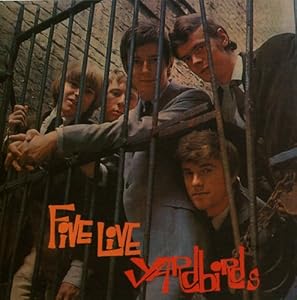
Cover of "Five Live"Cover of Five LiveBy Lando Frock

Introducing Eric "Slowhand" Clapton

Eighteen year old Eric Clapton joined The Yardbirds in 1963, blew the doors off the London blues scene, and moved on in 1965 just as they had their first hit single. It was during this time that he was given his nickname "Slowhand" - which was a goof on the fact that he actually played quite fast. Indeed quite a few of the early Yardbirds live recordings display some of the fastest playing around.

One could easily have termed it 'speed blues', but the phrase on the street for this bombastic style of blues was 'rave up' - the sound of the Clapton era. Clapton's Yardbirds style ferocious rave ups again and again on their classic record 'Five Live Yardbirds'.

Five of the ravest cuts from 'Five Live Yardbirds' are Too Much Monkey Business, Respectable, Pretty Girl, Here 'Tis, and Who Do You Love. They run the gamut from cooking swagger to full on jittery rave up - often within the space of a single song. These are classic blues and rock songs given the Yardbirds treatment and taken to a new landscape.

Too Much Monkey Business

The record starts with the classic Chuck Berry song 'Too Much Monkey Business'. This is a good one to jog too. Right away they employ the classic Yardbirdism of turning the guitar solos into whole band high intensity blasts of raw blues plasma - classic rave up. Young Mr. Clapton busts solos that are amazingly precise, and driven - the perfect foil for the rests in the verses.

Respectable

Penned by the Isley Brothers, The Yardbirds make it their own. The intro slides in and drops a hint at the double time rhythm coming down the pipe. Clapton's guitar solos begin with tasteful restraint. The steam starts to build in the 2nd half of the song when they drop into a shuffle verse of Humpty Dumpty then over the wall with blurring hands shaking the rhythm nearly to death before they drop out with a classic slow blue exit

Pretty Girl

The boys treat this Bo Diddley classic fairly straight - at the beginning anyway. Introduced with a loose swagger, by the time the choruses kick in things start to fly. Again displaying their trademark of laying down a nice riff, then cranking it up, letting it back out, then really pouring it on rave up style.

Here 'Tis

You can't get more rave than this. Another Bo Diddley tune, 'Here 'Tis' opens up and burns from start to finish. This is blues rave up at its most intense. Built furiously up and up again and again, then dropping the whole shebang into Jim McCarty's drum break. You can almost hear the audience trying to catch it's breath while Keith Relf begins his warning "There's more... There's more... Here it comes... Here it comes..." Then slamming back in with Eric's blazing riff trading with Samwell-Smith's stomping bass. They build it back up one last time and a halt on a dime. What an ending!

Who Do You Love

Yet another Bo Diddley verse. This one was added to the record as a bonus track for the 2003 re-release and it fits right in. The track fades in fast and furious before pulling back to make room for walking 47 miles of barbed wire. Things chug along nice and smooth for a bit, then almost sneaking into the rave up. Each time through the cycle the fevered strumming peaks higher until the final fade. A great version, and a great bonus to the record.

Fast Train To God Status

It would not be until he left The Yardbirds and hooked up with John Mayall and the Blues Breakers that London tube riders would see the writing on the wall proclaiming "Clapton Is God".

But you can hear his train rolling into the station at full speed with The Yardbirds on 'Five Live Yardbirds' as well as 'For Your Love', 'Sonny Boy Williamson and The Yardbirds' and the American compilation 'Having A Rave Up.'

After Claption left and was replaced with Jeff Beck (and Later Jimmy Page) the band explored new and exciting sonic directions, but their stamp on the rave up sound would become history.

There are some great bands these days who invoke the sonic fire of old school rock and roll - but do it in their own way. I'm very excited about a cookin' 3 piece called The Lovely Savages.

Get their blistering EP 'YES' for FREE at: http://www.thelovelysavages.info/

Article Source: http://EzineArticles.com/?expert=Lando_Frock
http://EzineArticles.com/?The-Yardbirds:-Anatomy-Of-A-Rave-Up-In-5-Songs&id=6389502
Enhanced by Zemanta

Friday, May 28, 2010

Cream - How Rock's Original Power Trio Continues to Influence

By Jim Hofman

Cream, the iconic musical power trio, was a musical tour de force in the middle and late 1960's. Consisting of drummer Ginger Baker, bassist Jack Bruce, and guitarist Eric Clapton, their music remains popular to this day. Discover how Cream continues to influence the musical artists of today...

Cream: Their Style

When most music fans think of Cream, the catch phrase "classic rock" comes to mind. And while it is true that most of the band's music is heard on classic rock radio stations these days, a more in depth view is required. The idea for Cream was hatched in early 1966 by drummer Ginger Baker, who was trained in the jazz styles of early 1960's London. He played in a British band called The Graham Bond Organization with bassist Jack Bruce, an exceptionally gifted musician also blessed with a strong voice.

Both soon crossed paths with a young virtuoso guitarist by the name of Eric Clapton, who was cutting his teeth on blues standards in the Chicago and Mississippi Delta style. Each of the three, disenchanted with their current situation, decided to join forces as Cream in June, 1966. At the time and in subsequent interviews, Clapton thought Cream would be a blues band. Alas, he had no idea of the musical direction and influences of both Baker and Bruce.

As Cream developed early on, it was clear this was something very unique. By the time the band dissolved in late 1968, Cream was noted for several musical styles, including blues, hard rock, pop, all underpinned with jazz stylings and lengthy improvisations.

The Ongoing Influence Of Cream

Despite being together for less than three years, Cream is still one of the best known bands of all time. They originally spawned super groups and power trios, like Blind Faith, Mountain, and several others in the early 1970's.

Later, Cream has been credited as an inspiration for popular rock acts in the 1980's and beyond. ZZ Top, an enormously popular rock and blues trio, was directly influenced by Cream, to the point of presenting them for induction in the Rock and Roll Hall of Fame in 1993.

The Police and Van Halen are two of many notably successful groups that have praised the influences of Baker, Bruce, and Clapton. Today, John Mayer plays occasionally with Clapton and has even recorded a version of "Crossroads", a blues standard which Cream made famous over forty years ago.

The Legacy Is Still Developing

All three members of Cream are still playing, with Bruce and Clapton more active than Baker. Cream reunited in 2005 for a highly successful live CD and DVD, with their Royal Albert Hall concerts being attended by rock royalty. Their legacy continues to evolve and their music has stood the test of time.

Discover the latest on the members of Cream, including insight into their music and careers. Visit our interactive site dedicated to the legacy of rock's original power trio at: http://www.squidoo.com/cream-power-trio

Article Source: http://EzineArticles.com/?expert=Jim_Hofman
http://EzineArticles.com/?Cream---How-Rocks-Original-Power-Trio-Continues-to-Influence&id=4351883

Tuesday, April 13, 2010

Famous Guitarists - Eric Clapton

By John Blackwood

The first, published blues music was 'Dallas Blues' in 1912, but the blues predates that by at least 20 years and possibly a great deal more. The first recordings of blues music were made for research purposes and have since been lost along with any record of the precise where when and why. Blues seem to have arisen in the period after the emancipation of slaves in the USA and some aspects of the music, such as blue notes, seem to originate (not surprisingly) with the music of Africa.

In other ways there was originally little difference between 'blues' and 'country' as they grew up together in the early part of the 20th century, yet 'blues' was identified with black musicians, while 'country' was predominately white. It seems strange then that while the blues is steeped in the culture of the American deep South, one of the most famous blue guitarists is a white guy from the UK, Eric Clapton.

American blues made the transition to the UK largely because of black American soldiers who were stationed in the UK during the second World War. In 1958 Muddy Waters played electric blues for the first time in Britain to shocked audiences, unaccustomed to the amplified electric sound and heavy beat. Many were captivated and while the cultural differences could not have been greater, British Blues was born. The Rolling Stones even took their name from a Muddy Waters song, 'Rollin Stone'.

Co-incidentally 1958 was the year Eric Clapton got his first guitar. Born in Ripley in Surrey and brought up my his grandmother, Clapton found the guitar difficult and nearly gave up, but he enjoyed listening to blues music on his tape recorder and spent a lot of time practicing to get the chords right. He left school in 1961 and went to art college, but only lasted a year. In 1962 he asked his grandparents help to buy an electric guitar, (a Gibson ES-335 clone) Already it was clear that music, not art was his major interest. He began busking and performing in pubs with a friend, then when he was 17 he joined a band called 'The Roosters' while supporting himself by working as a bricklayer.

In 1963 he joined another group called the Yardbirds and began to create an original sound and style, heavily influenced by blues music. Although the Yardbirds were successful their first major hit was not a blues song and in protest Clapton left to join John Mayall and the Bluesbreakers and then in 1966 he formed Cream. Cream disbanded in 1968.

Throughout this time, he was searching for a distinctive, 'bluesie' sound. In the early 60's Eric Clapton played a Fender telecaster but he changed this for a 1960 Gibson Les Paul and a Marshall amplifier. When he left the Bluesbreakers to form Cream, his Les Paul was stolen, but he continued to play guitars of that type until 1967 when he obtained a 1964 Gibson SG which he later had painted in psychedelic colors for a tour. The Gibson SG was one of the major components of the distinctive sound Clapton created during those mid to late 60's. The 'woman tone' as other musicians have called it, is a distorted sound partially created by turning the guitars amplifier up full and the tone down to one or zero.

By 1970 Eric Clapton was a superstar. He formed Derek and the Dominos and went on to record the album 'Layla and other assorted rock songs'. The inspiration was Clapton's attraction to George Harrison's wife, Patti Boyd, who was also the inspiration for Harrison's beautiful song 'Something'. To say this relationship was complicated is something of an understatement. Patti Boyd was a model and had married George Harrison in 1966. Eric worked on several projects with George and apparently fell in love not only with Patti but with Paula her sister. So much so that in 1970 Paula moved in to his home, but she wasn't alone. Eric had another girlfriend, Alice Ormsby Gore, daughter of Lord Harlech, the former British Ambassador to Washington. She and Eric had announced their engagement in 1969.

When Eric wrote Layla, Paula immediately knew who it was about and walked out, but Patti would still not leave her husband. This together with the albums lack of success sent Clapton into a depressive spiral fuelled mainly by heroin. He sank and became a recluse, rarely leaving his house and took Alice, who was 17, with him. Alice and Eric stayed together for five years, but when, with the help of Alices family, Eric managed to break his heroin habit, he ended their relationship. Alice died in poverty from a heroin overdose in 1995.

With the help of Pete Townshend (of 'The Who') he picked himself up and made a come back. Heroin was replaced by alchohol. Patti left George and by 1974 Eric had a new sound and was a composer as well as a guitarist. In 1979 he married Patti Boyd and in the 1980's he began another career, music for film and TV, such as 'The Hit' (1984) and the score for BBC's mini-series Edge of Darkness. In 1982 he ws admitted to Hazelden Treatment Enter in Center City Minnesota for treatment for alcoholism.

After this he produced two albums with Phil Collins, but perhaps because Patti Boyd was unable to have children, Clapton had a number of affairs and at least two children, Ruth (in 1985) and Connor in 1986. Eric and Patti Boyd were divorced in 1988. In 1991 Connor fell from a 53rd floor window and was killed. Eric poured his grief into a song called 'Tears in Heaven' and that year received six Grammy awards for the song and his album 'unplugged' where he played acoustic guitar.

Clapton made more albums throughout the 90's and in 1999 worked on an Album with the legendary BB King. In 2000 he was inducted into the US Rock and Roll Hall of Fame for the third time. To date he is the only person to have been inducted three times. In 2002 he married Melia McEnery with whom he already had a daughter, Julie. Ella followed in 2003 and Sophie in 2005. This was the inspiration for the song 'Three Little Girls' on his 2006 album The Road to Escondido.

In 2004 Clapton returned to the blues with a vengeance with two albums of music by Robert Johnson. In 2005 a reunited Cream played concerts in the Royal Albert Hall and in 2007 the rights to his official memoirs were sold at the Frankfurt Book Fair for four million dollars.

These days Eric Clapton plays a custom made 000-ECHF Martin from CF Martin and Company and is regarded as one of the most influential guitarists of all time. His song 'Layla' is viewed as one of rock music's great love songs and his solo on 'Crossroad Blues' one of the greatest live rock solos ever. Yet in 1958 when he got that first, steel stringed guitar, he found it hard to play. He had to persevere, to practice, and he did. How about you?

John Blackwood
Rock Guitar Lesson
Blues Lesson

Article Source: http://EzineArticles.com/?expert=John_Blackwood
http://EzineArticles.com/?Famous-Guitarists---Eric-Clapton&id=4029636

Friday, March 19, 2010

Cream - The Story Behind Their Four Classic Albums

By Jim Hofman

Cream, rock music's legendary power trio, produced four albums in their short 29 month existence. The group, consisting of legendary musicians Ginger Baker, Jack Bruce, and Eric Clapton, still influences musicians to this day. Here is the story behind Cream's four classic albums...

When Cream formed in late spring 1966, it was the brain child of ace drummer Ginger Baker. Bored and frustrated in his previous band, Baker approached guitarist Eric Clapton, whom he knew from London's music scene. Clapton suggested virtuoso bass player and vocalist Jack Bruce to round out the trio, and Cream was born. After a short European tour to polish their sound, the three men entered the studio to record their first album.

Fresh Cream

The band was signed to the famous Atlantic Records label, headed by the prominent Ahmet Ertegun. Ertegun thought Cream was a blues band and suggested they cover some hidden blues gems. Little did he realize that Cream's members were already hatching bigger and better plans. Fresh Cream did showcase a few relatively unknown blues standards that Cream essentially made their own. One such track, "I'm So Glad", highlights each member equally, with Bruce and Baker supplying a driving rhythm over Clapton's soaring lead guitar. Another is "Spoonful", a Willie Dixon song that later became a staple during concert performances. Both were played by the band during their 2005 reunion concerts. The band's first successful single, "I Feel Free", was a pop song composed by Jack Bruce and lyricist Pete Brown. The song still receives heavy air play on classic rock radio.

Disraeli Gears

Perhaps Cream's best known album, the album cover of Disraeli Gears was a psychedelic themed artist rendering of the band by Martin Sharp. Sharp also co-wrote one of the album's best known songs, "Tales of Brave Ulysses" with Eric Clapton. Recorded in New York in late spring 1967, the album's name came from one of the band's roadies, who mangled the term for the brakes on racing bikes. The band was amused by the pun and it stuck as the title. Disraeli Gears also featured two of Cream's most popular songs, "Sunshine of Your Love" and "Strange Brew", both co-written by Clapton. The album is ranked as one of the greatest rock albums of all time.

Wheels of Fire

Released in 1968 at the height of the bands popularity, Wheels of Fire reached #1 in the U.S. charts and was the first platinum selling double album of all time. The double album consisted of two sides of studio tracks and two sides of live tracks recorded in San Francisco in March, 1968. On March 10th, the famous version of "Crossroads" was performed and recorded. The song is instantly recognizable to even the most novice music fans. Another well known track is "White Room", a soaring five minute multi layered composition showcasing all three band members. Jack Bruce takes the lead vocal, with Ginger Baker supplying a unique 5/4 drum beat which gives the song its signature rhythm.

Goodbye

By late 1968, Cream was in the process of breaking up. The aptly titled "Goodbye" was released in early 1969, a few months after their last concert performance. One side consisted of live tracks recorded during their farewell tour of the United States. The second side included one track written by each member. The most famous song from this album is "Badge", written by Eric Clapton and George Harrison. When Cream reunited in 2005, it was the first time they had played "Badge" live together.

In subsequent years, several repackagings and live albums were released. The most recent Cream recording is taken from their live reunion shows at London's Royal Albert Hall in May, 2005. During these shows they covered songs from each of their four original albums.

The music of Cream continues to influence musicians and music lovers alike. Though their initial shelf life was relatively brief, their legacy is enormous. Learn more about rock's original power trio by visiting us at: http://www.squidoo.com/cream-power-trio

Article Source: http://EzineArticles.com/?expert=Jim_Hofman
http://EzineArticles.com/?Cream---The-Story-Behind-Their-Four-Classic-Albums&id=3939237

Saturday, March 13, 2010

Cream Reunion - Here's What Happened at the 2005 Cream Reunions

By Jim Hofman

Cream, the legendary musical power trio that first came into prominence in the late 1960's, finally reunited for a series of shows in 2005. Known as much for their tenuous relationships with each other as their intense musical chemistry, they haven't reunited since. What happened?

Cream: The Road To A Reunion

Cream, consisting of drummer Ginger Baker, bassist Jack Bruce, and guitarist Eric Clapton, broke up in late 1968 after a whirlwind 29 month existence. Over the next 24 years, the three men rarely worked together. Then in 1993, the band was inducted into the Rock and Roll Hall of Fame.

At the induction ceremony, Cream played three songs after a brief rehearsal the day before. Clapton, in his emotional acceptance speech, noted it was the first time the three had played together in almost 25 years. The performance, although brief, was highly praised and it was clear the musical chemistry of the three virtuoso players was still intact.

Although further Cream projects were apparently discussed, nothing more came from the brief reunion. Clapton, in the midst of a soaring solo career, continued down that path. Baker and Bruce went on to form two thirds of another power trio with guitarist Gary Moore that disintegrated a year after it began.

In 2003, Jack Bruce was diagnosed with liver cancer which nearly cost him his life. During his recovery period from a liver transplant, Clapton finally proposed a Cream reunion. All three members agreed to meet for six weeks of rehearsals in early 2005, with four shows scheduled for London in May.

By all accounts, rehearsals went well. The three members, all with strong personalities and musical directions, meshed well. Cream finally reunited on May 2, 2005, at the Royal Albert Hall, the first of four shows that week.

Playing a varied set list covering hits and blues standards, Cream generated world wide praise for the reunion. The concerts were filmed and recorded, and the subsequent CD and DVD set were best sellers.

New York Reunion

Clapton admitted he was elated with the shows. Baker and Bruce expressed similar sentiments, so it was no surprise Cream announced they would play three shows in New York in October.

Each of the three concedes something went wrong during the first show. Old animosities between Bruce and Baker were at the root of the problem. Baker, complaining that Bruce was playing too loudly, threatened to not play the next two shows until cooler heads prevailed.

Bruce, meanwhile, stated he was suffering severe cramping and swelling in his hands, an after effect of his surgery and medication. This, he said, caused him to not be at his best. Clapton, ever the diplomat, stated Cream's sound was too small for the large venue in New York. The three went their separate ways after the shows.

Future Cream Reunions?

Clapton, in recent interviews, stated that reuniting Cream was much like putting a ghost to bed, but adds he would "never say never" to another go around. Jack Bruce, now fully recovered, states he'd like to reunite with Cream for one more time, if only to leave everything on a positive note. Ginger Baker, living in an almost exile state in South Africa, has refused to reunite, citing old animosities with Bruce.

And yet, reunion rumors persist. Bruce and Baker, the old antagonists, played at a 2008 tribute concert for Baker in London. Clapton speaks glowingly of both men and wrote the forward for Jack Bruce's recent autobiography. There are rumors of a one shot Cream reunion during the 2010 guitar festival, Crossroads, hosted by Clapton.

Whether a reunion happens or not, Cream's music continues to stand the test of time. This grouping of three brilliant musicians produced a totally unique body of work that still influences musicians to this day.

Would you like to learn more about this legendary musical power trio, including their reunions and relationships with one another? Visit our site dedicated to the legendary jazz rock fusion band Cream. You'll find us at: http://www.squidoo.com/cream-power-trio

Article Source: http://EzineArticles.com/?expert=Jim_Hofman
http://EzineArticles.com/?Cream-Reunion---Heres-What-Happened-at-the-2005-Cream-Reunions&id=3857106

Thursday, March 4, 2010

Eric Clapton Launches Co-Headlining Tour with Jeff Beck

by Brent Warnken

Eric Clapton and Jeff Beck kicked off their co-headlining tour with a gig at storied New York venue Madison Square Garden on Feb. 18. Rolling Stone reported that the pair of former Yardbirds guitarists took the stage for over 40 minutes, performing covers of songs by Sly Stone, Henry Mancini and Willie Dixon, to name a few.

Beck opened the sold-out show with "Eternity's Breath" by the Mahavishnu Orchestra, enlisting an impressive backing band and sizable string section. Although members in the audience requested familiar songs like Beck's cover of "People Get Ready," he marched to the beat of his own drum and played surprising choices like "Corpus Christy Carol" and the Puccini aria "Nessun Dorma." Classic rock fans in attendance did get treated to Beck's cover of the Beatles' "A Day in the Life," for which the guitarist took home a Grammy on Jan. 31.

Clapton entered the stage after a short break, opening with an acoustic medley of blues standards like "Driftin' Blues" and "Nobody Knows You When You're Down and Out." Although original hits like "Wonderful Tonight," "Layla," "Sunshine of Your Love" and "Tears in Heaven" were absent from Clapton's set list, he did perform his original 1983 song "I've Got a Rock And Roll Heart." Clapton also covered Bob Marley's "I Shot the Sheriff," J.J. Cale's "Cocaine" and Derek and the Dominoes' "Tell the Truth."

Rolling Stone reported that the pair of iconic guitarists (who grace the current cover of the music magazine) "were clearly playing at the absolute top of their game" when they took the stage together for "Moon River," Cream's "Outside Woman Blues," and Sly Stone's "I Want To Take You Higher."

Clapton and Beck capped off their licks-trading section with Robert Jones' "Crossroads." Eric Clapton may have wrapped up his dates with Jeff Beck, but he is currently on the road with the Who's Roger Daltrey through March 13, after which point he will bring Steve Winwood with him for dates continuing through June. Head online for Eric Clapton tickets to see the living legend on tour.

Eric Clapton may be keeping up a frantic touring pace, but when his dates with Steve Winwood wrap up on June 13 the guitarist won't be taking a break, because his third Crossroads Guitar Festival will take play at Chicago's Toyota Park on June 26. Like the 2004 and 2007 editions of the festival, the 2010 Crossroads Guitar Festival will benefit the addiction treatment facility founded by Clapton, the Crossroads Center, which is located on the Caribbean island of Antigua.

Although the list of performers confirmed for the event is any rock fan's dream - B.B. King, Buddy Guy, Earl Klugh, John Mayer, Robert Randolph, Jeff Beck, Sheryl Crow, ZZ Top, Steve Winwood, Keb Mo, Vince Gill and Gary Clark, Jr., to name a few - Clapton told Rolling Stone, "I do it because I want to hear those players." Clapton and his band will headline the Windy City guitar festival. The first edition of the Crossroads Festival was held at the 2004 Cotton Bowl in Dallas and both the 2004 and 2007 festivals have been released on DVD, with the 2007 festival also edited into a two-hour PBS special for the network's Great Performances series.

This article is sponsored by StubHub. StubHub.com is a leader in the business of selling http://www.stubhub.com/eric-clapton-tickets/, sports tickets, concert tickets, theater tickets and special events tickets.

Distributed by http://www.ContentCrooner.com

Tuesday, March 2, 2010

Jeff Beck, Eric Clapton and the Way of the Guitar

Article from Rolling Stone, 17 February 2010 issue: http://preview.tinyurl.com/yf2otdy from http://www.Rollingstone.com

Jeff Beck and Eric Clapton have never done a joint interview - until now. On the eve of their historic first-ever co-headlining tour, Rolling Stone’s David Fricke sits in with the two guitar legends as they discuss old rivalries, blues heroes and the secrets of their craft in our new issue, on sale at newsstands today.

Check out all of Rolling Stone’s ultimate guitar coverage and join the debate: who’s the best of all time?

The pair chat about their experiences with Jimi Hendrix, possible set lists for their upcoming shows (compositions by Charles Mingus and Albert Collins are on the table) and the intricacies of each other’s technique (Beck cites Clapton’s timing and phrasing; Clapton praises Beck’s “multitasking” right-hand work).

They also explain why it took four decades for their current team-up. “We were all trying to be big bananas,” Beck says. “Except I didn’t have the luxury of the hit songs Eric’s got.” Clapton tells Fricke they couldn’t have collaborated in the Sixties or Seventies for one major reason: “Because we were enemies, basically.”

The pair don’t shy away from frank talk about the cause of their rift - their relationship to the Yardbirds, the psychedelic R&B band that featured Clapton, Beck and Jimmy Page on lead guitar (in that order). Clapton admits he expected the band to collapse without him, and was surprised when they became more successful. “I wanted to be as critical of him as I could,” he says. “It hurt me bad because I could see they were getting, with Jeff, at something beyond what I was capable of.” Beck stuns Clapton by insisting that the band revered Eric’s playing: “They were in awe.”

Clapton also reveals he has a new album in the works, possibly titled Whiplash - and the diverse covers project may become a double LP. “I covered anything I ever longed to do,” he says. For more on the project, plus Beck’s comments on the darker moments of his career and Clapton’s “unfinished business” with Blind Faith, check out the full story in the new issue. Plus, read about Clapton’s 2010 Crossroads Guitar Festival.

Check out Rolling Stone’s collections of Jeff Beck and Eric Clapton photos.