Showing posts with label Led Zeppelin Tributes. Show all posts
Showing posts with label Led Zeppelin Tributes. Show all posts
Wednesday, November 6, 2013


Monday, October 21, 2013
VIDEO: Jimmy Page, 13, Plays Guitar on BBC Talent Show (1957)
by Dan Colman, Open Culture: http://www.openculture.com/2010/07/jimmy_page_13_plays_guitar_on_bbc_talent_show_1957.html
Let’s rewind the video tape to 1957. A very young Jimmy Page appears on a BBC children’s talent show to play some skiffle.
Mixing together strands of American blues, jazz, country and folk music, this style of music became all the rage in the UK during the 1950s. Lonnie Donegan got the craze going.
And it wasn’t long before John Lennon formed his own skiffle band - The Quarry Men (photo here) … later to become The Beatles.
Heading into the 60s, a maturing Jimmy Page took his music in entirely new directions, which brings us to our post last week: The Strange Tale of Dazed and Confused.
Let’s rewind the video tape to 1957. A very young Jimmy Page appears on a BBC children’s talent show to play some skiffle.
Mixing together strands of American blues, jazz, country and folk music, this style of music became all the rage in the UK during the 1950s. Lonnie Donegan got the craze going.
And it wasn’t long before John Lennon formed his own skiffle band - The Quarry Men (photo here) … later to become The Beatles.

Heading into the 60s, a maturing Jimmy Page took his music in entirely new directions, which brings us to our post last week: The Strange Tale of Dazed and Confused.
Friday, October 18, 2013
VIDEO: Jimmy Page Tells the Story of “Kashmir”
by Mike Springer, Open Culture: http://www.openculture.com/2011/09/jimmy_page_tells_the_story_of_kashmir.html
One of the most original and distinctive songs Led Zeppelin ever recorded was the exotic, eight-and-a-half minute “Kashmir,” from the 1975 album Physical Graffiti.
In this clip from Davis Guggenheim’s film It Might Get Loud (2009), Jimmy Page explains the origins of the song to fellow guitarists Jack White and The Edge.
Then Page demonstrates it by picking up an old modified Danelectro 59DC Double Cutaway Standard guitar that he played the song with on some of Led Zeppelin’s tours (watch Kashmir live here).
In 1973, Page had been experimenting with an alternative D modal, or DADGAD, tuning often used on stringed instruments in the Middle East, when he hit upon the hypnotic, rising and falling riff.
The song came together over a period of a couple of years. John Bonham added his distinctive, overpowering drums during a two-man recording session with Page at Headley Grange.
Singer Robert Plant wrote the lyrics while he and Page were driving through the Sahara Desert in Southern Morocco (neither Page nor Plant had ever visited Kashmir, in the Himalayas).
Bassist and keyboard player John Paul Jones added the string and horn arrangements the following year.
In a 1995 radio interview with Australian journalist Richard Kingsmill, Plant recalled his experience with “Kashmir”:
One of the most original and distinctive songs Led Zeppelin ever recorded was the exotic, eight-and-a-half minute “Kashmir,” from the 1975 album Physical Graffiti.
In this clip from Davis Guggenheim’s film It Might Get Loud (2009), Jimmy Page explains the origins of the song to fellow guitarists Jack White and The Edge.
Then Page demonstrates it by picking up an old modified Danelectro 59DC Double Cutaway Standard guitar that he played the song with on some of Led Zeppelin’s tours (watch Kashmir live here).
In 1973, Page had been experimenting with an alternative D modal, or DADGAD, tuning often used on stringed instruments in the Middle East, when he hit upon the hypnotic, rising and falling riff.
The song came together over a period of a couple of years. John Bonham added his distinctive, overpowering drums during a two-man recording session with Page at Headley Grange.
Singer Robert Plant wrote the lyrics while he and Page were driving through the Sahara Desert in Southern Morocco (neither Page nor Plant had ever visited Kashmir, in the Himalayas).
Bassist and keyboard player John Paul Jones added the string and horn arrangements the following year.
In a 1995 radio interview with Australian journalist Richard Kingsmill, Plant recalled his experience with “Kashmir”:
It was an amazing
piece of music to write to, and an incredible challenge for me. Because
of the time signature, the whole deal of the song is … not grandiose, but
powerful. It required some kind of epithet, or abstract lyrical setting
about the whole idea of life being an adventure and being a series of
illuminated moments. But everything is not what you see. It was quite a
task, because I couldn’t sing it. It was like the song was bigger than
me.
Wednesday, October 16, 2013
VIDEOS: Deconstructing Led Zeppelin’s Classic Song ‘Ramble On’ Track by Track: Guitars, Bass, Drums & Vocals
by Mike Springer, Open Culture: http://www.openculture.com/2013/10/deconstructing-led-zeppelins-classic-song-ramble-on-track-by-track.html
Jimmy Page’s acoustic guitar
The beauty of isolated tracks is that they allow us to hear an old piece of music in a completely new way. They give us a fresh perspective on something we thought we already knew.
Today we bring you a series of isolated tracks showing how Led Zeppelin pieced together one of its classic early songs: “Ramble On.”
The song was written by Jimmy Page and Robert Plant and recorded in New York in the spring of 1969. Led Zeppelin was on its second tour of North America. Along the way, the band popped into various studios to lay down tracks for Led Zeppelin II.
The remainder of the album was recorded in the same fashion, between shows in Europe. “We were touring a lot,” bassist John Paul Jones wrote in the liner notes to the Led Zeppelin boxed set.
“Jimmy’s riffs were coming fast and furious. A lot of them came from onstage especially during the long improvised section of ‘Dazed and Confused.’ We’d remember the good stuff and dart into a studio along the way.”
John Paul Jones’s bass guitar
“Ramble On” is an early example of the Zeppelin hallmark of using a wide dynamic range within a single song. As the band goes back and forth between soft and loud, acoustic and electric, bassist John Paul Jones lays down a crisp outline of the song’s structure.
John Bonham’s drums
The pitter-patter drumbeat by John Bonham during the quiet parts of “Ramble On” has sparked considerable debate among drummers. Some have theorized that Bonham was hitting the sole of his shoe with drum sticks. Others say it was a plastic garbage can lid.
According to Chris Welch and Geoff Nicholls in John Bonham: A Thunder of Drums, Bonzo used his bare hands to tap out those 16th notes on an empty guitar case.
Robert Plant’s main vocals
The lyrics of “Ramble On” reflect Robert Plant’s fascination with characters and events in The Lord of the Rings trilogy by J.R.R. Tolkien: “‘Twas in the darkest depths of Mordor/I met a girl so fair./But Gollum and the evil one crept up/And slipped away with her.”
Led Zeppelin would include more references to Tolkien later, in songs like “Misty Mountain Hop” and “Stairway to Heaven.”
Jimmy Page’s electric rhythm guitar
Jimmy Page’s explosive electric guitar playing kicks in at about the 1:14 mark. The exact guitar used by Page on the recording is a matter of controversy.
He reportedly switched to his trademark Gibson Les Paul while recording Led Zeppelin II, but this track may have been played on the thinner-sounding Fender Telecaster he had been using since his days with the Yardbirds.
Jimmy Page’s electric lead guitar
Like all the band’s albums, Led Zeppelin II was produced by Page. Although he eventually became known for building up complex layers of guitar tracks, Page kept the lead guitar overdubs for “Ramble On” fairly simple.
Robert Plant’s backup vocals
Plant’s supplementary vocals begin at about the 1:14 mark. Plant would later say that the recording of the second album was when he began to feel sure of himself within the band. “Led Zeppelin II was very virile,” Plant told Nigel Williamson, author of The Rough Guide to Led Zeppelin.
“That was the album that was going to dictate whether or not we had the staying power and the capacity to stimulate.”
Led Zeppelin II was released in October of 1969 and rose to number one in Great Britain and America. In the four decades since, the album has sold over 12 million copies.
Though it was never released as a single, “Ramble On” was ranked #444 on Rolling Stone’s list of the 500 Greatest Songs of All Time.
Jimmy Page’s acoustic guitar
The beauty of isolated tracks is that they allow us to hear an old piece of music in a completely new way. They give us a fresh perspective on something we thought we already knew.
Today we bring you a series of isolated tracks showing how Led Zeppelin pieced together one of its classic early songs: “Ramble On.”
The song was written by Jimmy Page and Robert Plant and recorded in New York in the spring of 1969. Led Zeppelin was on its second tour of North America. Along the way, the band popped into various studios to lay down tracks for Led Zeppelin II.
The remainder of the album was recorded in the same fashion, between shows in Europe. “We were touring a lot,” bassist John Paul Jones wrote in the liner notes to the Led Zeppelin boxed set.
“Jimmy’s riffs were coming fast and furious. A lot of them came from onstage especially during the long improvised section of ‘Dazed and Confused.’ We’d remember the good stuff and dart into a studio along the way.”
John Paul Jones’s bass guitar
“Ramble On” is an early example of the Zeppelin hallmark of using a wide dynamic range within a single song. As the band goes back and forth between soft and loud, acoustic and electric, bassist John Paul Jones lays down a crisp outline of the song’s structure.
John Bonham’s drums
The pitter-patter drumbeat by John Bonham during the quiet parts of “Ramble On” has sparked considerable debate among drummers. Some have theorized that Bonham was hitting the sole of his shoe with drum sticks. Others say it was a plastic garbage can lid.
According to Chris Welch and Geoff Nicholls in John Bonham: A Thunder of Drums, Bonzo used his bare hands to tap out those 16th notes on an empty guitar case.
Robert Plant’s main vocals
The lyrics of “Ramble On” reflect Robert Plant’s fascination with characters and events in The Lord of the Rings trilogy by J.R.R. Tolkien: “‘Twas in the darkest depths of Mordor/I met a girl so fair./But Gollum and the evil one crept up/And slipped away with her.”
Led Zeppelin would include more references to Tolkien later, in songs like “Misty Mountain Hop” and “Stairway to Heaven.”
Jimmy Page’s electric rhythm guitar
Jimmy Page’s explosive electric guitar playing kicks in at about the 1:14 mark. The exact guitar used by Page on the recording is a matter of controversy.
He reportedly switched to his trademark Gibson Les Paul while recording Led Zeppelin II, but this track may have been played on the thinner-sounding Fender Telecaster he had been using since his days with the Yardbirds.
Jimmy Page’s electric lead guitar
Like all the band’s albums, Led Zeppelin II was produced by Page. Although he eventually became known for building up complex layers of guitar tracks, Page kept the lead guitar overdubs for “Ramble On” fairly simple.
Robert Plant’s backup vocals
Plant’s supplementary vocals begin at about the 1:14 mark. Plant would later say that the recording of the second album was when he began to feel sure of himself within the band. “Led Zeppelin II was very virile,” Plant told Nigel Williamson, author of The Rough Guide to Led Zeppelin.
“That was the album that was going to dictate whether or not we had the staying power and the capacity to stimulate.”
Led Zeppelin II was released in October of 1969 and rose to number one in Great Britain and America. In the four decades since, the album has sold over 12 million copies.
Though it was never released as a single, “Ramble On” was ranked #444 on Rolling Stone’s list of the 500 Greatest Songs of All Time.
Monday, October 14, 2013
VIDEOS: John Bonham’s Isolated Drum Track For Led Zeppelin’s ‘Fool in the Rain’
by Mike Springer, Open Culture: http://www.openculture.com/2013/04/john_bonhams_isolated_drum_track_for_led_zeppelins_fool_in_the_rain.html
His playing was as loud as thunder and as fast as lightning. John Bonham of Led Zeppelin was arguably the greatest of rock-and-roll drummers.
When Rolling Stone asked its readers in 2011 to name the greatest drummer of all time, Bonham won by a landslide. Drummerworld says of his playing:
Bonham’s later playing is on display in this isolated drum track (above) from “Fool in the Rain,” a single from the 1979 album In Through the Out Door, the last album released by Zeppelin before Bonham’s death in 1980.
The recording above includes about one-third of the entire drum track, ending just before the samba-style breakdown in the middle.
Bonham is playing a variant of the half-time Purdie Shuffle, a pattern developed by the legendary session drummer Bernard Purdie, who began playing it when he was a youngster trying to imitate the dynamics of a train.
“The way a locomotive kind of pushes and pulls,” Purdie said in a 2011 MusicRadar interview, “that’s what I was feeling.”
Variations of the Purdie Shuffle can be heard across popular music. Purdie himself played it on Steely Dan’s “Home at Last.” More recently, Death Cab for Cutie’s Jason McGerr played it on “Grapevine Fires.”
Perhaps the most famous variation is the so-called “Rosanna Shuffle” played by the late Jeff Porcaro of Toto on the single “Rosanna,” which blended elements of Purdie’s original shuffle, Bonham’s “Fool in the Rain” pattern and the Bo Diddley Beat.
For more on Bernard Purdie and his trademark shuffle, see the 2009 video below from the New York Times.
In the accompanying article, David Segal writes: “Created with six bass, high-hat and snare tones, the Purdie Shuffle is a groove that seems to spin in concentric circles as it lopes forward. The result is a Tilt-a-Whirl of sound, and if you can listen without shaking your hips, you should probably see a doctor.”
via That Eric Alper
His playing was as loud as thunder and as fast as lightning. John Bonham of Led Zeppelin was arguably the greatest of rock-and-roll drummers.
When Rolling Stone asked its readers in 2011 to name the greatest drummer of all time, Bonham won by a landslide. Drummerworld says of his playing:
Imitators are usually left
frustrated, since Bonham made it look so easy–not only in his playing
but also in the incredible drum sound he achieved. His legendary right
foot (on his bass pedal) and lightning-fast triplets were his instant
trademark. He later refined his style from the hard skin-bashing
approach to a more delicate wrist-controlled one - which produced an even
more powerful and louder sound with less effort.
Bonham’s later playing is on display in this isolated drum track (above) from “Fool in the Rain,” a single from the 1979 album In Through the Out Door, the last album released by Zeppelin before Bonham’s death in 1980.
The recording above includes about one-third of the entire drum track, ending just before the samba-style breakdown in the middle.
Bonham is playing a variant of the half-time Purdie Shuffle, a pattern developed by the legendary session drummer Bernard Purdie, who began playing it when he was a youngster trying to imitate the dynamics of a train.
“The way a locomotive kind of pushes and pulls,” Purdie said in a 2011 MusicRadar interview, “that’s what I was feeling.”
Variations of the Purdie Shuffle can be heard across popular music. Purdie himself played it on Steely Dan’s “Home at Last.” More recently, Death Cab for Cutie’s Jason McGerr played it on “Grapevine Fires.”
Perhaps the most famous variation is the so-called “Rosanna Shuffle” played by the late Jeff Porcaro of Toto on the single “Rosanna,” which blended elements of Purdie’s original shuffle, Bonham’s “Fool in the Rain” pattern and the Bo Diddley Beat.
For more on Bernard Purdie and his trademark shuffle, see the 2009 video below from the New York Times.
In the accompanying article, David Segal writes: “Created with six bass, high-hat and snare tones, the Purdie Shuffle is a groove that seems to spin in concentric circles as it lopes forward. The result is a Tilt-a-Whirl of sound, and if you can listen without shaking your hips, you should probably see a doctor.”
via That Eric Alper
Wednesday, August 28, 2013
Sunday, May 13, 2012
The Top 3 Best Led Zeppelin Songs Of All Time - And Why
 |
| Jimmy Page; Robert Plant; John Bonham and John Paul Jones of Led Zeppelin. A crop/montage derived from images with Creative Commons licences on Wiki Commons (Photo credit: Wikipedia) |
Without a doubt, Led Zeppelin is one of the greatest Rock Bands of all time.
Their music has influenced millions of people and there over all personality helped shape the face of Rock music as we know it. I am personally an enormous fan of Led Zeppelin.
So when the question of "what are the best Led Zeppelin songs of all time," was recently raised during a conversation amongst friends,it got me thinking strongly about the subject, here's what I came up with ...
1. "Whole Lotta Love"
Needless to say, this is the song that pushed Zeppelin over the top! In other words,this is the bands biggest song of their career. Since the outbreak of digital downloads, this record could be surpassed! Let's face it. I doubt it will happen. Especially since this song has some of the most memorable guitar licks of all time! I guess we'll have to wait and see!
I think the band really outdid themselves with this song! The bass playing is perfect. They are widely considered to be one of the most successful, innovative and influential rock groups in the history of music.
With Jimmy Page playing guitar, Robert Plant singing and John Paul Jones laying it down deep in the pocket, along with John Bonham. It's no wonder these guy's are considered the best Rock Band Of All Time PERIOD!
2. "Stairway To Heaven"
You either love it or hate it! Some people love it while for others, it makes their skin crawl! This song is up there with some of the best songs ever written. The words are awesome, referring to the greedy people while still trying to maintain a positive outlook!
Also, I Love the Guitar solo; it's so melodic. For me this guitar solo really accentuates the very soul of the melody, which I believe helped sell millions of Led Zeppelins albums! I'm not saying this to discredit the awesome bass guitar expertise and the awesome drumming! I ultimately feel strongly that the guitar solo along with the vocal lines really did it for me with this song.
3. "Ten Years Gone"
This song is one of my personal favorites, mainly because it's unlike most Zeppelin songs. It's really soulful! I can feel every note and lyric. The guitar intro is just beautiful along with the vocals and lyrics. This is not to say their other songs don't have soul! I'm just saying this song, I think, has the most soul out of all of their hits.
Whether you agree with my picks for the best Led Zeppelin songs of all time or not, there is no disputing that this Band is one of the best we've ever had.
If you like Led Zeppelin, then you might also check out http://www.tonysmithbassplayer.com
Tony's music is a lot different than Led Zeppelins, but I think you might like it. Click http://www.tonysmithbassplayer.com to download a copy of his latest single for free.
Article Source: http://EzineArticles.com/?expert=Anthony__J__Smith_
http://EzineArticles.com/?The-Top-3-Best-Led-Zeppelin-Songs-Of-All-Time---And-Why&id=7041101

Sunday, August 8, 2010
Thats the Way - Led Zeppelin
 Image via Wikipedia
'I don't how I'm gonna tell you, I cant play with you no more. I don't know how I'm gonna do what mamma told me, my friend the boy next door'.
These are the opening lines of Zeppelins That's The Way. Painfully, yet beautifully written, the story centers on these two lines.
A young friendship that has no color, knows no race, but the human race as one. Forced to never speak or see each other again, because 'that's the way it oughtta stay'. Thats The Way reveals the heartache and devastating consequences of losing your best friend, because of the mindset of others.
Unable to stay away from one another, they discover the misery both are suffering due to the loss of their innocent friendship.
Children are not born prejudiced or racist, a theme discussed throughout the song; it is something drilled into them through many forms, in this example their families.
Plant sings 'I can't believe what people saying, you're gonna let your hair hang down' - Zeppelin themselves received prejudiced remarks for having long hair, even receiving death threats in America before concerts. The song unravels and questions the need for these backward views.
'Now's the time to look and look again at what you see. Is that the way it oughtta stay?'
These wonderfully written lyrics are very powerful and overall discuss discrimination against change/difference/race. The music is equally mesmerizing. Soft mandolin, acoustic guitar and steel guitar almost float around your ears and you could be forgiven for letting your mind hop on board these notes and drift away.
Combine the well-written music and thought provoking lyrics and you have a memorable and magnificent song.
Article Source: http://EzineArticles.com/?expert=Michelle_Lawrie
http://EzineArticles.com/?Thats-the-Way---Led-Zeppelin&id=4783411

Thursday, July 29, 2010
PREVIEW: Robert Plant's Band of Joy, "Angel Dance"

Image via Wikipedia
Posted by: "Eric Bonatti" Wed Jul 28, 2010 8:22 am (PDT) on classic_rock_from_a_2_z@yahoogroups.comFYI: Robert Plant's Band of Joy, "Angel Dance" from the upcoming album. Listen to it here: http://www1.rollingstone.com/hearitnow/player.php?xmlData=plant/plant.xml
Eric drummer with the band littleSUNDAY
web: www.littleSUNDAY.com
myspace: www.myspace.com/littlesunday
my page: www.bonatti.ca
youtube: www.youtube.com/ericdrummerca
I play Underground Drum Co. drums: www.udrum.com
and Los Cabos drumsticks: www.loscabosdrumsticks.com

Monday, July 26, 2010
NEWS: Robert Plant Talks Band of Joy
 Image via Wikipedia
Benjamin Crandell of SunSentinel.com recently conducted an interview with legendary Led Zeppelin singer Robert Plant. A couple of excerpts from the chat follow below.
SunSentinel.com: "Band Of Joy" was the name of a band you had in the 1960s with [then-future Led Zeppelin drummer] John Bonham. Why resurrect the name?
Plant: Really, it's braggadocio. Once upon a time, I was a young man, and I found my musical leanings were more important than success. The name is a return to a time when everything was free-form. I remember when I was with Bonzo; we were playing, and we knew it didn't really matter how it was received. All that mattered was that the music was inside your heart. We were trying to get as far away from the popular music of that era, the Bobby Goldsboro sound, as we could. We just wanted to kick ass … The first Band of Joy was quite extreme, psychedelic … I'm thinking Grande Ball Room Detroit, the Blue Cheer. We would have been right at home alongside [Love guitarist] Arthur Lee. This gets me back to the things that allowed me to be a singer, to end up with The New Yardbirds and then Led Zeppelin. If I hadn't been into this kind of extreme sound I never would have hooked up with Jimmy.
SunSentinel.com: How would you describe the new band and what people can expect at the show.
Plant: I think of the "Led Zeppelin III" era. There was a dynamic about the "Zeppelin III" period where we could go from reflective acoustic stuff to some heavy shit … "Hats off to Harper", "Gallows Pole" … I'm not interested in doing late-middle-age cabaret. I want it heavy and spooky. There should be some mystery, big and deep, that makes people's skin tingle. I want [Band of Joy] to be as much Arcade Fire as Link Wray. There's gotta be a lot of dark shit going on. A lot of it is Buddy, who is absolutely incredible. He is playing in styles that he hasn't touched on in years. Each of us - me, Buddy, Patty - we came out of ourselves and met somewhere in the air.
SunSentinel.com: You and Mick Jagger have taken different approaches to your rock-god status. He's pretty much doing what he's always done.
Plant: There has never been a time where you could say about me, "Oh, he does that, and that's what he does." It's been like that since I was 19. No one Zeppelin album followed the next in style. I don't want to get bored with my own gift. The last few years with [Plant's band] The Strange Sensation, I was in the company of some real special musicians. When we were in Serbia or North Africa or West Africa or Mexico, I just kept absorbing all kinds of music. That guy out of the Stones ... It can be so dull, if you're not careful, if all you are doing is pulling things out of your bag of tricks. You reach in and out comes your juju; that's no good. You've got to keep mixing it up. This is a whole new period for me.

Sunday, June 13, 2010
Led Zeppelin at the Dawn of the Swinging Sixties
By Royston Ellis
The early 1950s in Britain were grim dull years but by the time the decade ended, musicians were being heard as the dawn chorus of The Swinging Sixties.
In Britain there were no coffee bars, no commercial television stations, no jukeboxes, and no teenage popstars. The young people of the 1950s were the same as they had been for generations previous. They were quiet, ordinary embryo adults plodding without interference to maturity. Their spare time was spent on sport, ballroom dancing, or on visits to the cinema. Slumped in the stalls of the local "fleapit" they came face to face with celluloid glamour transporting them to the fantasies of filmdom. Their early idols were US film stars, not record stars. Bill Haley and Elvis Presley changed that in Britain and then home-grown pop stars like Tommy Steele and Cliff Richard attracted the fans.
The abolition in 1960 in Britain of the compulsory two years military National Service for 18-year-olds had a liberating effect on teenagers. It was a taste of freedom; the excesses that resulted in the Swinging Sixties stemmed from that liberty. It was those early years that spawned Led Zeppelin.
The cult of the teenager in Britain can be dated from the end of conscription. There was no more forced discipline; kids were able to do what they wanted, unchecked by the call of military service that moulded previous teenagers into obedient, conventional, young adults. Thousands of teenagers took up the guitar in the hope of emulating their idols and to play the music they loved. It was a form of rebellion.
One boy, 16-year-old Jimmy Page from Epsom, near London, joined a group that called themselves first the Red Caps and then, as that sounded rather square - it was the name of a brand of milk - the Red Cats. In 1960, I met Jimmy Page and we became friends. I was using different musicians to back me for my performances of poetry read to rock and roll accompaniment, which I called Rocketry.
Jimmy was playing guitar in a London-based group managed by Chris Tidmarsh, who later transformed himself in to the Swinging Sixties pop star, Neil Christian. At the time I was writing a book about the big beat scene and introduced Jimmy to many of the stars featured in the book. I was living in a rented cottage in Watchbell Street, Rye, and Jimmy and the Red Cats used to stay there too.
Radcliffe Hall, the lesbian author of "The Well of Loneliness" had once lived next door. I acquired her topcoat and there exists a photograph of me wearing it at a rocketry performance at Cambridge University while a young Jimmy Page giggles in the background. Jimmy backed me on many stage and television performances, with our last appearance together being in a show at London's Mermaid Theatre in July 1961.
By that time I was 20 and no longer a teenager. My book was published and it seemed time to move on. I left England and escaped the Swinging Sixties. Jimmy, however, stayed and absorbed everything that was going on in the youth and music scene. As a result, in 1968 his energy, experience and talent gave the world the incredible Led Zeppelin. From being picked as a teenage guitarist to play backing music for a beat poet, he became the great music icon he remains today.
Royston Ellis, author of over 60 biographies, novels and travel guides, now lives in Sri Lanka having left England, where he began as a beat poet, in 1961, age 20, for a life of travel. His latest book, The Big Beat Scene, has just been published by Music Mentor Books http://musicmentor0.tripod.com/book_big_beat_scene.html in a new edition for the first time in 50 years with a foreword and afterword about his association with Jimmy Page and The Beatles. For more information, see http://roystonellis.com
Article Source: http://EzineArticles.com/?expert=Royston_Ellis
http://EzineArticles.com/?Led-Zeppelin-at-the-Dawn-of-the-Swinging-Sixties&id=4447560
The early 1950s in Britain were grim dull years but by the time the decade ended, musicians were being heard as the dawn chorus of The Swinging Sixties.
In Britain there were no coffee bars, no commercial television stations, no jukeboxes, and no teenage popstars. The young people of the 1950s were the same as they had been for generations previous. They were quiet, ordinary embryo adults plodding without interference to maturity. Their spare time was spent on sport, ballroom dancing, or on visits to the cinema. Slumped in the stalls of the local "fleapit" they came face to face with celluloid glamour transporting them to the fantasies of filmdom. Their early idols were US film stars, not record stars. Bill Haley and Elvis Presley changed that in Britain and then home-grown pop stars like Tommy Steele and Cliff Richard attracted the fans.
The abolition in 1960 in Britain of the compulsory two years military National Service for 18-year-olds had a liberating effect on teenagers. It was a taste of freedom; the excesses that resulted in the Swinging Sixties stemmed from that liberty. It was those early years that spawned Led Zeppelin.
The cult of the teenager in Britain can be dated from the end of conscription. There was no more forced discipline; kids were able to do what they wanted, unchecked by the call of military service that moulded previous teenagers into obedient, conventional, young adults. Thousands of teenagers took up the guitar in the hope of emulating their idols and to play the music they loved. It was a form of rebellion.
One boy, 16-year-old Jimmy Page from Epsom, near London, joined a group that called themselves first the Red Caps and then, as that sounded rather square - it was the name of a brand of milk - the Red Cats. In 1960, I met Jimmy Page and we became friends. I was using different musicians to back me for my performances of poetry read to rock and roll accompaniment, which I called Rocketry.
Jimmy was playing guitar in a London-based group managed by Chris Tidmarsh, who later transformed himself in to the Swinging Sixties pop star, Neil Christian. At the time I was writing a book about the big beat scene and introduced Jimmy to many of the stars featured in the book. I was living in a rented cottage in Watchbell Street, Rye, and Jimmy and the Red Cats used to stay there too.
Radcliffe Hall, the lesbian author of "The Well of Loneliness" had once lived next door. I acquired her topcoat and there exists a photograph of me wearing it at a rocketry performance at Cambridge University while a young Jimmy Page giggles in the background. Jimmy backed me on many stage and television performances, with our last appearance together being in a show at London's Mermaid Theatre in July 1961.
By that time I was 20 and no longer a teenager. My book was published and it seemed time to move on. I left England and escaped the Swinging Sixties. Jimmy, however, stayed and absorbed everything that was going on in the youth and music scene. As a result, in 1968 his energy, experience and talent gave the world the incredible Led Zeppelin. From being picked as a teenage guitarist to play backing music for a beat poet, he became the great music icon he remains today.
Royston Ellis, author of over 60 biographies, novels and travel guides, now lives in Sri Lanka having left England, where he began as a beat poet, in 1961, age 20, for a life of travel. His latest book, The Big Beat Scene, has just been published by Music Mentor Books http://musicmentor0.tripod.com/book_big_beat_scene.html in a new edition for the first time in 50 years with a foreword and afterword about his association with Jimmy Page and The Beatles. For more information, see http://roystonellis.com
Article Source: http://EzineArticles.com/?expert=Royston_Ellis
http://EzineArticles.com/?Led-Zeppelin-at-the-Dawn-of-the-Swinging-Sixties&id=4447560
Sunday, February 21, 2010
Led Zeppelin - Creators of Heavy Metal
By Jeff Bachmeier
The 70s and 80s was an era that saw the introduction of Heavy Metal. One of the leading bands who helped introduce and make heavy metal popular was Led Zeppelin.
Led Zeppelin was an English rock band formed in 1968 by Jimmy Page, Robert Plant, John Paul Jones and John Bonham. Prior to being labeled Led Zeppelin, the group came together as "The Yardbirds" a band that Eric Clapton once played lead guitar for. After Clapton left, the band later reformed under a new name, came to America and before long sold over 200 million albums worldwide including 111.5 million certified units in the United States.
The band Led Zeppelin also ranked #1 on VH1's 100 Greatest Artists of Hard Rock. Led Zeppelin released their first album in 1969 during their first U.S. tour. The album was considered a nice blend of blues, folk and eastern influences.
They were also described as the heaviest band of all time by Rolling Stone. Many even suggest that Led Zeppelin's album "Led Zeppelin II" wrote the blueprint for heavy metal bands. The title and genre assigned to Led Zeppelin of heavy metal had Plant concerned who at the time was afraid it would typecast the group. Plant said it was unfair for Led Zeppelin to be labeled heavy metal as a third of their music was acoustic.
Then, as now, the definition of heavy metal was music that has its roots in blues-rock and/or psychedelic rock. It is also characterized by amplified distortion, extended guitar solos and lyrics associated with masculinity and machismo.
While the label "Led Zeppelin II" gave the band its heavy metal genre, "Led Zeppelin IV" showed off the band's unique talents. The album included songs such as "Black Dog, "Going to California", and "Rock and Roll." The album proved to be the band's best selling history thanks mostly to the track "Stairway To Heaven".
Stairway to Heaven, the most requested song by the band, was played at every tour from its release in 1971. The song was voted number three in 2000 by VH1 on its list of 100 Greatest Rock Songs.
The song was also considered controversial as some Christian evangelists suggested that it had hidden messages in the song that were masked. The technique, they said, was called backward masking and hid messages about Satanism. Some stated that in the section of the song where lyrics say "If there's a bustle in your hedgegrow, don't be alarmed now", if played backward stated "Here's to my sweet Satan" and "I sing because I live with Satan". The band ignored such claims stating that their 'turntables only play in one direction, forward, and that it would be a silly waste of time to record something like this'.
What was Led Zeppelin's biggest musical influence when first getting started that made them such a success? Certainly all the talent of Bonham, Jones, Page and Plant didn't hurt. Some state that with Page's layered guitar work, Plant's upper-timbre vocals, Jones' melodic bass playing and keyboard work along with Bonham's thunderous drumming created alchemy, how could they go wrong?
It was after the death of drummer John Bonham that the group disbanded in the early 1980s. Robert Plant went on to launch his solo career and Jimmy Page formed "The Firm" with former Bad Company singer Paul Rodgers. John Paul Jones began producing, arranging and scoring music.
The group did rejoin in 2007 for a concert in London. Surviving members along with deceased drummer John Bonham's son Jason performed. Whether the group performs again or not, it is hard to tell. But it certainly has already left a lifetime long legacy.
Jeff Bachmeier is owner of 977music.com, an online music and online radio station network providing live streaming Internet Radio channels with music from the 50's thru Today. Users can also choose to create their own customized on demand playlist through their own social media profile. For more information please visit http:///www.977music.com.
Article Source: http://EzineArticles.com/?expert=Jeff_Bachmeier
http://EzineArticles.com/?Led-Zeppelin---Creators-of-Heavy-Metal&id=3794962
The 70s and 80s was an era that saw the introduction of Heavy Metal. One of the leading bands who helped introduce and make heavy metal popular was Led Zeppelin.
Led Zeppelin was an English rock band formed in 1968 by Jimmy Page, Robert Plant, John Paul Jones and John Bonham. Prior to being labeled Led Zeppelin, the group came together as "The Yardbirds" a band that Eric Clapton once played lead guitar for. After Clapton left, the band later reformed under a new name, came to America and before long sold over 200 million albums worldwide including 111.5 million certified units in the United States.
The band Led Zeppelin also ranked #1 on VH1's 100 Greatest Artists of Hard Rock. Led Zeppelin released their first album in 1969 during their first U.S. tour. The album was considered a nice blend of blues, folk and eastern influences.
They were also described as the heaviest band of all time by Rolling Stone. Many even suggest that Led Zeppelin's album "Led Zeppelin II" wrote the blueprint for heavy metal bands. The title and genre assigned to Led Zeppelin of heavy metal had Plant concerned who at the time was afraid it would typecast the group. Plant said it was unfair for Led Zeppelin to be labeled heavy metal as a third of their music was acoustic.
Then, as now, the definition of heavy metal was music that has its roots in blues-rock and/or psychedelic rock. It is also characterized by amplified distortion, extended guitar solos and lyrics associated with masculinity and machismo.
While the label "Led Zeppelin II" gave the band its heavy metal genre, "Led Zeppelin IV" showed off the band's unique talents. The album included songs such as "Black Dog, "Going to California", and "Rock and Roll." The album proved to be the band's best selling history thanks mostly to the track "Stairway To Heaven".
Stairway to Heaven, the most requested song by the band, was played at every tour from its release in 1971. The song was voted number three in 2000 by VH1 on its list of 100 Greatest Rock Songs.
The song was also considered controversial as some Christian evangelists suggested that it had hidden messages in the song that were masked. The technique, they said, was called backward masking and hid messages about Satanism. Some stated that in the section of the song where lyrics say "If there's a bustle in your hedgegrow, don't be alarmed now", if played backward stated "Here's to my sweet Satan" and "I sing because I live with Satan". The band ignored such claims stating that their 'turntables only play in one direction, forward, and that it would be a silly waste of time to record something like this'.
What was Led Zeppelin's biggest musical influence when first getting started that made them such a success? Certainly all the talent of Bonham, Jones, Page and Plant didn't hurt. Some state that with Page's layered guitar work, Plant's upper-timbre vocals, Jones' melodic bass playing and keyboard work along with Bonham's thunderous drumming created alchemy, how could they go wrong?
It was after the death of drummer John Bonham that the group disbanded in the early 1980s. Robert Plant went on to launch his solo career and Jimmy Page formed "The Firm" with former Bad Company singer Paul Rodgers. John Paul Jones began producing, arranging and scoring music.
The group did rejoin in 2007 for a concert in London. Surviving members along with deceased drummer John Bonham's son Jason performed. Whether the group performs again or not, it is hard to tell. But it certainly has already left a lifetime long legacy.
Jeff Bachmeier is owner of 977music.com, an online music and online radio station network providing live streaming Internet Radio channels with music from the 50's thru Today. Users can also choose to create their own customized on demand playlist through their own social media profile. For more information please visit http:///www.977music.com.
Article Source: http://EzineArticles.com/?expert=Jeff_Bachmeier
http://EzineArticles.com/?Led-Zeppelin---Creators-of-Heavy-Metal&id=3794962
Saturday, January 16, 2010
Led Zeppelin and Their Success
By Pascal Imprimatur
Led Zeppelin, one of the biggest rock bands in history, is still influencing bands today. Radio stations regularly play their most famous song Stairway To Heaven, and other hits like Whole Lotta Love and Kashmir. With over 200 million albums sold worldwide they are one of the best selling bands.
The English rock band was formed in 1968 by four of the original band members: Robert Plant, Jimmy Page, John Paul Jones and John Bonham. Some consider the band one of the first heavy metal bands due to the intensive electric guitar sound heard on their songs. Yet their repertoire includes many different styles of music from metal to blues to pop. Robert Plant's distinctive voice made their songs easily recognizable.
The 1970's was really the period in which Led Zeppelin became well known all over the world. The English band ruled the 70's, comparable, perhaps, to how the Beatles were kings of the 60's. Their concerts were all sold-out events. Their fourth album, Led Zeppelin IV, is one of the best selling albums of all time, with over 20 million unit sold. The album is officially untitled. It includes the well known track Stairway To Heaven. It was released in November 1971.
On 4 December 1980 band members decided that a future without their drummer John Bonham would not be viable. Bonham died due to asphyxiation from vomit in September 1980. After the disbanding of Led Zeppelin band members took on solo projects.
In later years a Led Zeppelin box set was released, which attracted a whole new generation of fans. The remastering work of the tracks was done under the supervision of band guitarist Jimmy Page. The first box set includes 4 unreleased tracks. Box set number 2 was released in 1993 - combined they represent a complete repertoire of Led Zeppelin songs. It also includes several rare live tracks and studio recordings.
In December 2007 the still-living members of the band reunited for a tribute concert for Ahmet Ertegun. The concert was a huge success and watched by millions of people all over the world.
Want to read more about the Led Zeppelin box set? Fly over to our main site and get the juicy details!
Article Source: http://EzineArticles.com/?expert=Pascal_Imprimatur
http://EzineArticles.com/?Led-Zeppelin-and-Their-Success&id=3537021
Led Zeppelin, one of the biggest rock bands in history, is still influencing bands today. Radio stations regularly play their most famous song Stairway To Heaven, and other hits like Whole Lotta Love and Kashmir. With over 200 million albums sold worldwide they are one of the best selling bands.
The English rock band was formed in 1968 by four of the original band members: Robert Plant, Jimmy Page, John Paul Jones and John Bonham. Some consider the band one of the first heavy metal bands due to the intensive electric guitar sound heard on their songs. Yet their repertoire includes many different styles of music from metal to blues to pop. Robert Plant's distinctive voice made their songs easily recognizable.
The 1970's was really the period in which Led Zeppelin became well known all over the world. The English band ruled the 70's, comparable, perhaps, to how the Beatles were kings of the 60's. Their concerts were all sold-out events. Their fourth album, Led Zeppelin IV, is one of the best selling albums of all time, with over 20 million unit sold. The album is officially untitled. It includes the well known track Stairway To Heaven. It was released in November 1971.
On 4 December 1980 band members decided that a future without their drummer John Bonham would not be viable. Bonham died due to asphyxiation from vomit in September 1980. After the disbanding of Led Zeppelin band members took on solo projects.
In later years a Led Zeppelin box set was released, which attracted a whole new generation of fans. The remastering work of the tracks was done under the supervision of band guitarist Jimmy Page. The first box set includes 4 unreleased tracks. Box set number 2 was released in 1993 - combined they represent a complete repertoire of Led Zeppelin songs. It also includes several rare live tracks and studio recordings.
In December 2007 the still-living members of the band reunited for a tribute concert for Ahmet Ertegun. The concert was a huge success and watched by millions of people all over the world.
Want to read more about the Led Zeppelin box set? Fly over to our main site and get the juicy details!
Article Source: http://EzineArticles.com/?expert=Pascal_Imprimatur
http://EzineArticles.com/?Led-Zeppelin-and-Their-Success&id=3537021
Sunday, August 23, 2009
Led Zeppelin's Artwork Gets Better With Time
By Geoffrey Levene
Led Zeppelin's music has impacted today's music world from all genres from bluegrass to hip-hop. The 70's rock star life style of excess caught up with the band and took the life of drummer John Bonham in 1980, years before VH1 was a concept and decades before their Behind the Music program. The band is noted for its musical influence that has recently sparked new tours and re-mastered songs. The artwork of their shirts, albums and posters captures another important aspect of what the band left behind, wonder.
Led Zeppelin's CDs and mp3s do not capture the true feel of the music because the album art work was interactive and helped to tune the listener's mind before the needle hit the record. Led Zeppelin III had an album cover that was engaging and is completely lost in translation to a CD sleeve. You had to spin the wheel and see the image shift before taking the record out of the sleeve. And it was great to keep spinning the wheel of the album cover while the LP circled the turntable. Physical Graffiti and The Song Remains the Same came with highly stylized album covers too.
Wearing a Led Zeppelin shirt is a fashion trend that will go in and out of style for years to come. Even today a 35 year old may look at a 15 year old in a Led Zeppelin Swan shirt and wonder how they can connect to the band as a 50 year old looks at a 35 year old wondering the same. I can't wait for the day to see a 90 year old man with a Led Zeppelin poster on his wall with a son jamming to a Houses of the Holy CD and a baby in a Led Zeppelin t-shirt.
I just think that there is something cool about the band that will not go away. Robert Plant with his long rock style hair and bell bottom jeans. Jimmy Page with his outrageous outfits and double necked guitar. The Song Remains the Same video was a flop when it came out but somehow manages to get better with every passing year. I do not see how a day will come where the riff from Black Dog does not grab everyone by the balls.
Led Zeppelin Shirts is a blog dedicated to promoting the band and it's artwork. The blog's main goal is to evaluate the rise and fall of the band and discuss the albums, music and artwork and how it helped to mold their generation.
http://www.ledzeppelinshirts.net/.
Article Source: http://EzineArticles.com/?expert=Geoffrey_Levene
http://EzineArticles.com/?Led-Zeppelins-Artwork-Gets-Better-With-Time&id=2739155
Friday, May 22, 2009
Remembering John Bonham
 John Bonham via last.fm
Remembering John Bonham by Mark Brownlee
The late great John Bonham is still regarded today as one of the greatest ever rock drummers, even decades after his death. Why? Well, why not! John's playing has inspired countless thousands of drummers around the world to pick up the sticks and play. His style has been hugely imitated, copied, and sampled and he paved the way for the hard rock drummers of today. Let's take a closer look.
Style
John's style was one of the best features of his playing, he really got stuck into the drums hard and got a big powerful sound from them. He used big, deep drums when other drummers in the 70's were playing much smaller sizes. Not only that, but he tuned them quite tight and didn't use any padding or dampening at all. He wanted a huge, powerful, open sound, and that's what he got.
Feel
Just as good was John's feel, he could certainly lay down a mean groove. On Led Zeppelin tracks like 'Whole lotta love' for example where the beat is almost swung slightly, the track is brought to life and feels much more alive and edgy. Instead of just playing straight and solid, John brought the feel of a real drummer to the music with ghosted notes, dynamics, and a mild swing inspired by some of his jazz drumming influences like Buddy Rich.
Creativity
Another great thing about John's drumming was his ability to come up with musical ideas that were integral to the song. Zeppelin's riffs weren't just on guitar and bass, they were on drums too! Big driving fills, and crash cymbals propelled the songs forward, while his intricate snare buzz strokes and bass drum triplets added substance and interest to the sound.
Drum Solos
John Bonham was also well known for playing some amazing drum solos, especially 'Moby Dick' that featured in live shows. Here John would use the whole drum set with sticks, play with his hands, and also use percussion like bongos and congas. He even had a large Paiste gong at the back of his set-up and sometimes used large orchestral timpani drums too. Talk about being creative and interesting! These solos could last as long as 15 to 30 minutes and showed the depth of John's drumming ability and technique.
Influence
Very few drummers have had such a lasting impact decades after their death. The fact that today's drummers look back at what John did in the 1970's and still regard it as some of the best rock drumming ever, goes to show how important it was. John has influenced, and continues to influence, the playing of tens of thousands of drummers around the world. And rightly so. John Bonham is one of the greatest drummers in rock music.
For further information about John Bonham including videos, pictures, biography, discography, quotes, set-up and more, visit the John Bonham page at Total-Drums.com.
Mark Brownlee has been playing drums for more than 12 years and has obtained a BA Hons degree in popular music studies. He now writes drum related articles and supports the drumming community with his website Total-Drums.com which features articles, videos, lessons, news, drummer biographies, pictures and more.
Article Source: http://EzineArticles.com/?expert=Mark_Brownlee
http://EzineArticles.com/?Remembering-John-Bonham&id=2238049
http://thezeitgeistischanging.blogspot.com/
http://psychedelichippiefashion.blogspot.com/
http://www.soul-flower.com/Merchant2/merchant.mvc?Screen=SFNT&Store_Code=SOS&AFFIL=Robert_Muller
Tuesday, May 19, 2009
The History of Led Zeppelin
 Led Zeppelin via last.fm
The History of Led Zeppelin by Vince P Platania
The history of Led Zeppelin is one of incredible sales success, critical failure and innovation in the field of rock and roll. The band took their love of American blues music and turned things up to 11, adding John Bonham's pounding rhythms and the hard and heavy guitar of Jimmy over the top of Robert Plant's soaring vocals.
While there had been other bands of that era, like Vanilla Fudge, who had experimented with the same type of sound, it wasn't until Led Zeppelin came along and perfected it that the first wave of what would eventually become heavy metal started to surge in popularity.
Led Zeppelin is not only credited with giving rise to metal, which some musicologists trace back to the ultra-heavy riffing in the song 'Whole Lotta Love', but the band may have also recorded the first punk song. 'Communications Breakdown' has frequently been cited as the beginning of the punk style of playing, and Johnny Ramone himself once stated that the inspiration for his guitar style came from Jimmy Page's rapid downstrokes in that very song.
Led Zeppelin were also innovators in the way they dealt with both the music business and their self-image. They refused to release any of their songs as singles, preferring instead to let their albums form a cohesive musical unit. Only under great protest was 'Whole Lotta Love' eventually given the single treatment, and even then only in the United States - not their native England.
This attitude provided a great deal of leeway to radio DJs, since they were free to play any of the tracks off of their albums as opposed to those which were being promoted as singles by the record label. Led Zeppelin were at the forefront of what would later be termed the 'album-oriented rock' radio movement. In a similar fashion, the band preferred to keep television and film appearances to a minimum, stating that they wanted to connect with their audiences in a live environment.
The band was able to achieve this level of autonomy due to the fact that while critics hated their particular brand of rock and roll, audiences could not get enough. In the history of Led Zeppelin, each of their albums went platinum at bare minimum, with Led Zeppelin IV selling 23.2 million units alone. Their incredible staying power on the charts and in the hearts of their fans even allowed them to set up their own label, Swan Song, to which they signed classic rock radio stalwarts Bad Company in 1973.
Classic-Rock-Music.com is the mystical rehearsal studio for rockers DEMON TWEAK. Listen as they prepare for battle with the evil trickster Loki by playing home brewed classic rock direct from Ragnarok. Also read articles on your favorite classic rock band written by resident historian VIRGIL THE STORYTELLER
Article Source: http://EzineArticles.com/?expert=Vince_P_Platania
http://EzineArticles.com/?The-History-of-Led-Zeppelin&id=2131457
http://psychedelichippiemusic.blogspot.com/
http://thezeitgeistischanging.blogspot.com/
http://psychedelichippiefashion.blogspot.com/
http://www.soul-flower.com/Merchant2/merchant.mvc?Screen=SFNT&Store_Code=SOS&AFFIL=Robert_Muller
Friday, May 15, 2009
Jimmy Page Gets the Led Out
 Image via Wikipedia
The multi-talented Jimmy Page began to make a name for himself as a studio musician in London in the mid 1960's, playing on sessions with The Who ("I Can't Explain"), The Kinks (You Really Got Me"), Van Morrison ("Here Comes the Night"), and the Rolling Stones ("Heart of Stone"), among others.
Later he joined the Yardbirds, first on bass guitar, then as twin lead guitarist with Jeff Beck. Page and Beck recorded one single together with the Yardbirds, "Happenings Ten Years Time Ago". After Beck left the Yardbirds, Page recorded one album as lead guitarist, titled "Little Games".
In his next career move, Page combined the lessons he learned in his studio days, his experience as a live performer with the Yardbirds, and his emerging talents as a songwriter, to form the legendary Led Zeppelin; recruiting singer Robert Plant, drummer John Bonham, and bass and keyboard player John Paul Jones. As Zeppelin's producer, co-songwriter (with Plant), and lead guitarist, Page created a sound that would become a staple of classic rock radio.
On "Led Zeppelin I", and later on the solo in Zeppelin's signature tune "Stairway to Heaven", Page played a Fender Telecaster. From "Led Zeppelin II" onward, his main workhorses were a Gibson Les Paul and a Marshall amplifier. However in the studio he also employed Fender, Supro, Orange, and Vox AC30 amps.
Also proficient on acoustic guitar, he finger picked Ovations and Martins on songs like "Gallows Pole", and "Going to California". He added variety to his multi-tracked guitar parts by overdubbing a pedal steel on "Your Time is Gonna Come" and "That's the Way", and using a Danelectro 3021 for slide on songs such as "What is and What Should Never Be". Another weapon in his Zeppelin arsenal was the Gibson EDS-1275 double neck, which features a six-string and twelve-string neck, necessary for playing "Stairway to Heaven" live.
Page helped generate his unique tones using effects such as the Theremin, in the middle section of "Whole Lotta Love", and the Vox Wah Wah, which he pressed all the way to the treble position to produce a piercing lead sound, for the solo in "Communication Breakdown". Another trick was using a violin bow to pluck the strings during "Dazed and Confused". He added additional colors to his palette with alternate tunings, such as DADGAD, on "Kashmir".
One of the lessons Page learned from his studio work was that "distance makes depth". Instead of placing the microphone close to the guitar amplifier, he would position the mic at a distance, which would result in a deeper, fuller sound. He applied this distance miking technique to the drums in "When the Levee Breaks". Drummer John Bonham's kit was placed at one end of a hallway, with the microphone at the other end, creating a natural echo effect. Another example of his production skill was his invention of backwards echo, which is heard in the vocal track of "Whole Lotta Love".
Some multi-talented people are described as a "jack of all trades, master of none". Jimmy Page is a tradesman who mastered them all.
Led Zeppelin Discography:
Led Zeppelin (1969)
Led Zeppelin II (1969)
Led Zeppelin III (1970)
Led Zeppelin IV (1971)
Houses of the Holy (1973)
Physical Graffiti (1975)
Presence (1976)
The Song Remains the Same (1976)
In Through the Out Door (1979)
Coda (1982)
http://psychedelichippiemusic.blogspot.com/
http://thezeitgeistischanging.blogspot.com/
http://psychedelichippiefashion.blogspot.com/
http://www.soul-flower.com/Merchant2/merchant.mvc?Screen=SFNT&Store_Code=SOS&AFFIL=Robert_Muller
Sunday, March 29, 2009
"Rock and Roll" by Led Zeppelin - An Iconic 1970s Track
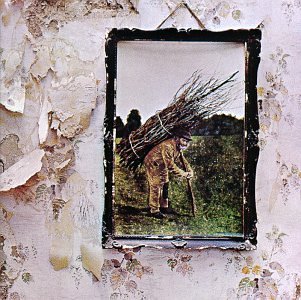 Cover of Led Zeppelin IV (aka ZOSO)
Led Zeppelin IV was a turning point for the band. The year was 1971, and the group realized that they were interested in penning more than straight ahead rock and roll songs and long, extended blues jams.
For some bands, this would have posed a problem, as there are sometimes songwriting elements in a group that are locked into a certain style and are unwilling to move in new directions. As a result of these 'creative differences', it was not, and is still not, uncommon for band members to leave and pursue their own artistic direction. Label pressure to keep on churning out the same old tried and true hits is also a heavy factor when a crossroads like this is reached.
Luckily, Led Zeppelin was far from a normal band. In fact, the group discovered that they were comfortable having multi-part rock epics share the same album side as blistering 12 bar blues rock. For Led Zeppelin Rock and Roll was their way of keeping in touch with their roots while at the same time stretching their branches to reach for the stars.
The genesis of the song lies in the simplicity of its title. While jamming in the studio, drummer John Bonham kept subjecting the band to the introductory cymbal and snare parts of the Little Richard song 'Good Golly Miss Molly'. This prompted guitarist Jimmy Page to retaliate by composing an accompaniment on the spot, and the riff for 'Rock and Roll' was born. The band liked the song so much that they immediately decided to record it and include it on the album.
The spontaneity of the song can definitely be felt while listening to it. The track breathes with a life of its own, and is the perfect second half of the one-two punch that opens the album, after the down and dirty blues workout of 'Black Dog'. The basic arrangement of the track belies the power of early rock and roll, and for Led Zeppelin Rock and Roll was a way for them to give new energy to the past creations of the musical pioneers that had brought them to their current career stage.
Recorded in 15 minutes, 'Rock and Roll' proves that sometimes the best music is that which does not suffer from agonizing second guessing and endless overdubs. Its position on the same album side as 'Stairway to Heaven' in no way diminishes the song's stature as one of classic rock's shining moments.
Classic-Rock-music.com is the mystical rehearsal studio for rockers DEMON TWEAK. Listen as they prepare for battle with the evil trickster Loki by playing home brewed classic rock direct from Ragnarok. Also read articles on your favorite classic rock band written by resident historian VIRGIL THE STORYTELLER.
Article Source: http://EzineArticles.com/?expert=Vince_P_Platania
http://EzineArticles.com/?Led-Zeppelin-Rock-and-Roll-in-Tribute-to-Their-Heroes&id=2115133
http://psychedelichippiemusic.blogspot.com/
http://psychedelichippiefashion.blogspot.com/
http://thezeitgeistischanging.blogspot.com/
http://www.soul-flower.com/Merchant2/merchant.mvc?Screen=SFNT&Store_Code=SOS&AFFIL=Robert_Muller
Friday, January 23, 2009
Jimmy Page and his Gibson Les Paul
 Image via Wikipedia
The Gibson Les Paul and Jimmy Page by Robert W. Walker
His talent led him to hold the title of founder, lead guitarist, songwriter, producer and engineer of what is arguably the biggest rock band ever... Led Zeppelin. As a guitarist, few people have ever had the enormous impact on future guitar players as Jimmy Page. To inspire so many musicians requires impeccable technique as well as an innovative sound, Jimmy Page had the ability and the sound and that sound, at the height of its popularity, was created on the Gibson Les Paul electric guitar.
Some legendary guitar players are most noted for the use of certain guitars, Jimi Hendrix and his right-handed, played-left handed Fender Stratocaster, Eddie Van Halen's home made Frankenstein and Jimmy Page's Gibson Les Paul. In fact, to think of Jimmy Page without his low-slung Les Paul would be like thinking about an angel without wings. While Jimmy Page can thank his unique and inventive sound to the Les Paul, Gibson should thank Page for a resurgence of popularity in the guitar.
Jimmy Page's use of Gibson guitars is extensive, from his trademark Les Pauls to his use of the double neck Gibson SG as well as a host of Gibson acoustic guitars. While those other guitars had occasional appearances on Led Zeppelin albums and live performances the workhorses of Jimmy Page's playing were his Gibson Les Pauls.
While Page used several different Les Pauls throughout his career, there were two guitars that stood out. The first was a 1958 Gibson Les Paul Standard, that he purchased from James Gang and Eagles lead guitarist Joe Walsh in 1969. This guitar consequently was the template for the Jimmy Page Custom Shop Les Paul (sold from 2004 to 2007). The second guitar, which was named Number Two, was a 1959 Les Paul Standard.
It's been 40 years since Led Zeppelin's inception and Jimmy Page is still is a popular and influential musician and the Gibson Les Paul is still the guitar Page turns to display his unique style and sound.
Robert W. (Bob) Walker
I'm a big fan of the Gibson Les Paul in all of its variations. Please visit my blog...
http://www.gibsonlespaulelectricguitar.com/
http://EzineArticles.com/?The-Gibson-Les-Paul-and-Jimmy-Page&id=1894166
![Reblog this post [with Zemanta]](http://img.zemanta.com/reblog_e.png?x-id=ad15a6d7-885b-454a-86fa-530c186b2862)
Wednesday, December 24, 2008
Led Zeppelin Reunion?
Public Say NO to Led Zeppelin Reunion Tour by Ed Vinicombe
I love Led Zeppelin as much as the next guy. I wasn't even born into the era of Led Zeppelin but they are still one of my favourite bands of all time. They have written songs that will truly stand the test of time there is no doubt about that.
Former band promoter to Led Zeppelin has questioned as to whether there is any genuine reason to why the band should get back together for a tour in 2008. Harvery Goldsmith told a crowd at the MusExpo conference in London this week, "I certainly don't think they should do a big tour because I can't see the point of it", "I think that some of the band really want to go out on tour and do it and other members of the band need to understand why they're doing it, and if there's no compelling reason to do it, they shouldn't".
Harvey Goldsmith was reacting to statements released by bassist of the band, John paul Jones, confirming that he, Jimmy Page and John Bonham's son Jason were rehearsing with a view to do some live gigs. I would absolutely love led Zeppelin to get back into live performing, they are a band that I have always wanted to see and now the chance is so near it almost feels un-real. To see them live would be amazing. Harvey Goldsmith has brandished the idea as 'wishful thinking' yet I remain in hope that this tour will happen. All I can do now is keep my fingers crossed and hope for the best!
Exquisite Zipfires BBQ's.
Reliable Winter BBQ Products.
Article Source: http://EzineArticles.com/?expert=Ed_Vinicombe
http://EzineArticles.com/?Public-Say-NO-to-Led-Zeppelin-Reunion-Tour&id=1632244
Subscribe to:
Comments (Atom)