Saturday, April 27, 2013

ALBUM REVIEW: Bob Dylan's "Blood On The Tracks", Part 1: Tangled Up In Blue

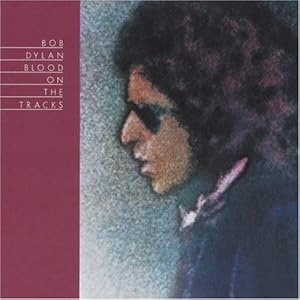
Cover of "Blood on the Tracks"
Blood on the Tracks
by Garrett Sawyer

Some critics have hailed Bob Dylan's "Blood on the Tracks" as his best album. And with good reason.

The album is a raw mix of personal anguish, fantasy and poetry gushing out in an abundance of terrific melodies.

The album was not his best-selling one; "Greatest Hits", "Greatest Hits - Vol. II", and "Desire" all sold more but as an artistic achievement only "Highway 61 Revisited" was undeniably better.

Let's go through the songs in order:

Tangled Up In Blue

This rambling seven-verse epic is a road song/love song that has as many twists and turns as a slalom.

Written in the summer of 1974 at a farm he had just bought in Minnesota it examines a fictional relationship that comes together, breaks apart, comes together again much later and then finally breaks apart a second time, still with eventual hope of reconciliation.

When he sings, "She was married when we first met, soon to be divorced" this is an accurate description of his first encounter with his future wife, Sara Lownds. When they met she was already married and the mother of a daughter.

On stage Dylan has occasionally introduced this song about the ups and downs of his subsequent marriage to Sara by telling the audience it took "10 years to live and 2 years to write."

As part of their 1977 divorce settlement, Sara got half the royalties from the songs Dylan wrote while they were married ... "tangled up in blue" included.

While most of the references in the song are pure fantasy, some of them are quite real. There really is a "Montague Street" in an upscale section of Brooklyn which had a music venue named "Capulet's" (recall Shakespeare's Romeo Montague and Juliet Capulet) that Dylan sometimes frequented.

The allusion to "an Italian poet from the fifteenth century" may sound ambiguous at first but the explanation is there were two versions of this song recorded: the first in New York then subsequently in Minnesota.

The Minnesota version was the one used on the album. But in the previous New York version the lyric was originally "thirteenth century" a clear reference to the Italian poet Dante.

From the lines, "All the people we used to know they're an illusion to me now" we get the impression that the breakup of their relationship felt surreal to him. The song ends with a frank confession "We always did feel the same, we just saw it from a different point of view, tangled up in blue."

Despite his legendary career Dylan never hit the charts as frequently as artists/bands with comparable influence such as the Beatles, Elvis and the Rolling Stones. "Tangled up in blue" was a happy exception, poking its way into Billboard's Top 40 in March of 1975.

If you like Bob Dylan's "Blood on the Tracks" then you'll like a song inspired by the story of a soldier who died after returning from Iraq. For a limited time only you can download this song for FREE by clicking HERE.

Download your free song at: http://www.garrettsawyer.net/am/

Article Source: http://EzineArticles.com/?expert=Garrett_Sawyer
http://EzineArticles.com/?Bob-Dylans-Blood-On-The-Tracks,-Part-1:-Tangled-Up-In-Blue&id=7668779

Enhanced by Zemanta

Saturday, April 20, 2013

The Story Behind Simon And Garfunkel's Songs: "Richard Cory" With A Twist

by Garrett Sawyer

OK, you're Paul Simon. You and Art Garfunkel have become an overnight sensation when your song "The Sound of Silence" became a number one hit on Billboard without your even knowing that it had been re-recorded and re-released.
The Definitive Simon & Garfunkel
The Definitive Simon & Garfunkel (Wikipedia)

You've hurried back from England to reunite with your partner and rush to the studio to record some more songs so that your new smash can be made into an album.

Problem: you need more songs. Solution? You use some songs that you've had stored up.

And you write a couple more, like "Richard Cory."

Most people don't know it but Simon was an English major at Queens College, obtaining a degree in English literature (even fewer know that he briefly attended the Brooklyn Law School).

So it's only natural he would reach into his knowledge of poetry to help him come up with material for the album they were hastily putting together.

Given that Simon's audience was in the process of becoming disenchanted with the Vietnam War and distrustful of the "Establishment", the wealthy, and the elder generation it's only natural that he would choose the Edward Arlington Robinson poem "Richard Cory".

Written during the depression that followed the Panic of 1893 it portrays a man who seems to have it all: wealth, education, manners, and the admiration of all those around him.

And those who envy him haven't enough money for meat and cursed the bread they did have (many were forced to live on day-old bread in those depression years). But despite all this success Cory calmly goes home one day and commits suicide with a gun.

The reader is compelled to see that all Cory's advantages didn't matter and that he lacked something essential.

Maybe it was the senselessness of excessive wealth (consider the Book of Ecclesiastes "All is vanity and a striving after wind"). Maybe it was loneliness. Maybe it was boredom or depression. We don't know ... but we're challenged to ask.

Simon, using his English literature experience, brought "Richard Cory" into the 20th Century. It begins the same way, although Simon embellished it a bit. Cory isn't just rich, he "owns one half of this whole town".

He's so wealthy he can lavishly give to charity. He knows all the right people. He was born with a silver spoon in his mouth, the pampered only son of a rich banker.

The press follow his every move like a latter-day paparazzi. For his amusement he throws unbelievable parties and indulges in orgies. Yet he still commits suicide with a gun.

And the singer of the song? He works in Cory's factory, hungry and poor, furious at fate for his poverty, bitterly envious of his "boss". But unlike the poem the singer seems to have a death wish because he still wishes he were Cory even after Cory has killed himself.

So there you have it. Alienation personified. Folk-rock with an agenda. And a 19th century poem moved forward into the rebellious '60's and given an O. Henry style curveball at the end.

Simon and Garfunkel's album "The Sound of Silence" began side one with the title song and side two with "Richard Cory", a terrific match.

If you like Simon & Garfunkel's "Richard Cory" then you'll like a song inspired by the story of a soldier who died after returning from Iraq. For a limited time only you can download that song for FREE by clicking HERE.

Download your free mp3 at: http://www.garrettsawyer.net/am/

Article Source: http://EzineArticles.com/?expert=Garrett_Sawyer
http://EzineArticles.com/?The-Story-Behind-Simon-And-Garfunkels-Songs:-Richard-Cory-With-A-Twist&id=7642898

Enhanced by Zemanta